Subscribe To JKM


 Posts
All Comments
Friday, June 07, 2013
Movie Trailer: Waterworld (1995)

 award-winning creator of the web series Abnormal Fixation (2024), the audio drama Enter the House Between (2023) and author of 35 books including Horror Films FAQ (2013), Horror Films of the 1990s (2011), Horror Films of the 1980s (2007), TV Year (2007), The Rock and Roll Film Encyclopedia (2007), Mercy in Her Eyes: The Films of Mira Nair (2006),, Best in Show: The Films of Christopher Guest and Company (2004), The Unseen Force: The Films of Sam Raimi (2004), An Askew View: The Films of Kevin Smith (2002), The Encyclopedia of Superheroes on Film & Television (2004), Exploring Space:1999 (1997), An Analytical Guide to TV's Battlestar Galactica (1998), Terror Television (2001), Space:1999 - The Forsaken (2003) and Horror Films of the 1970s (2002).
Thursday, June 06, 2013
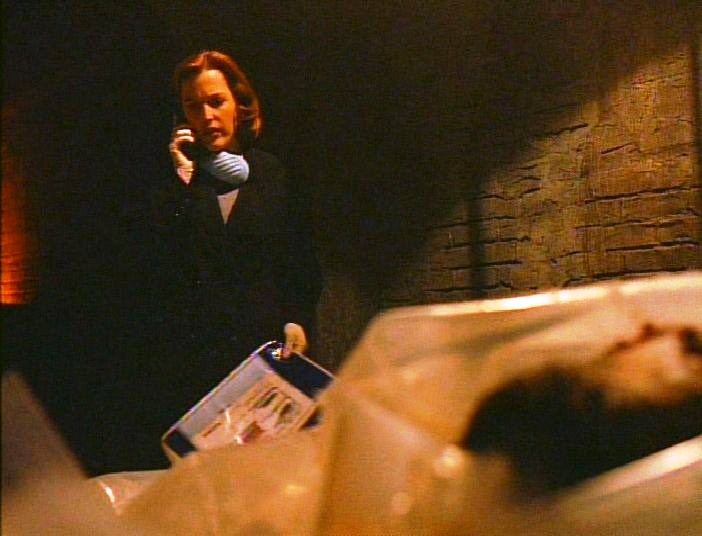
The X-Files 20th Anniversary Blogging: "F. Emasculata" (April 28, 1995)

If
I were compiling my top ten list of X-Files episodes, the second season installment
“F. Emasculata” would definitely make the cut.
Not coincidentally, it would also take the number one slot for “most disgusting episode” of the long-lived
sci-fi/horror series.
In
this episode, Mulder and Scully battle a deadly, incredibly contagious disease,
and most not only stop its transmission, but make some tough choices about how
much information the public has a right to know in times of an emergency.
What
makes this episode by Chris Carter and Howard Gordon such a visceral,
throat-tightening entry is the grotesque appearance and nature of the
disease. Those infected develop a
high-fever and almost instantly develop throbbing,
mushy pustules on their skin.
After
a time, roughly thirty-six hours, these pulsating sacs actually explode -- like overripe zits -- ejaculating the
disease into the air. In one of the most
disgusting scenes I’ve ever witnessed on network television, a suburban wife
and mom is seen here tending to a sick man when a pustule ruptures, and
splatters the toxic materials in her open mouth, and all over her face.
On
a personal note, my wife still hasn’t recovered from the scene in which an
infected convict holds a little boy hostage on a bus, and his pustule-deformed
face edges perilously close to the child’s angelic visage. This moment captures the horror of contagion
perfectly, and expresses the fear that we’re all vulnerable to disease.
Of
course, gore is one (wonderful) thing,
but the creeping terror of “F. Emasculata” is more than special effects. Rather, the disease scenario played out here
is frighteningly plausible and, in fact, based on a real incident from the
1980s.

After
a scientist named Torrance is killed by a virulent disease in South America, a
package is sent by a mysterious mailer to an inmate in jail, in Dinwiddie,
Virginia. Inside is a diseased animal
leg which soon causes the spread of the deadly disease inside the facility.
When
two murder suspects escape from prison carrying the fatal contamination and
therefore the possibility of mass infection, Mulder (David Duchovny) and Scully
(Gillian Anderson) must track down the fugitives and prevent further spread of
the terminal contagion.
Soon,
Scully uncovers evidence that the government and a large pharmaceutical company
engineered this “test” as part of some secret operation, but Mulder’s first
order of business is to catch the last surviving fugitive before he
contaminates a busload of innocent people…
In
the mid-1990s, the virus or contagion was the new pop-culture boogeyman, one even displacing serial
killers for a span.

Films
such as Outbreak (1995) tracked the progress of Ebola through a
heavily-populated American town, and by 1997, UPN aired a (ridiculous) “disease”
or “virus”-of-the-week series titled The Burning Zone for a season.
Hazmat
suits were suddenly in vogue, and the de
rigueur attire of the 1990s horror genre.
All
of this disease-oriented material likely originated with a best-selling book: The
Hot Zone (1994), by Richard Preston. A “terrifying
true story,” this book explored in nauseating but meticulous detail the
outbreak of a deadly Ebola virus in a monkey storage facility, Hazelton
Laboratories, in 1989. The facility,
much like the prison in The X-Files, was located in
Virginia, but in Reston rather than Dinwiddie.
In
real life, the CDC investigated the outbreak, and the book also details the
author’s exploration of the lab building where it occurred, later demolished in
1995. Now…it’s a KinderCare.
The
details of the Ebola Virus as recounted in The Hot Zone (on page 24) are enough
to make anyone sick or simply scared to death.
Preston writes of victims vomiting blood, the sound of a “bed sheet being torn in half” (the noise
of bowels opening and “venting blood from
the anus”), and other body horrors that make vampires, werewolves, and
other every day monsters seem innocuous by comparison.
What’s
rather amazing about “F. Emasculata” is not only that it follows in
broad-strokes the details of The Hot Zone (in terms of location),
but that it is actually far gorier and disturbing than Outbreak, which was
released theatrically. This episode is
extremely graphic and forthright about its depiction of disease in a way the
movie simply isn’t. Because it pulls no
punches, “F. Emasculata” has long been a favorite of mine. It brilliantly explores the notion of a genie
loosed from the bottle; of a danger that, once uncorked, is difficult to
catch-up with and contain.
Also,
I like the no-bullshit resolution of “F. Emasculata.” In movies such as Outbreak and TV series
such as The Burning Zone, a miraculous cure is always found in the nick
of time, and major characters are spared agonizing and disgusting death. Life
rarely turns out so neatly. In “F.
Emasculata” no cure is developed…the outbreak simply is contained while the
disease burns itself out. I much prefer
that dramatic resolution to any nonsense about discovering some cure to a
deadly disease on the spot. I’m glad
this episode doesn’t go there. The
X-Files is a brilliant series precisely because it always keeps one
foot grounded in reality.

Although
the government is a crucial player in this particular conspiracy, “F.
Emasculata” reserves its greatest contempt for Pinck Pharmaceuticals, the big
company which has orchestrated the outbreak to determine how the toxin affects
human beings. Why? So the company can circumvent
years of FDA testing.
In
other words, the company couldn’t wait to make money…and so people had to
die. Not surprisingly, this big business
chose the population with the least power and freedom to use as guinea pigs:
prison convicts.
So
in this case, unregulated, irresponsible Big Business is the enemy, though
certainly the government’s role is a crucible for debate.
Is
it right for the government to hide the truth of the disease from the American
public, knowing that the truth could cause a panic and costs lives? Or should the government reveal all in the
name of disclosure and public safety? “Controlling the information,” as the
episode points out, is about who possess power, and who doesn’t.
This
debate relates to Mulder’s journey. He wants the public to know the truth, and
for the guilty to be held to account.
But,
of course, there is no evidence to support his story, and so he risks becoming
the story, himself.
The
question becomes: how much does the public deserve to know, and when does it deserve
to know it?
I’m
of the mind that the truth in situations like this must come out, but if
reporting it as “breaking news” causes a panic -- and costs lives – it’s best to tread carefully, and get all the
facts first. That’s not a paradigm our
current mainstream press is very good at.
In
simple horror terms, “F. Emasculata” is an exploration of subversion by micro-organism; of the way that tiny invaders can
reshape our bodies and threaten our very lives.
A disease is not a monster that can be fought with guns or knives, but
one that multiplies and spreads, and enacts its monstrous work without
conscience or even consciousness. It’s difficult to fight an enemy like that,
one that can pop up, like a multi-headed Hydra, and can transform the most
healthy person in the world into a disease producer.
I
find this idea absolutely terrifying, which is no doubt why “F. Emasculata” remains
such a visceral viewing experience. Even
today, this episode plays more like science fact than science fiction.
In
two weeks: “Our Town.”
award-winning creator of the web series Abnormal Fixation (2024), the audio drama Enter the House Between (2023) and author of 35 books including Horror Films FAQ (2013), Horror Films of the 1990s (2011), Horror Films of the 1980s (2007), TV Year (2007), The Rock and Roll Film Encyclopedia (2007), Mercy in Her Eyes: The Films of Mira Nair (2006),, Best in Show: The Films of Christopher Guest and Company (2004), The Unseen Force: The Films of Sam Raimi (2004), An Askew View: The Films of Kevin Smith (2002), The Encyclopedia of Superheroes on Film & Television (2004), Exploring Space:1999 (1997), An Analytical Guide to TV's Battlestar Galactica (1998), Terror Television (2001), Space:1999 - The Forsaken (2003) and Horror Films of the 1970s (2002).
The X-Files Promo: "F. Emasculata"
award-winning creator of the web series Abnormal Fixation (2024), the audio drama Enter the House Between (2023) and author of 35 books including Horror Films FAQ (2013), Horror Films of the 1990s (2011), Horror Films of the 1980s (2007), TV Year (2007), The Rock and Roll Film Encyclopedia (2007), Mercy in Her Eyes: The Films of Mira Nair (2006),, Best in Show: The Films of Christopher Guest and Company (2004), The Unseen Force: The Films of Sam Raimi (2004), An Askew View: The Films of Kevin Smith (2002), The Encyclopedia of Superheroes on Film & Television (2004), Exploring Space:1999 (1997), An Analytical Guide to TV's Battlestar Galactica (1998), Terror Television (2001), Space:1999 - The Forsaken (2003) and Horror Films of the 1970s (2002).
Wednesday, June 05, 2013
Collectible of the Week: Clash of the Titans Action Figures (Mattel; 1981)

In
1981, Mattel acquired the license to the epic Ray Harryhausen fantasy film, Clash
of the Titans, and produced a nice line of 3-inchaction figures and
toys based on the stop-motion spectacle.
Today,
many of these toys -- particularly the
Greek mythology-inspired “monsters” or “beasts” -- are worth a pretty penny
and considered collectors’ items.

In
terms of the action figures, Mattel produced Perseus -- Harry Hamlin’s
character -- described on his card as “The
Hero Son of Zeus,” and the film’s secondary villain, the deformed,
devil-like Calibos (“Lord of the Marsh.”)
It
also produced Thallo (“Captain of the Guard”), and Charon (“The Devil’s Boat
Keeper.”) I had all of these figures,
except for Charon. I still have them in
my home office, sharing a shelf with figures from Captain Power, Mork and Mindy,
The Black Hole, and Dune.
Mattel
also manufactured a Clash of the Titans set featuring Perseus and Pegasus (“The
Winged Horse), and best of all…the monstrous destroyer of cities, the
Kraken. I remember being in fifth grade
and wanting that Kraken toy more than anything, but I never managed to get my
hands on one.

I don’t know that these Clash of the Titans figures were all
that successful commercially, but they came with nice accouterments (like gold
shields and swords), and I always hoped for a second release featuring action figures
like Medusa, Bubo, Andromeda, Zeus, Poseidon, and so on.
award-winning creator of the web series Abnormal Fixation (2024), the audio drama Enter the House Between (2023) and author of 35 books including Horror Films FAQ (2013), Horror Films of the 1990s (2011), Horror Films of the 1980s (2007), TV Year (2007), The Rock and Roll Film Encyclopedia (2007), Mercy in Her Eyes: The Films of Mira Nair (2006),, Best in Show: The Films of Christopher Guest and Company (2004), The Unseen Force: The Films of Sam Raimi (2004), An Askew View: The Films of Kevin Smith (2002), The Encyclopedia of Superheroes on Film & Television (2004), Exploring Space:1999 (1997), An Analytical Guide to TV's Battlestar Galactica (1998), Terror Television (2001), Space:1999 - The Forsaken (2003) and Horror Films of the 1970s (2002).
Model Kits of the Week: The Batmobile


 award-winning creator of the web series Abnormal Fixation (2024), the audio drama Enter the House Between (2023) and author of 35 books including Horror Films FAQ (2013), Horror Films of the 1990s (2011), Horror Films of the 1980s (2007), TV Year (2007), The Rock and Roll Film Encyclopedia (2007), Mercy in Her Eyes: The Films of Mira Nair (2006),, Best in Show: The Films of Christopher Guest and Company (2004), The Unseen Force: The Films of Sam Raimi (2004), An Askew View: The Films of Kevin Smith (2002), The Encyclopedia of Superheroes on Film & Television (2004), Exploring Space:1999 (1997), An Analytical Guide to TV's Battlestar Galactica (1998), Terror Television (2001), Space:1999 - The Forsaken (2003) and Horror Films of the 1970s (2002).
Tuesday, June 04, 2013
Cult-Movie Review: After Earth (2013)

When
I was a young boy, I received for Christmas one year a book with the (now
politically-incorrect…) title Adventures for Boys.
After
avidly reading the selections within that anthology, I devoured other, similar
stories of outdoor adventure such as Jack London’s (1876 – 1916) The
Call of the Wild (1903), and White Fang (1906).
Those
tales featured genuine simplicity -- or clarity
-- of theme and morality, and to this day, I find that writing voice and
style appealing.
Almost
universally set in a harsh climate or natural terrain, these “adventures for boys” also concerned, specifically, a character’s rite of passage, even if the character
in question happens to be a canine.
M.
Night Shyamalan’s new and much-maligned science fiction movie After Earth (2013) is an affair
in an almost identical vein. It’s a
boy-against nature, rite-of-passage movie, and one uncluttered by story fat or extraneous plotting and incident.
In
fact, After Earth is a stream-lined, enjoyable adventure for
boys and girls. And likes its literary antecedents, the film even
focuses on a very specific philosophy of
life, and explores that (spiritual) way of knowing with a surfeit of clarity, even grace. And I'm not talking about Scientology, either.
In
short, the film is more enjoyable, and worthwhile
than I anticipated it would be, and much more so than most reviews have indicated.

After
Earth is set
in the distant future. Man has left Earth behind after polluting and ruining
it.
One
thousand years after that exodus and re-settlement on another world, Nova
Prime, man has established himself as an interstellar presence.
Unfortunately,
a competing alien race has bred monstrous predators called the Ursa who can
smell our fear, and who are engineered to do nothing but hunt and murder humans.
On
a routine space mission aboard a ship called the Hesper, a hero father, Cypher
Raige (Will Smith) and his estranged, troubled teenage son, Kitai Rage (Jaden
Smith) face danger when their ranger ship encounters an “asteroid storm.”
The
ship crashes on wild, untamed Earth, after cracking into pieces. Alas, a rescue beacon is located on the tail
section of the ship…located more than fifty miles away from the fore section’s
crash site.
Side-lined
by a severe leg injury, Cypher must send his inexperienced son into the wild
alone to retrieve the rescue beacon and send a distress call to the authorities.
Making
matters more dangerous, the Hesper was carrying in its hold a deadly Ursa
captive, a creature now unloosed on Earth and ready to resume hunting human
survivors.
Cypher
has mastered the art of “ghosting,” of suppressing his fear so that the Ursa
can’t detect his presence. But his son,
Kitai, has no such experience…

In
my introduction above, I wrote about After Earth’s central,
fully-explored theme or philosophy. That philosophy of life -- short and sweet
-- is mindfulness: the attentive awareness
of the reality of things; of the happenings of the moment. It’s a Buddhist belief, but also one that has
been adopted in contemporary psychological counseling.
Mindfulness
is considered one way of understanding life, and of vanquishing emotions that
aren’t important, or serve no useful purpose.
And in After Earth, mindfulness is the gateway to adulthood and the
key to survival in a frightening situation.
Specifically,
Cypher delivers a lengthy monologue about the nature of fear, and how, via the
auspices of mindfulness, he was able to subtract fear from his mental
gestalt. Cypher describes danger as “real”
but fear as nothing but a choice, an
emotion that is “imaginary.”
Hence, it can be controlled.
Hence, it can be controlled.
Cypher’s
key to short-circuiting the un-real aspect of fear, as he describes it, is his
recognition of his immediate, surrounding environment. He describes a terrifying battle with an
Ursa, and how fear left his body. His eyes registered sunlight. He describes the sight of his own blood. But Cypher distanced himself from his
emotions even as he tuned into his environment, so he could survive. In a crisis, Cypher suggests, we must deal with what surrounds
us, instead of imaginary boogeymen that are unreal, and therefore unrelated to the life-and-death struggle at hand.
Mindfulness
is the philosophy that guides and informs After Earth, but the mode of that philosophy’s transmission
is of equal interest to the message itself.
This is a film about generations, and about fathers-and-sons,
specifically.
Indeed,
one might gaze upon the film in its entirety as a metaphor for fathering (or on
a bigger scale, parenting in general).
Here a father must share with his child the way he sees the world, and
then hope that this very knowledge will be useful when that boy must stand up
and fight alone.
Without being maudlin
about it, the movie is about the wisdom we impart to our children.
And,
of course, it’s absolute murder to see the boy stand up and fight alone, when
it’s clear that Cypher wants nothing more than to fight Kitai’s battles for
him.
That’s
an urge all parents feel and yet, in some important instances, must
resist. We send our children out into
the world knowing that we can’t always be there for them, but that, hopefully,
the things we taught them will resonate and prove meaningful. Those seeds will
sprout in their memories, and they will survive and endure, and then -- one day -- pass on their version of that
knowledge to the next generation.
The
father-son relationship in After Earth is emotionally-moving
because even a helpful philosophy such as mindfulness can be perceived, in
certain situations, as negative.
From the outside, it looks a lot like distance, or the lack of feeling...the lack of love. As Kitai's mother suggests, he is a sensitive, intuitive, feeling boy, one who needs a father, not a philosopher or commander. He doesn't understand why his father is so remote. There is a price to pay for mindfulness, for always living life in the "ghosting" mode, in the film's vernacular.
From the outside, it looks a lot like distance, or the lack of feeling...the lack of love. As Kitai's mother suggests, he is a sensitive, intuitive, feeling boy, one who needs a father, not a philosopher or commander. He doesn't understand why his father is so remote. There is a price to pay for mindfulness, for always living life in the "ghosting" mode, in the film's vernacular.

In terms of family issues, Cypher
and Kitai both experienced a tragedy involving a family member, and Cypher doesn’t know how to
handle his guilt. So he deploys
mindfulness in his family life too, but there is a cost to those around him.
Cypher -- adhering to the stoicism of mindfulness -- can’t reach out emotionally, because he believes emotions don’t help in a crisis. Cypher has been practicing mindfulness in his personal life for so long that he forgets what it means to really connect with someone. In other words, the very philosophy that keeps him alive is the thing that keeps him from truly connecting with his son.
Cypher -- adhering to the stoicism of mindfulness -- can’t reach out emotionally, because he believes emotions don’t help in a crisis. Cypher has been practicing mindfulness in his personal life for so long that he forgets what it means to really connect with someone. In other words, the very philosophy that keeps him alive is the thing that keeps him from truly connecting with his son.
Accordingly,
After
Earth reaches its zenith of emotion during its climax, when Cypher
attempts to express his new-found regard and respect for Kitai in a kind of socially-acceptable but
ordered and restrained gesture: a military salute.
Delightfully -- and outside of movie tradition -- Kitai doesn’t reciprocate.
Instead, he hugs his father, an absolute assertion that sometimes emotionality, not mindfulness, is the key to life.
Thus, like all children, Kitai has taken his father’s “lesson” and interpreted it in a way that is meaningful to him as an individual.
That is the very rite-of-passage meted in the film: Kitai’s ability to understand his father’s choice, and then to make his own meaningful choice about whom he hopes to be.
The
movie is about nothing more and nothing less than that kernel of an idea: one man’s way of seeing
the world and his son coming to understand that “vision..." and divine his own belief system from it.
Sadly,
you likely won’t read about any of this thematic substance in the majority of
mainstream critical reviews. Instead, the
reviews for After Earth have been harsh, even savage.
That
rampant negativity is a result, I suspect, of a perfect storm of bile and jealousy:
the continuing backlash against Shyamalan (because he dared to trick us with The
Sixth Sense [1999] and then minted a fortune), and the relatively fresh
backlash against Will Smith and his son Jaden.
So
if hating is the game, After Earth is a two-fer!
I should also state this fact: After Earth isn't a movie about Scientology. I've read reviewers insist it's about Scientology because -- wait for it -- there's a volcano placed prominently in the action. I suppose this means that Star Trek: Into Darkness and Revenge of the Sith (a whole planet of volcanoes there!) are also about Scientology. Who knew?
Perhaps more to the point, even if After Earth did feature principles of Scientology, would that fact immediately, a priori, render it a bad film? Does the same rule apply to Catholicism or other branches of Christianity, or only to unpopular religions?
Perhaps more to the point, even if After Earth did feature principles of Scientology, would that fact immediately, a priori, render it a bad film? Does the same rule apply to Catholicism or other branches of Christianity, or only to unpopular religions?
But I'm not in the business of defending movies, only watching them, interpreting them, and presenting my analysis. Having seen and enjoyed the film, I conclude that it is a well-made, enjoyable “adventure for boys” (and girls too…) -- nothing more, nothing less -- with an authentic sense of humanity. It is a simple, straightforward "shipwreck" movie, and parts of the adventure reminded me of Robinson Crusoe and Swiss Family Robinson. The production design is original and compelling, and the location shooting transforms Earth into the most vividly dangerous of wildernesses.
We
live now in a culture of noisy, hectic movie blockbusters, where event piles upon
events, where there are feints and counter-feints, and where “surprises” and
reversals come at the audience by the dozen (and often in 3-D to boot). We leave the theater after such films not
exhilarated and moved, but throttled.
Refreshingly,
After
Earth doesn’t care about throttling you, or layering on a multitude of
high-intensity incidents. Instead -- and
much like The Call of the Wild or White Fang -- the film simply and
directly vets its adventurous tale of extraordinary survival, and of a father and son
discovering each other.
The
key is that After Earth accomplishes those tasks with heart, and a considerable degree of humanity. It's a shame people aren't looking at the movie with open eyes and open hearts, but bitterness instead. It's more fun, I suppose, to fit the movie into another edition of the "M. Night Shyamalan-has-lost-it" narrative than to grapple with the ideas the movie actually presents.
Frankly, I think the critics could use a lesson in mindfulness.
So you may love After Earth, or you may hate it, I guess. But when you watch the film, at least do this much: drop your expectations and biases, be in the moment, and judge the work for yourself.
Frankly, I think the critics could use a lesson in mindfulness.
So you may love After Earth, or you may hate it, I guess. But when you watch the film, at least do this much: drop your expectations and biases, be in the moment, and judge the work for yourself.
award-winning creator of the web series Abnormal Fixation (2024), the audio drama Enter the House Between (2023) and author of 35 books including Horror Films FAQ (2013), Horror Films of the 1990s (2011), Horror Films of the 1980s (2007), TV Year (2007), The Rock and Roll Film Encyclopedia (2007), Mercy in Her Eyes: The Films of Mira Nair (2006),, Best in Show: The Films of Christopher Guest and Company (2004), The Unseen Force: The Films of Sam Raimi (2004), An Askew View: The Films of Kevin Smith (2002), The Encyclopedia of Superheroes on Film & Television (2004), Exploring Space:1999 (1997), An Analytical Guide to TV's Battlestar Galactica (1998), Terror Television (2001), Space:1999 - The Forsaken (2003) and Horror Films of the 1970s (2002).
Movie Trailer: After Earth (2013)
award-winning creator of the web series Abnormal Fixation (2024), the audio drama Enter the House Between (2023) and author of 35 books including Horror Films FAQ (2013), Horror Films of the 1990s (2011), Horror Films of the 1980s (2007), TV Year (2007), The Rock and Roll Film Encyclopedia (2007), Mercy in Her Eyes: The Films of Mira Nair (2006),, Best in Show: The Films of Christopher Guest and Company (2004), The Unseen Force: The Films of Sam Raimi (2004), An Askew View: The Films of Kevin Smith (2002), The Encyclopedia of Superheroes on Film & Television (2004), Exploring Space:1999 (1997), An Analytical Guide to TV's Battlestar Galactica (1998), Terror Television (2001), Space:1999 - The Forsaken (2003) and Horror Films of the 1970s (2002).
Theme Song of the Week: The Invisible Man (1975)
award-winning creator of the web series Abnormal Fixation (2024), the audio drama Enter the House Between (2023) and author of 35 books including Horror Films FAQ (2013), Horror Films of the 1990s (2011), Horror Films of the 1980s (2007), TV Year (2007), The Rock and Roll Film Encyclopedia (2007), Mercy in Her Eyes: The Films of Mira Nair (2006),, Best in Show: The Films of Christopher Guest and Company (2004), The Unseen Force: The Films of Sam Raimi (2004), An Askew View: The Films of Kevin Smith (2002), The Encyclopedia of Superheroes on Film & Television (2004), Exploring Space:1999 (1997), An Analytical Guide to TV's Battlestar Galactica (1998), Terror Television (2001), Space:1999 - The Forsaken (2003) and Horror Films of the 1970s (2002).
Monday, June 03, 2013
Ask JKM a Question: Ranking the Star Trek Movies, post Into Darkness?

"How do you now rate the twelve Star Trek films best to worst #1 to #12?"
Great question, SGB, especially since I loved the new Star Trek film, and think it lands in the top tier.
Here is my revised tally:
Tier One (Meaning Classic, or Great)
1. Star Trek II: The Wrath of Khan (1982)
2. Star Trek VI: The Undiscovered Country (1991)
3. Star Trek: The Motion Picture (1979)
4. Star Trek: Into Darkness (2013)
3. Star Trek: The Motion Picture (1979)
4. Star Trek: Into Darkness (2013)
Tier Two (Meaning good)
5. Star Trek (2009)
6. Star Trek III: The Search for Spock (1984)
7. Star Trek: First Contact (1996)
8. Star Trek IV: The Voyage Home (1986)
Tier Three (Meaning, not-so-good, and sometimes downright awful)
9. Star Trek: Insurrection (1998)
10. Star Trek V: The Final Frontier (1989)
11. Star Trek: Generations (1994)
12. Star Trek: Nemesis (2002)
award-winning creator of the web series Abnormal Fixation (2024), the audio drama Enter the House Between (2023) and author of 35 books including Horror Films FAQ (2013), Horror Films of the 1990s (2011), Horror Films of the 1980s (2007), TV Year (2007), The Rock and Roll Film Encyclopedia (2007), Mercy in Her Eyes: The Films of Mira Nair (2006),, Best in Show: The Films of Christopher Guest and Company (2004), The Unseen Force: The Films of Sam Raimi (2004), An Askew View: The Films of Kevin Smith (2002), The Encyclopedia of Superheroes on Film & Television (2004), Exploring Space:1999 (1997), An Analytical Guide to TV's Battlestar Galactica (1998), Terror Television (2001), Space:1999 - The Forsaken (2003) and Horror Films of the 1970s (2002).
Cult-TV Theme Watch: Clouds

A cloud is a visible mass of chemicals suspended in the atmosphere above the surface of a planet.
Clouds of all shapes, colors, and sizes have appeared frequently throughout cult-tv history, and often have portrayed as alien life-forms.
In the Star Trek franchise, the appearance of a "space cloud" is something of a semi-regular occurrence. For instance in the Original Series (1966 - 1969), the Companion -- an ionic cloud -- appeared in the second season episode "Metamorphosis," dragging a shuttle down to a mysterious planetoid.
Similarly, another space-traveling cloud appeared in "Obsession." In that case, the cloud was also a life-form, albeit a dangerous vampire.

In Star Trek: The Animated Series (1973 - 1974), in the episode "One of Our Planets is Missing," the Enterprise encounters a gigantic cloud that has wandered into our galaxy and is consuming planets at the edge of known space. The Enterprise pierces the cloud, and finds that it possesses a quasi humanoid anatomy, replete with a nervous system and digestive system. Spock (Leonard Nimoy) mind-melds with the intelligent cloud and it is able to understand human nature.

In a first season episode of Deep Space Nine (1993 - 1999) called "The Storyteller, Chief O'Brien (Colm Meaney) and Dr. Bashir (Alexander Siddig) battle a strange atmospheric cloud, the Dal'Rock, which seems to be a nexus of psychic energy.

And n the sixth episode of Star Trek: Voyager (1995 - 2001), titled "The Cloud," Voyager explores a nebula in the Delta Quadrant that isn't actually a nebula, but rather another sentient life-form. After the ship accidentally harms the creature, Captain Janeway (Kate Mulgrew) becomes responsible for its health, and setting things right.

In the second season episode of Space: 1999 (1975 - 1977) titled "The Beta Cloud," Moonbase Alpha is attacked by a space-going cloud that camouflages a deadly and sinister alien intelligence. The cloud first infects Alpha with a "lassitude" sickness, and then sends a fierce warrior to steal the base's life-support system. When the Alphans, led by Maya (Catherine Schell), finally defeat the cloud, the roiling mist seems to retract and dissolve in outer space, perhaps returning to its own dimension.

In the short-lived 1970s series The Fantastic Journey (1977), colorful, storm clouds represent portals through time and space near Evoland, a giant land-mass in the Bermuda Triangle. In "Vortex," the series pilot, a green cloud at sea captures a sea-going vessel and deposits its inhabitants on the island's shore. In a later episode, "Beyond the Mountain," the series protagonists encounter another such portal, but this time the cloud glows red instead of green.

Clouds also make a comical appearance in the finale of The X-Files episode "Rain King." Here, a shy man with psychic powers -- and the ability to change the weather with his mind -- envisions only sunny skies (and happy clouds) when his unhappy personal life turns out the way he hopes, at long last.
award-winning creator of the web series Abnormal Fixation (2024), the audio drama Enter the House Between (2023) and author of 35 books including Horror Films FAQ (2013), Horror Films of the 1990s (2011), Horror Films of the 1980s (2007), TV Year (2007), The Rock and Roll Film Encyclopedia (2007), Mercy in Her Eyes: The Films of Mira Nair (2006),, Best in Show: The Films of Christopher Guest and Company (2004), The Unseen Force: The Films of Sam Raimi (2004), An Askew View: The Films of Kevin Smith (2002), The Encyclopedia of Superheroes on Film & Television (2004), Exploring Space:1999 (1997), An Analytical Guide to TV's Battlestar Galactica (1998), Terror Television (2001), Space:1999 - The Forsaken (2003) and Horror Films of the 1970s (2002).
The Cult-TV Faces of: Clouds
 |
| Identified by SGB: The Vampire Cloud of Star Trek: "Obsession." |
 |
| Identified by SGB: The Companion of Star Trek: "Metamorphosis." |
 |
| Identified by Terri Wilson: Ardana, the Cloud City of Star Trek: "The Cloud Minders." |
 |
| Identified by SGB: Star Trek: The Animated Series: "One of our Planets is Missing." |
 |
| Identified by SGB: Space:1999: "The Beta Cloud." |
 |
| Not Identified: The Fantastic Journey: "Beyond the Mountain." |
 |
| Identified by SGB: The Fantastic Journey: "Vortex." |
 |
| Identified by Terri Wilson: Doctor Who: "Underworld." |
 |
| Identified by SGB: Battlestar Galactica (original); opening sequence. |
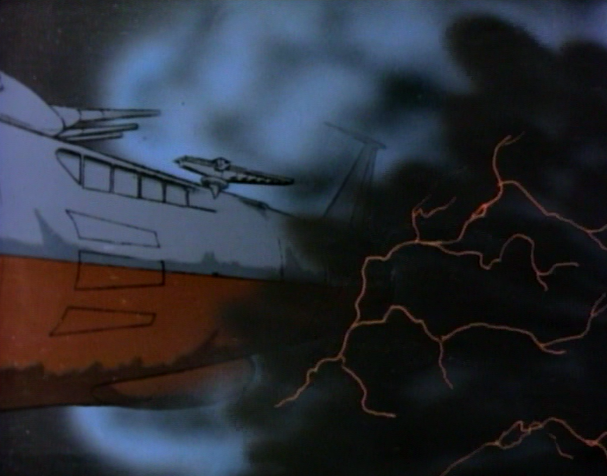 |
| Identified by SGB: Star Blazers, Desslok's Energy Cloud. |
 |
| Identified by Terri Wilson: The Simpsons, Opening Sequence. |
 |
| Identified by Brian A.Dixon: The Dal Rock of Deep Space Nine: "The Storyteller" |
 |
| Identified by SGB: Star Trek: Voyager: "The Cloud." |
 |
| Identified by Brie Holtz: The X-Files: "Rain King." |
 |
| Identified by Terri Wilson: Lost (Smoke Monster). |
award-winning creator of the web series Abnormal Fixation (2024), the audio drama Enter the House Between (2023) and author of 35 books including Horror Films FAQ (2013), Horror Films of the 1990s (2011), Horror Films of the 1980s (2007), TV Year (2007), The Rock and Roll Film Encyclopedia (2007), Mercy in Her Eyes: The Films of Mira Nair (2006),, Best in Show: The Films of Christopher Guest and Company (2004), The Unseen Force: The Films of Sam Raimi (2004), An Askew View: The Films of Kevin Smith (2002), The Encyclopedia of Superheroes on Film & Television (2004), Exploring Space:1999 (1997), An Analytical Guide to TV's Battlestar Galactica (1998), Terror Television (2001), Space:1999 - The Forsaken (2003) and Horror Films of the 1970s (2002).
Subscribe to:
Posts (Atom)
40 Years Ago: Star Trek IV: The Voyage Home (1986)
Star Trek IV: The Voyage Home (1986), directed by Leonard Nimoy, proved such a sensation at the box office in the mid-1980s that its succes...

-
 Director Ridley Scott has already given the science fiction cinema two of its greatest and most cherished films: Alien (1979) and Blade...
-
 "Other Worlds lie outside our seeing; beyond the beyond; on the edge of within. The Great Pyramids: erected by the Ancient Ones as a ba...