Showing posts with label 1960s. Show all posts

Sunday, February 12, 2017

Robots of: The 1960s (A Gallery)


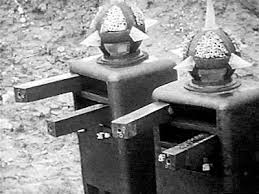
The great decade of the Space Age -- the 1960's -- is also the great age of TV robots, in particular.

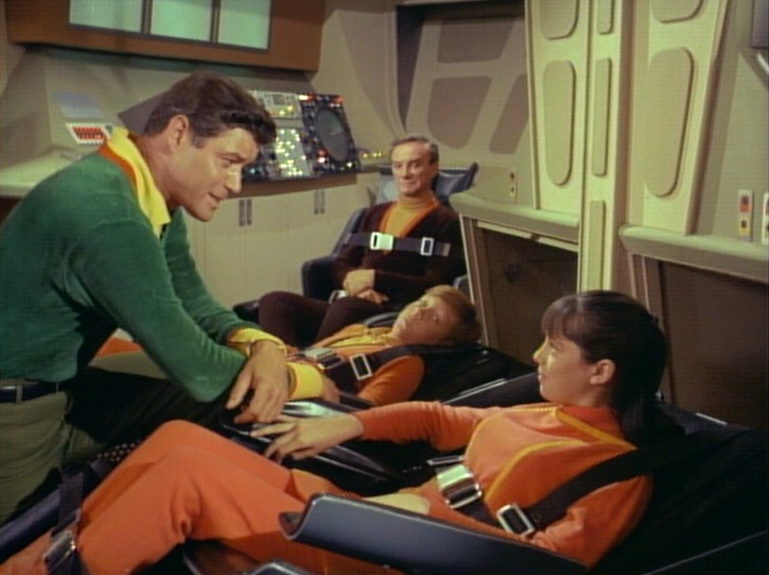
This epoch brought us multiple "guest appearances" by Robby the Robot on The Twilight Zone (1959-1963), and introduced us to many more mechanical friends, including the Jetsons' maid, Rosie, and the "bubble headed booby" from Lost in Space (1965-1968).

Identified by Hugh: The Twilight Zone

Identified by Hugh: The Jetsons

Identified by Hugh: Fireball XL5

Identified by Hugh: The Twilight Zone.

Identified by Hugh: The Outer Limits

Identified by Hugh: Lost in Space.

Identified by Hugh: Doctor Who.

Identified by Hugh: Frankenstein Jr.

Identified by Hugh: Doctor Who.

Identified by Hugh: Star Trek

Identified by SGB: King Kong Escapes

Identified by Hugh: Star Trek

13

Wednesday, July 27, 2016

Theme Song of the Week: The Flintstones (1961 - 1966)

Wednesday, January 27, 2016

Theme Song of the Week: The Addams Family (1964 - 1966)

Wednesday, December 02, 2015

Theme Song of the Week: Combat (1962-1967)

Monday, November 02, 2015

007 Week: Dr. No (1962)


Dr. No (1962) is the first James Bond film.

Let that concept sink in for just a moment.

The film, directed by Terence Young, is the starting point of a fifty-three year (so far…) cinematic journey.  

That cinematic odyssey has taken audiences through the End of the Cold War -- the original historical context of Ian Fleming’s British secret agent -- through some of the most difficult days of the 1970s (such as the energy crisis in The Man with the Golden Gun), to Iran-Contra in the 1980s (The Living Daylights [1987]) and even to the rise of the 24 hour news cycle (Tomorrow Never Dies in 1997).

Yet despite some changes in background or context over the decades, it is also amazing how much the Bond films have remained consistent. Indeed, a number of key ingredients in the franchise are cemented almost immediately in Dr. No, from Bond’s sardonic persona and the immortal 007 theme by Monty Norman, to the famous gun barrel opening. 

We are also introduced by film’s end, to an urbane, brilliant, arrogant, physically disfigured villain, and his sci-fi headquarters (in this case, located on a mysterious island).  Dr. No, of course, possesses metal hands, but over the years we would meet villains with metal teeth (Jaws), a third nipple (Scaramanga), webbed fingers (Stromberg) and a bleeding eye (Le Chiffre). Despite his physical deformity, Dr. No speaks from a place of total superiority, a superiority that is questioned only when a “stupid policeman” (Bond) dares to speak truth to power.


We also get a mention of Bond’s mysterious new nemesis, SPECTRE, in Dr. No, and that organization would prove a crucial narrative factor in the Bond franchise through the 1960s, twice in the 1980s (For Your Eyes Only [1981] and Never Say Never Again [198]), and is set to return in a few days, in 2015’s SPECTRE.

Another motif that appears occasionally in the Bond films appears here too, in Dr. No, for the first time: the idea of superstition cloaking or hiding some high-tech criminal or terrorist organization. This notion, epitomized by the “dragon” of Crab Key, recurs in efforts such as Live and Let Die (1971), and in a way (thanks to Wayne Newton’s religious retreat…), in Licence to Kill (1989).

On a much larger scale, Dr. No concerns, very broadly, how ideological, technological combatants in the Cold War can be manipulated by a third party.

Here, American rockets are being “toppled” by SPECTRE.

In You Only Live Twice (1967), the Soviet Union and the United States are similarly manipulated by SPECTRE, but this time involving disappearing spacecraft.

Similarly, in the Spy Who Love Me (1977), the U.S.S.R and U.S. are nearly drawn into nuclear war over “stolen” submarines (taken by a businessman, Stromberg).

And in Tomorrow Never Dies, the British and the Chinese are manipulated into a naval confrontation by a Rupert Murdoch stand-in.  James Bond, stalwart agent and patriot, is always on hand to stop the ideological opponents from destroying one another.

Ursula Andress plays the first “Bond Girl” in Dr. No -- Honey Ryder -- and is most famous for her impressive first appearance in the film.


I doubt your memory needs refreshing, but Honey emerges from an ocean -- a veritable Goddess -- in a white bikini…with a knife-hilt on her hip. She is fit, gorgeous, and, in some way, wildly natural/innocent too. 

Spying Honey for the first time, one cannot help but remember the creation myth of Aphrodite or Venus, born from the sea foam; emerging from the ocean perfectly formed, and perfectly beautiful.  Even Honey’s arrival on the beach in the film has become a key element in the Bond series. 

In Die Another Day (2002), Halle Berry --- an African-American Bond Girl – is afforded the same loving once-over upon her debut in the film, arising from the sea, thus signaling immediately that the old movie traditions and stereotypes involving race are no longer operative. 

Ironically, this shot -- of a physically gorgeous specimen being birthed by the sea -- has appeared a third time in the canon too: in Casino Royale (2006), this time with Bond (Daniel Craig) himself as the camera’s object of beauty and lust. The focus on a male physique, for the first time, really, is an indication that Bond himself has fully become a sexualized figure too. We live in an equal opportunity world for eye candy, and can ogle Honey Ryder, Jinx, or 007 himself without judgment.


The other Bond Girl in Dr. No -- whom you may know in other incarnations by names such as Fiona Volpe, Fatima Blush, or Xenia Onatopp -- is the femme fatale.  This is a character who works for the villain of the film, is sexually carnivorous, and both a lover and a threat to 007. In Dr No, we meet the first such femme fatale character: Miss Taro (Zena Marshall), a woman who arranges a brutal death for Bond, and then is surprised when he shows up at her home, ready for an assignation.

With little choice, she follows through.


In terms of pre-title sequences, Dr. No provides one that looks fairly modest by today’s high-tech, high-budget standards, although it remains clever.  No amazing stunts or chase sequences are featured, and instead we see a series of assassinations by hit-man who pretend to be (or present as…) being blind.  Later pre-title sequences in the series are, obviously, much more elaborate. Still there’s a viciousness and directness to this sequence that establishes, immediately, the level of danger one can expect in the world of 007.

Oppositely, Dr. No features some points clearly intended as continuing ingredients in the film series, but which don’t make the cut, such as the character named Sylvia Trench (Eunice Gayson), a prospective lover for Bond.

She reappears in the second film, From Russia with Love (1963) too, and then is never referred to again.  Apparently, she was intended to be a recurring character throughout the first several Bond films, and then made a lead “Bond Girl” on her final outing.  Too bad that it didn’t happen.


Finally, no discussion of Dr. No would be complete without making mention of the star-making turn by Sean Connery as 007.

For many fans and critics, Connery remains the definitive cinematic Bond, and it is easy to see why his popularity endures. His incarnation of Bond is smooth, witty, and yet very human.  We see him sweat, winded after a brutal fight, for instance.  He is suave and charming yes, but he is not a superman.  Like all of us, he has feet of clay, but Bond makes up for these foibles with an ever-active mind and a finely-developed sense of survivor skills.

There are moments in Dr. No wherein Connery flashes an expression of fear, or discomfort, and these moments humanize him immensely.  I also like his Bond because he transmits as pragmatic, or even economical in his behavior.  When he plots the interrogation and murder of Professor Dent, for instance, Bond just sits in a chair behind a door, and waits silently with his gun at the ready.  He doesn’t put on a show.  He’s not a drama queen. He does his job in the simplest, easiest way possible. He sits smoking while he waits for the action to start.


I also enjoy how Connery portrays Bond’s edge, or cunning side. Bond knows full well that Miss Taro wants him dead, and never expected to bed him. He shows up at her house, and ignores all this…and beds her anyway.  Not exactly nice, but he doesn’t care. This is the world he travels in, and we get the sense that Bond will insist on his pleasure, wherever (and with whomever) he finds it.

Finally, it’s true that some aspects of Dr. No also feel a little out of touch with our 21st century mores, from the, let’s just say “colonial” depiction of Quarrel -- and particularly the line, barked imperiously: “fetch my shoes!” -- to the idea of casting a non-Asian as the Asian titular figure, Dr. No. 

But the real story here is not how out-of-date or old the first James Bond feels, but rather how well Dr. No still holds up.


Wednesday, October 21, 2015

Lunchbox of the Week: It's About Time


Wednesday, October 14, 2015

Fantastic Voyage (1968) GAF Viewmaster


Tuesday, September 01, 2015

Lost in Space 50th Anniversary Blogging: "Space Circus" (October 12, 1966)


In “Space Circus,” the Robinsons encounter Dr. Marvello (James Westerfield) “a bringer of joy” and showman/ringmaster of a traveling space circus.  

Among Marvello’s attractions are “mistress of the occult” Madame Fenestra (Melinda Fee), strong-man Nubu (Michael Greene), “juggler of cosmic forces” Vicho (Harry Varteresian) and a monster from Supernova 12.

Dr. Smith (Jonathan Harris) wishes for Marvello to take him back to Earth, and auditions for a role in the circus, singing Tiptoe through The Tulips.  The Robot attempts to accompany him, but his singing is awful.

Marvello isn’t impressed by Smith's audition, but realizes that when aided by a psychic “conductress” like Fenestra, Will (Bill Mumy) can materialize objects out of thin air.

Smith, hoping to be Will’s manager, attempts to convince the boy that he should sign up with the circus.  

Will believes this is a noble sacrifice, since food is running short at the Robinson encampment, and the food purifier can’t work without a new supply of cobalt magnesium.

Will agrees to join Marvello’s show, but his parents rush to stop him from leaving the planet.


Although it would absolutely be rated a sub-par episode in Lost in Space’s (1965-1968) first season, “Space Circus” is actually not the worst episode so far of the immensely disappointing second season.  Make no mistake, the story is a straight-up re-telling of “The Keeper,” but at least it gets the “heart” aspect of the story right.

In the two-part “The Keeper,” as you may recall, an alien zoo-keeper came to Priplanus and wanted to collect every animal there, including humans.  His goal was to take the Robinson children, in fact.  

Ultimately, after being rescued from danger by Maureen, The Keeper opted to leave the planet and the Robinsons in peace.


In “Space Circus,” a ringmaster, Marvello, comes to the Robinsons’ planet too, and realizes that one of the Robinson children, Will, would make a great attraction. 

But in the end, he sees that Will’s heart would not be in showmanship, and allows him to stay with his family, before blasting off to space with the rest of his circus.


In both stories, Smith attempts to book a ride to Earth, but ends up causing strife. In “The Keeper,” he tricks Penny (Angela Cartwright) and Will (Bill Mumy) into going aboard the alien spaceship. In “Space Circus,” he tricks Will into a self-sacrifice, joining the circus. 

“Space Circus” also pipes in the ending from “Invaders from the Fifth Dimension.” 

As you may recall, that story ends with aliens realizing they cannot abduct Will Robinson because his love of his family makes him too emotional, and therefore too dangerous to operate their spaceship’s navigational computer.  

In “Space Circus,” Marvello realizes that Will’s heart is with his family, and therefore he would not make a good attraction.

So at this point, Lost in Space is basically just reshuffling the same, old, hand-ful of story ingredients.  

One of the “key” narrative templates of the series, indeed, involves the alien individual -- who boasts a notable Earth occupation -- encountering the Robinsons and trying to “own” one of the humans.  

This kind of visit happens not just in “The Keeper” and “Space Circus” but in “The Space Trader” and other episodes too.  

The big drawback of this type of episode, in my opinion, is that the visitor -- save for the original, Michael Rennie’s Keeper -- is not generally depicted in particularly alien or otherworldly terms.  

Here, Marvello wears the familiar top hat and outfit we associate with terrestrial ringmasters, and his circus stage is decorated with images that look straight from 1930s carnivals: human magicians in tuxedos, and so on.

A “space circus” is not a terrible idea (see: Doctor Who: "The Greatest Show in the Galaxy"), but it could be handled in a way that suggests it is part of an alien tradition too, not just an Earth tradition. 

Why are space-going human beings of other worlds constantly acting like Earth people of the 20th century, even though they possess the ability to travel the galaxy?  Even though they have advanced technology?

That aspect of the series is never explained and never makes sense.


There’s nothing new or fresh about “Space Circus” and yet it holds together marginally better than any of the first four episodes of the second season.  Why shouldn't it? It is pure recycling.

Also, there’s a  good scene late in the drama wherein Will -- having made the decision to join the circus -- says farewell to his family.  The Robinsons are all working outside the Jupiter 2, and Will talks to each one of them in turn.  He doesn’t actually say goodbye, but we understand that doing so is his (secret) purpose.  It’s a lovely scene, well-performed and well-written, and it remembers the best angel of Lost in Space’s nature.

The show is about -- or supposed to be about -- family, and what members of a family will do for one another on the frontier, when life is hard, and survival is not guaranteed.  

Too often this season, Lost in Space has been about Smith, Will and the Robot getting into some sort of silly trouble (like Smith’s bout with explosive beer in “Forbidden World.”)  “Space Circus” is completely familiar and derivative of earlier, better episodes, but it also re-grounds the series in the basics. It's not new, in other words, but it's on point.

That doesn’t mean it is perfect.  

For instance, Marvello undergoes a last-minute change of heart so fast that you may get whiplash. One minute he's scheming and evil, the next his heart is touched by the love of a child for his family.

And Madame Fenestra’s part seems weirdly abbreviated and half-explored.  She seems to have a story to tell about being in the circus, but the episode never gets to it  Instead she kind of skulks around for much of the story and we never learn for what purpose, or what secret she is hiding.

We also learn in this episode that Will is a special boy indeed. With the right psychic medium helping him, he can manifest objects out of thin air!

I’ll be curious to see if the series ever develops this character quality, or it is just a gimmick to endanger him for the duration “Space Circus.”

Next week, I remember one of the best episodes of the second season: “The Prisoners of Space.”

Tuesday, July 28, 2015

Lost in Space 50th Anniversary Blogging: "Blast Off into Space" (September 14, 1966)


In the season premiere of Lost in Space (1965-1968), season two, a reckless miner from another world, Nerim (Strother Martin), searches for the valuable substance “Cosmonium” on Priplanus.

Unfortunately, Nerim’s lack of attention to safety begins a catastrophic chain reaction. All of his blasting in the planet’s interior has caused an irreversible problem. In just twelve-to-fifteen hours, the planet will explode.

The Robinsons work desperately against the clock, making final preparations to lift off and leave their home.

Dr. Smith (Jonathan Harris), unfortunately, has different plans. 

He wants to possess Nerim’s valuable Cosmonium, and gambles for it in a card game with the miner, using a crucial thruster unit from the Jupiter 2 as collateral. 

The thruster is lost to Nerim, and he promptly flees the doomed world, leaving the Robinson family behind.

As the planet nears total destruction, the Cosmonium causes a statue of Dr. Smith to come to malevolent life, and other perils threaten the family too.

Finally, the Jupiter 2 leaves Priplanus with all hands aboard, just as the world is destroyed. 

But now the ship is on a collision course with a red dwarf!


The first thing to note about Lost in Space season two, perhaps, is that the series looks fantastic in color.  

More than ever, the series resembles a lushly-colored, vividly illustrated and highly-imaginative fantasy comic strip. The Chariot, the rocket pack, and the Jupiter 2 exteriors and interiors all look fantastic outside of the first year’s black-and-white photography.  The Robinsons' clothing is kind of garish in color, but also visually striking.


But beyond the shock of the new -- of seeing Lost in Space in color after 29 episodes in b&w -- there’s simply not much to commend this premiere episode, “Blast Off into Space.”

Indeed, all the creative problems that came to hobble the series late in the first year (in the run between “The Challenge” and “Lost Civilization,” in particular) return in force to impact the storytelling here. 

First and foremost of these problems is the pervasive earth-centric thinking.  

In “Blast Off into Space,” for example, we meet Nerim the miner.  But he is presented here like a late 19th century miner (of the Old West) rather than as an alien or futuristic miner.  

He is accompanied by a mule, uses a pick-axe, and wears and Old West wardrobe.   He is a creature of the past, not of the space age, or of an alien culture.  There is no imagination, in other words, in his depiction.


Once more, the question is, simply, how did the equivalent of a 19th century Earth miner arise as a citizen of another planet?  

And how come he can travel from planet to planet, but the Robinsons can’t?  To our eyes, they’re all human beings.  So why doesn’t Nerim help the Robinsons, or allow them to join the galactic culture?

Secondly, “Blast Off into Space” is predicated almost entirely on the idea of Dr. Smith getting into trouble, and acting badly.  

Again. 

He gambles away a critical thruster unit. 

He creates a statue of himself that comes to life when he accidentally spills Cosmonium on it.  

He tries to partner up with Nerim, leaving the Robinsons behind to their fate.  

By now, we expect Smith to be greedy, cowardly and buffoonish, but it is tiresome that Smith’s behavior is always the entrance point into the narrative, the thing which creates stories. It would be much more interesting, from a dramatic stand-point, to have the Robinsons discover the planet's instability.


Thirdly, “Blast Off into Space” has little regard for series history.  

The Jupiter 2 escapes from doomed Priplanus, but there is no mention of the fact that thousands of aliens in a subterranean world (including a child princess…) will die when the planet crumbles. 

In “The Lost Civilization,” we met the princess and saw her soldiers frozen in suspended animation tubes. We met her major domo (Royal Dano).  

No notation is given here about any of them, but if Priplanus dies…they all die, right?  

It would have been great to have Will exclaim “The Princess!” at one point, just to remind us that Priplanus was populated by humanoids other than the Robinsons.

What “Blast Off into Space” adds to the Lost in Space creative equation, perhaps, is a kind of frenetic approach to action. The episode never settles down or lingers in one place, or with one plot-line for long.  Between the action and special effects pyrotechnics, the episode is stunning in the visual sense.


For example, we get a weird anti-gravity chute in a mine, an attack by a creepy monster, a search (by John Robinson) of the planet in the air, and a last-minute escape by the Jupiter 2, and other set-pieces. These moments don’t all gel together, but the surfeit of action means that the episode is, at least, never dull.

The story ends with promise, with the Robinsons unshackled from planet-bound adventures, and free to roam space. 

But I have an unhappy suspicion that this will turn out to be more potential unfulfilled.

Next up (in two weeks): “Wild Adventure.”

Tuesday, July 21, 2015

Lost in Space 50th Anniversary Blogging: "Follow the Leader" (April 27, 1966)


In “Follow the Leader,” a planet-quake strikes just as Professor Robinson (Guy Williams) and Dr. Smith (Jonathan Harris) are exploring a cavern.  

Robinson falls into a subterranean room, heretofore buried, and stumbles upon an ancient alien temple.

There, the disembodied spirit of an ancient warrior -- Canto (Gregory Morton) -- possesses Robinson’s body, transforming the kindly patriarch into a draconian, vicious brute of man. John returns to camp changed, and the others soon take notice of his peculiar and uncharacteristic behavior.

Only the Robot understands what is occurring, and offers a dire warning to the Robinsons.  Unless the body possession can be stopped, Professor Robinson’s identity will soon be lost forever, absorbed by Canto.

When Will (Bill Mumy) interferes in the alien temple, hoping to find a way to destroy Canto, Canto strikes back.  He takes Will to the precipice of a bottomless pit, where he intends to push him over the edge.

Realizing death awaits, Will makes a last ditch attempt to reach his father…


The last episode of Lost in Space’s (1965-1968) first season ends the black-and-white catalog on a high note, and a disturbing one too.

The kindly John Robinson (who has always shown such restraint, especially vis-à-vis Smith), is possessed by a wicked, merciless and aggressive alien.  In the episode’s shocking denouement, the alien in Robinson’s body, Canto, nearly kills an innocent child, Will.

Fortunately, Will is a smart kid, and thinks quickly.  Before he plunges into the abyss, he asks Canto if he can take off his helmet, so he can see his father’s face “one last time.”  

Canto agrees, and that’s when Will strikes, looking into Robinsons’ eyes and telling his father that he loves him.  From there, Robinson fights his way back, and destroys the helmet, the source of Canto’s power.


On the surface, “Follow the Leader” is another alien possession story, the brand that is a dime a dozen on various incarnations of Star Trek (“Lonely Among Us,” or “Warlord” to name two).  But “Follow the Leader” also features a dramatic and powerful sub-text.  This is a story about alcoholism in the nuclear family, perhaps.

Think about it. 

One day, your father is suddenly different: cruel and mercurial. He shouts and yells, and goes off into violent fits.  He verbally upbraids you and your mother, as well as other family members (as John does to Maureen, Smith and will here…). 

Suddenly you don’t feel safe or secure, and this man in your midst, you realize, is an enemy.  He has “changed.”  He’s different.  He wears a mask of cruelty, hiding, perhaps, who you think he is; or who he would like to be.


The sci-fi idea of alien possession replaces alcohol, but the metaphor is in place.  Will and the others are at a loss to help John, or stop John.  He can be reached, finally, only by forcing him to remember his family obligations, his love of his son, for example.  

And that’s one emotionally powerful final scene on the precipice.  In part, I suppose, because “Follow the Leader” goes so far. Canto walks Will onto the precipice, and forces him to look down.  

Will understands what’s happening, and says something along the lines of “you’re going to push me over the edge, aren’t you?”  Canto acknowledges that yes, he is going to do that. 

The calmness and rationality with which both Will and Canto face this horrible fate is chilling.  There is nothing childish or juvenile about this moment. Will is a smart kid, and he knows what’s happening to him.  Meanwhile, Canto has no love for him, and no desire to save his life.

The more I think about it, chilling is the appropriate word.  A father is about to murder his son.  Yet Will shows such composure, and Canto, no humanity whatsoever.


“Follow the Leader” feels ever-so-much more urgent and immediate than many episodes of Lost in Space, and there is a degree of tension and anxiety present in this episode.  

“Follow the Leader” showcases, perhaps, what the series might look like when the buffoonish Smith isn’t the center of the action.  It also cements the idea that I've talked about here many times before. The best episodes of Lost in Space are those that take some topic of life here on Earth (senseless war, alcoholism, the beginning of adolescence, etc.) and translate them to the space frontier, but in a family milieu. This episode absolutely follows that pattern.

Only one quibble.  How many underground civilizations are there on Priplanus, the Robinsons' planet?  By my count, this is the third!


Next week, Lost in Space goes color in “Blast off into Space!,” the second season premiere.