Subscribe To JKM


 Posts
All Comments
Showing posts with label 1984. Show all posts
Showing posts with label 1984. Show all posts
Thursday, December 22, 2016
Movie Trailer: Gremlins (1984)

 award-winning creator of the web series Abnormal Fixation (2024), the audio drama Enter the House Between (2023) and author of 35 books including Horror Films FAQ (2013), Horror Films of the 1990s (2011), Horror Films of the 1980s (2007), TV Year (2007), The Rock and Roll Film Encyclopedia (2007), Mercy in Her Eyes: The Films of Mira Nair (2006),, Best in Show: The Films of Christopher Guest and Company (2004), The Unseen Force: The Films of Sam Raimi (2004), An Askew View: The Films of Kevin Smith (2002), The Encyclopedia of Superheroes on Film & Television (2004), Exploring Space:1999 (1997), An Analytical Guide to TV's Battlestar Galactica (1998), Terror Television (2001), Space:1999 - The Forsaken (2003) and Horror Films of the 1970s (2002).
Wednesday, January 13, 2016
Board Game of the Week: Dune (Parker Bros; 1984)

 award-winning creator of the web series Abnormal Fixation (2024), the audio drama Enter the House Between (2023) and author of 35 books including Horror Films FAQ (2013), Horror Films of the 1990s (2011), Horror Films of the 1980s (2007), TV Year (2007), The Rock and Roll Film Encyclopedia (2007), Mercy in Her Eyes: The Films of Mira Nair (2006),, Best in Show: The Films of Christopher Guest and Company (2004), The Unseen Force: The Films of Sam Raimi (2004), An Askew View: The Films of Kevin Smith (2002), The Encyclopedia of Superheroes on Film & Television (2004), Exploring Space:1999 (1997), An Analytical Guide to TV's Battlestar Galactica (1998), Terror Television (2001), Space:1999 - The Forsaken (2003) and Horror Films of the 1970s (2002).
Movie Trailer: Dune (1984)
award-winning creator of the web series Abnormal Fixation (2024), the audio drama Enter the House Between (2023) and author of 35 books including Horror Films FAQ (2013), Horror Films of the 1990s (2011), Horror Films of the 1980s (2007), TV Year (2007), The Rock and Roll Film Encyclopedia (2007), Mercy in Her Eyes: The Films of Mira Nair (2006),, Best in Show: The Films of Christopher Guest and Company (2004), The Unseen Force: The Films of Sam Raimi (2004), An Askew View: The Films of Kevin Smith (2002), The Encyclopedia of Superheroes on Film & Television (2004), Exploring Space:1999 (1997), An Analytical Guide to TV's Battlestar Galactica (1998), Terror Television (2001), Space:1999 - The Forsaken (2003) and Horror Films of the 1970s (2002).
Thursday, December 10, 2015
Movie Trailer: Gremlins (1984)
award-winning creator of the web series Abnormal Fixation (2024), the audio drama Enter the House Between (2023) and author of 35 books including Horror Films FAQ (2013), Horror Films of the 1990s (2011), Horror Films of the 1980s (2007), TV Year (2007), The Rock and Roll Film Encyclopedia (2007), Mercy in Her Eyes: The Films of Mira Nair (2006),, Best in Show: The Films of Christopher Guest and Company (2004), The Unseen Force: The Films of Sam Raimi (2004), An Askew View: The Films of Kevin Smith (2002), The Encyclopedia of Superheroes on Film & Television (2004), Exploring Space:1999 (1997), An Analytical Guide to TV's Battlestar Galactica (1998), Terror Television (2001), Space:1999 - The Forsaken (2003) and Horror Films of the 1970s (2002).
Thursday, August 20, 2015
Movie Trailer: 2010: The Year We Make Contact (1984)
award-winning creator of the web series Abnormal Fixation (2024), the audio drama Enter the House Between (2023) and author of 35 books including Horror Films FAQ (2013), Horror Films of the 1990s (2011), Horror Films of the 1980s (2007), TV Year (2007), The Rock and Roll Film Encyclopedia (2007), Mercy in Her Eyes: The Films of Mira Nair (2006),, Best in Show: The Films of Christopher Guest and Company (2004), The Unseen Force: The Films of Sam Raimi (2004), An Askew View: The Films of Kevin Smith (2002), The Encyclopedia of Superheroes on Film & Television (2004), Exploring Space:1999 (1997), An Analytical Guide to TV's Battlestar Galactica (1998), Terror Television (2001), Space:1999 - The Forsaken (2003) and Horror Films of the 1970s (2002).
Tuesday, March 17, 2015
Movie Trailer: Gremlins (1984)
award-winning creator of the web series Abnormal Fixation (2024), the audio drama Enter the House Between (2023) and author of 35 books including Horror Films FAQ (2013), Horror Films of the 1990s (2011), Horror Films of the 1980s (2007), TV Year (2007), The Rock and Roll Film Encyclopedia (2007), Mercy in Her Eyes: The Films of Mira Nair (2006),, Best in Show: The Films of Christopher Guest and Company (2004), The Unseen Force: The Films of Sam Raimi (2004), An Askew View: The Films of Kevin Smith (2002), The Encyclopedia of Superheroes on Film & Television (2004), Exploring Space:1999 (1997), An Analytical Guide to TV's Battlestar Galactica (1998), Terror Television (2001), Space:1999 - The Forsaken (2003) and Horror Films of the 1970s (2002).
Wednesday, April 23, 2014
The Last Starfighter (1984) View-Master
 award-winning creator of the web series Abnormal Fixation (2024), the audio drama Enter the House Between (2023) and author of 35 books including Horror Films FAQ (2013), Horror Films of the 1990s (2011), Horror Films of the 1980s (2007), TV Year (2007), The Rock and Roll Film Encyclopedia (2007), Mercy in Her Eyes: The Films of Mira Nair (2006),, Best in Show: The Films of Christopher Guest and Company (2004), The Unseen Force: The Films of Sam Raimi (2004), An Askew View: The Films of Kevin Smith (2002), The Encyclopedia of Superheroes on Film & Television (2004), Exploring Space:1999 (1997), An Analytical Guide to TV's Battlestar Galactica (1998), Terror Television (2001), Space:1999 - The Forsaken (2003) and Horror Films of the 1970s (2002).
Friday, January 03, 2014
Cult-Movie Review: The Class of 1984


And while some movies appeal to the intellect, others go for the heart. Or, in the case of Class of 1984, right for the jugular.
This visceral 1982 exploitation film lives up to its sub-genre in spades. Mark Lester's Class of 1984 gamely exploits widely-held "generation gap"-styled fears, happily stokes extreme paranoia and anger towards failed American institutions (such as the police and public school systems) and finally descends into bloody violence the likes of which one usually expects to see only in a rape-and-revenge film
If dissected, coldly, rationally and intellectually in the cold light of day, Class of 1984 hardly holds together as a film at all. It doesn't make sense even on a basic narrative level. But in the darkness of a movie auditorium -- or your living room -- the film veritably pulsates with wild, anarchic energy. It "feels" dangerous to watch, and puts you on edge from the very first frame. Class of 1984 emerges from an era when exploitation films like this were made not merely with commendable gusto, but absolute fearlessness, plus a strong grounding in film style.
Given the film's emotional approach to its subject matter, it's an authentic surprise that Class of 1984's most valuable player is not a bomb thrower (like Van Patten's effectively dramatized gang leader, Stegman), but a perfect gentleman. The late Roddy McDowall here plays a put-upon biology teacher, Terry Corrigan, just about at the end of his rope. McDowall crafts his character with the sensitivity and intelligence one expects from this great actor. In fact, his performance grounds Class of 1984 in understandable, relatable humanity, when only blood and guts appeared to be on the syllabus.
And yet even McDowall's appeal is an emotional, not intellectual one. We feel the guy's pain almost as our own, yet still want to ask him logical questions like: how about looking for another job? Or not attempting vehicular homicide...?
Breathing life into Class of 1984's rambunctious tale of students gone wild is an old, widespread, real-life fear, a generation gap if you will. Basically, the adult generation demonizes and "fears" the up-and-coming generation as a wild, apocalyptic, uncontrollable one. Since the 1950s, teenagers have been an easy scapegoat for society's problems in this regard. You can find generation gap films in the fifties, sixties, seventies, eighties, and nineties without conducting a wide or deep search.
But in the late 1970s and early 1980s, it indeed looked like things were falling apart to some folk, and this element of American culture played into the fear about the future, and future generations. New York City became a hub for urban blight and ruin in efforts such as The Warriors (1979), Fort Apache: The Bronx (1981), Escape from New York (1981) and Wolfen (1981).
In terms of teens, about a thousand murders a year were committed by them in 1982, and the trend grew worse until about 1994, when the trends sharply reversed. But the early 1980s remains the age of an irrational fear of teenagers, some of whom were even termed "super predators" in the mainstream press. Similarly, the media often recounted horrific tales of skyrocketing drug abuse and prostitution among teens. This Zeitgeist is perfectly captured by student thug Stegman's immortal line (put to music by Alice Cooper in Class of 1984):
"I am the future."
The narrative model for Class of 1984 appears to be director Richard Brooks' Blackboard Jungle (1955). Often described as the very first "rock and roll" movie, Blackboard Jungle follows an English teacher, Rick Dadier (Glenn Ford) as he takes a new teaching job and runs afoul of violent juvenile delinquents including Miller (Sidney Poitier), Artie (Vic Morrow) and Stocker (Paul Mazursky).
At home, Dadier's wife, Ann (Anne Francis) suffers from extreme anxiety over her husband's teaching assignment, and this anxiety could jeopardize her pregnancy. During the course of the film, a gentle math teacher, played by Richard Kiley, sees his record album collection destroyed by the out-of-control students. The film ends with Dadier earning the respect of his students after winning a knife-fight with Artie.
At home, Dadier's wife, Ann (Anne Francis) suffers from extreme anxiety over her husband's teaching assignment, and this anxiety could jeopardize her pregnancy. During the course of the film, a gentle math teacher, played by Richard Kiley, sees his record album collection destroyed by the out-of-control students. The film ends with Dadier earning the respect of his students after winning a knife-fight with Artie.
Blackboard Jungle opened with a passage that contextualized this strange tale of students gone crazy:
"We in the United States are fortunate to have a school system that is a tribute to our communities and to our faith in American youth. Today, we are concerned with juvenile delinquency -- its causes and its effects. We are especially concerned when the delinquency boils over into our schools. The scenes and incidences depicted here are fictional."
"We in the United States are fortunate to have a school system that is a tribute to our communities and to our faith in American youth. Today, we are concerned with juvenile delinquency -- its causes and its effects. We are especially concerned when the delinquency boils over into our schools. The scenes and incidences depicted here are fictional."
Class of 1984 apes Blackboard Jungle significantly. Here, there's another new teacher as protagonist, his pregnant wife, several out-of-control teenagers, and a teacher friend who undergoes a terrible loss, in this case the murder of his school room rabbits. Even the didactic Blackboard Jungle prologue has a corollary in Class of 1984.
Specifically, a title card informs audiences that "last year" (presumably 1981...), there were "280,000 incidents of violence by students against their teachers and classmates." The card concludes with an ominous note; that the "following film is based partially on a true event." And yes, the word "partial" certainly leaves the filmmakers quite a degree of wiggle room, and they exploit the loophole to its fullest.
Specifically, a title card informs audiences that "last year" (presumably 1981...), there were "280,000 incidents of violence by students against their teachers and classmates." The card concludes with an ominous note; that the "following film is based partially on a true event." And yes, the word "partial" certainly leaves the filmmakers quite a degree of wiggle room, and they exploit the loophole to its fullest.
In plot and thematic focus, Class of 1984 is much like Blackboard Jungle on speed. The films are of different generations, and from different narrative and cinematic traditions, and yet they both reveal a disdain and fear of teenagers, the "next generation." That's apparently a recurring value in American culture, but Class of 1984 is the more hardcore presentation. This 1982 film descends into violence and death, rails against failed institutions (such as law enforcement) and resolves not in amity, but in bloody, mortal combat between the generations. It's final title card, which I won't reveal here, is a testament to the film's cynicism, and yet, it's impossible to deny that the film's finale -- gory as it is -- satisfies the heart.
"Face the music, teacher, teacher..."

Written by Tom Holland, Class of 1984 depicts the story of Mr. Andrew Norris (Perry King), a high school music teacher who has just transferred to the difficult Lincoln High...where students must go through metal detectors before entering the school house.
Very quickly, Mr. Norris runs afoul of a violent gang, one led by the brilliant but psychotic Peter Stegman (Timothy Van Patten). Stegman is not only a bully, but an entrepreneur of sorts, running drugs and a prostitution ring in school. He is always protected by a gang of enforcers, including a grunting neo nazi, and a skinny heroin addict.
When a music student dies from a drug overdose-spawned accident, Norris vows to punish the "pusher," Stegman (Van Patten). Although Norris's friend and fellow teacher, Terry Corrigan (Roddy McDowall) urges caution and restraint, Norris ignores his advice and spurs a a war between gang and teachers. The warfare eventually takes Terry's life, and causes another music student, Arthur (Michael J. Fox) severe injury. On the night of a big school concert, Stegman and his goons break into Norris's house and gang rape his very pregnant wife, Diane (Merrie Lynn Ross).
Realizing the impotent local police and school administration can't help him seek justice, Norris exacts bloody vengeance with fire, table saw (!), and automobile.
"What's the matter with you? What's the matter with me? What's the matter with matter?"

I wrote in my introduction that Class of 1984 doesn't really hold together on a logical or cerebral level. In part, this is because the film really stacks the deck in Stegman's favor. In doing so, it makes school bureaucrats and policemen look like ineffectual idiots.
Al Waxman's detective, in particular, informs Norris that unless someone "sees" Stegman committing a crime, nothing can be done to stop him.
This "fact" (ahem) is abundantly untrue in our legal system, and has never been true in our legal system, as I hope discerning viewers would realize. Eyewitness accounts, forensic science (finger prints!) and even confessions are also helpful when putting away bad elements. However, much of Class of 1984's emotional argument about bad kids stems from this fully-expressed idea of helplessness; this idea that even the law itself is powerless to stop teenage super predators on the rampage. It's the same irrational thought that underlines much of the cinema of Charles Bronson, and appeals mainly to paranoids. Our laws just protect criminals!
This "fact" (ahem) is abundantly untrue in our legal system, and has never been true in our legal system, as I hope discerning viewers would realize. Eyewitness accounts, forensic science (finger prints!) and even confessions are also helpful when putting away bad elements. However, much of Class of 1984's emotional argument about bad kids stems from this fully-expressed idea of helplessness; this idea that even the law itself is powerless to stop teenage super predators on the rampage. It's the same irrational thought that underlines much of the cinema of Charles Bronson, and appeals mainly to paranoids. Our laws just protect criminals!
In more specific terms, the film must jump through some wacky hoops to keep Stegman and his thugs out of jail. Arthur -- the very young Michael J. Fox -- has witnessed a drug deal, but won't testify as to this fact, thus allowing Stegman to remain on the loose. Norris spends much of the film trying to get Arthur to testify against Stegman, but he won't. Then, Arthur is stabbed by one of Stegman's new lackeys, and finally, Arthur agrees to testify. But here's the rub: he only apparently testifies against the lackey who stabbed him, not against Stegman, whom he witnessed selling drugs. It makes no sense at all. In for a penny, in for a pound, right Arthur? Sensibly, there's no reason why the kid wouldn't tell the police everything he knows, at least to get Stegman off the street for the length of an investigation.

The worst aspect of the film, however, is that it lives up to the Principal's critique of his own school, that "the bad ones take so much of our attention."
This idea is literalized when, during a brilliant concert performance of The 1812 Overture by the school band, Stegman's corpse -- hanged by a rope -- breaks through a stain glass window on the ceiling.
In other words, the students who have done well and achieved a victory in the concert see their thunder utterly stolen by the bad kid...one more time. But Class of 1984 doesn't recognize this. It treats the finale as a triumph, a victory. It is a triumph, I suppose, in the sense that Stegman dies and Norris and his wife survive. But what about the kids who staked their futures on the concert?
A better ending, I submit, would have seen Norris dispatch the gang, and then return to conduct the orchestra triumphantly. Instead, the movie just reinforces the idea that good kids get lost in the battle, and are treated with less importance than the bad ones. Since the film makes you root and support the music students, the visual reiteration of the school principal's negative point is odd and counterproductive, to say the least.
And yet, of course, none of this matters a lick.
Class of 1984 is an effective and brutal little film, one that activates the primitive impulses of your mind, and makes you absolutely long for vengeance. This blood lust is achieved not just through violent acts, but through some pretty fine acting. Once more, I must pinpoint Roddy McDowall's performance, which lifts the whole enterprise. In particular, he has a scene in which he explains to King's newcomer, Norris, why he became a teacher in the first place. It was to touch young lives in a meaningful way, to offer students a real connection to a world larger than their own concerns. But his hopes have been quashed and destroyed. The students of Lincoln High want nothing from Corrigan. Nothing. There's no fact, no theory, no idea, no message about life that he can impart to them, and so his life has been rendered meaningless.
Class of 1984 is an effective and brutal little film, one that activates the primitive impulses of your mind, and makes you absolutely long for vengeance. This blood lust is achieved not just through violent acts, but through some pretty fine acting. Once more, I must pinpoint Roddy McDowall's performance, which lifts the whole enterprise. In particular, he has a scene in which he explains to King's newcomer, Norris, why he became a teacher in the first place. It was to touch young lives in a meaningful way, to offer students a real connection to a world larger than their own concerns. But his hopes have been quashed and destroyed. The students of Lincoln High want nothing from Corrigan. Nothing. There's no fact, no theory, no idea, no message about life that he can impart to them, and so his life has been rendered meaningless.
Accordingly, Corrigan (McDowall) decides that the best way to teach these kids is not with a carrot, but with a stick. He holds his class at gunpoint and begins implementing a snap quiz about biology wherein the students better answer correctly. Or else.
In these two scenes, McDowall affords Class of 1984 its human heart. I realize that movies such as this one don't get nominated for Academy Awards, but goddamnit if McDowall didn't absolutely deserve one for his work here. Sometimes the great work of an actor involves not taking high-falutin material and simply giving it just due, but working on a more problematic script, and elevating the whole affair. As foolish, illogical and anger-baiting as the rest of Class of 1984 remains, McDowall represents a stark contrast. Through Corrigan, we see the human toll on the teachers at Lincoln High, and this quality absolutely grounds the picture and makes it more than a simple reach for blood lust.
In these two scenes, McDowall affords Class of 1984 its human heart. I realize that movies such as this one don't get nominated for Academy Awards, but goddamnit if McDowall didn't absolutely deserve one for his work here. Sometimes the great work of an actor involves not taking high-falutin material and simply giving it just due, but working on a more problematic script, and elevating the whole affair. As foolish, illogical and anger-baiting as the rest of Class of 1984 remains, McDowall represents a stark contrast. Through Corrigan, we see the human toll on the teachers at Lincoln High, and this quality absolutely grounds the picture and makes it more than a simple reach for blood lust.

But you'll feel blood lust too.
I think that's because, inherently, all human beings covet justice. We want to see the good rewarded and the bad punished. And yet our legal system doesn't universally reach a just conclusion. So we get angry when we see bad people get away, and good people hurt. We get angry when we see the law, and our schools, and policemen, fail in what we perceive as their duties.
On this front, Class of 1984 turns Stegman into an absolute monster, one who has escaped the law and operates with no fear of being caught. By the end of the film -- after gang rape and other crimes -- you really do thirst for the deaths of the gang members. The film obliges in a glorious, bloody denouement.
You may regret your blood lust after the film ends, but during it, Class of 1984 brilliantly plucks every note of indignation and outrage imaginably. It certainly leaves you feeling...emotionally sated.
You may rightly ask yourself why you want to see a movie that doesn't make sense if you step back and examine it rationally. Or one that provokes your most animal instincts and thirst for vengeance. Or that simplifies a real, multi-faceted problem so much that it becomes the basic law of the jungle: kill or be killed.
I don't believe I can satisfactorily answer those questions, except to suggest that all human beings possess a multitude of psychological shades. As evolved and civilized as we might like to believe we are, there is still that part of our psyche that longs for the re-assertion of justice, even if it is bloody justice. Bluntly described, Class of 1984 resonates with something powerful in the psyche. The film is extremely effective in delivering what it sets out to give us, and the one-two assault of humanity (in McDowall's performance) and inhumanity (in Van Patten's) makes the bloody movie virtually impossible to resist.
Rationally, I can see how Class of 1984 panders to the worst in human nature. Emotionally, the film does speak to some basic truth about our human need to see justice prevail. I can't deny feeling a thrill when Roddy McDowall picks up a gun and begins to lecture his out-of-control class about biology. It's not rational, but when I write here, I'm supposed to level with you, and express myself and my feelings honestly. For me, this movie worked, even if afterward I wondered why I let it get to me.
In my book -- irrationality aside -- Class of 1984 gets a passing grade. But Roddy McDowall is the one who did all the extra credit.
In my book -- irrationality aside -- Class of 1984 gets a passing grade. But Roddy McDowall is the one who did all the extra credit.
award-winning creator of the web series Abnormal Fixation (2024), the audio drama Enter the House Between (2023) and author of 35 books including Horror Films FAQ (2013), Horror Films of the 1990s (2011), Horror Films of the 1980s (2007), TV Year (2007), The Rock and Roll Film Encyclopedia (2007), Mercy in Her Eyes: The Films of Mira Nair (2006),, Best in Show: The Films of Christopher Guest and Company (2004), The Unseen Force: The Films of Sam Raimi (2004), An Askew View: The Films of Kevin Smith (2002), The Encyclopedia of Superheroes on Film & Television (2004), Exploring Space:1999 (1997), An Analytical Guide to TV's Battlestar Galactica (1998), Terror Television (2001), Space:1999 - The Forsaken (2003) and Horror Films of the 1970s (2002).
Movie Trailer: The Class of 1984 (1982)
award-winning creator of the web series Abnormal Fixation (2024), the audio drama Enter the House Between (2023) and author of 35 books including Horror Films FAQ (2013), Horror Films of the 1990s (2011), Horror Films of the 1980s (2007), TV Year (2007), The Rock and Roll Film Encyclopedia (2007), Mercy in Her Eyes: The Films of Mira Nair (2006),, Best in Show: The Films of Christopher Guest and Company (2004), The Unseen Force: The Films of Sam Raimi (2004), An Askew View: The Films of Kevin Smith (2002), The Encyclopedia of Superheroes on Film & Television (2004), Exploring Space:1999 (1997), An Analytical Guide to TV's Battlestar Galactica (1998), Terror Television (2001), Space:1999 - The Forsaken (2003) and Horror Films of the 1970s (2002).
Wednesday, December 11, 2013
Collectible of the Week: Gremlins Poseable Stripe Figure (LJN; 1984)

Straight from LJN (the company that also held the license to create toys from the movie Dune...), comes this 1984 retro-toy treasure: the Gremlins Poseable Stripe Figure. The very toothy and imposing Stripe stands at over a foot tall, has poseable limbs (and claws...), beady red eyes, and on his blue box is this legend: "WARNING: YOU MUST OBEY ALL MOGWAI RULES!"
Of course, this monstrous creature (the figure designed for ages 3 and up...) is from one of the most controversial genre blockbusters of 1984 (the same summer of Ghostbusters, Indiana Jones and the Temple of Doom and Star Trek III: The Search for Spock.) Basically, Joe Dante's horror movie featured a lot of violence (like a suburban mother sparring with a violent Gremlin in her kitchen...) yet the film was still aimed at children....the market that had appreciated E.T. Steven Spielberg was the executive producer and his clout was such that the movie (along with Indiana Jones) got a new rating "PG-13" instead of R. Yep, the M.P.A.A. created an entirely new ratings classification just to stay on the director's good side...

Anyway, this is indeed the figure of the malevolent Stripe, leader of the nasty gremlins (or Mogwai).
The side of the box reminds us of the dangers of owning Mogwai by reciting the movie's warning. To paraphrase: Keep 'em out of water; Keep 'em out of light (sunlight is fatal...), and don't feed these buggers after midnight.
On the back fo the box, there's a Gremlins "Proof of Purchase" worth three points, and an admonition to "collect the entire line of Gremlins toys from L.J.N."

These include the: "3 piece collectible gift set; wind-up Gizmo and Stripe; small Poseable Gizmo; Bendable Stripe; Large Poseable Gizmo; Large Poseable Stripe" and "Stripe and Gizmo Water Hatchers." As for me, I had this bugger, the Bendable Stripe, and the Large poseable Gizmo. But this is the only one that I have the box for.
Also on the back of the box is an array of photos showing how a kid can "have fun making up your own Stripe costumes from accessories found at home." I'm sure Mom would appreciate you raiding her closet.

How do I get my fun from this Gremlin? Well, this little thing really scares my wife Kathryn (he's very lifelike, actually...), so occasionally, when she's not paying attention, I'll sneak into the kitchen and pose Stripe in the pantry, or inside one of the dish cabinets. Once, I posed him in her closet while she was dressing for work; when she wasn't suspecting it. Finally, she laid down the law and told me I was no longer allowed to display Stripe, and that I had to put him back in the box permanently. That's where he lives today...
award-winning creator of the web series Abnormal Fixation (2024), the audio drama Enter the House Between (2023) and author of 35 books including Horror Films FAQ (2013), Horror Films of the 1990s (2011), Horror Films of the 1980s (2007), TV Year (2007), The Rock and Roll Film Encyclopedia (2007), Mercy in Her Eyes: The Films of Mira Nair (2006),, Best in Show: The Films of Christopher Guest and Company (2004), The Unseen Force: The Films of Sam Raimi (2004), An Askew View: The Films of Kevin Smith (2002), The Encyclopedia of Superheroes on Film & Television (2004), Exploring Space:1999 (1997), An Analytical Guide to TV's Battlestar Galactica (1998), Terror Television (2001), Space:1999 - The Forsaken (2003) and Horror Films of the 1970s (2002).
Lunchbox of the Week: Gremlins (1984)

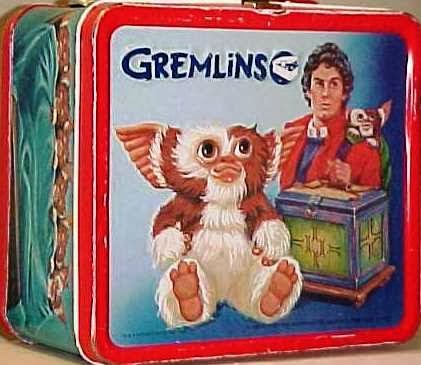 award-winning creator of the web series Abnormal Fixation (2024), the audio drama Enter the House Between (2023) and author of 35 books including Horror Films FAQ (2013), Horror Films of the 1990s (2011), Horror Films of the 1980s (2007), TV Year (2007), The Rock and Roll Film Encyclopedia (2007), Mercy in Her Eyes: The Films of Mira Nair (2006),, Best in Show: The Films of Christopher Guest and Company (2004), The Unseen Force: The Films of Sam Raimi (2004), An Askew View: The Films of Kevin Smith (2002), The Encyclopedia of Superheroes on Film & Television (2004), Exploring Space:1999 (1997), An Analytical Guide to TV's Battlestar Galactica (1998), Terror Television (2001), Space:1999 - The Forsaken (2003) and Horror Films of the 1970s (2002).
Board Game of the Week: Gremlins (1984)

 award-winning creator of the web series Abnormal Fixation (2024), the audio drama Enter the House Between (2023) and author of 35 books including Horror Films FAQ (2013), Horror Films of the 1990s (2011), Horror Films of the 1980s (2007), TV Year (2007), The Rock and Roll Film Encyclopedia (2007), Mercy in Her Eyes: The Films of Mira Nair (2006),, Best in Show: The Films of Christopher Guest and Company (2004), The Unseen Force: The Films of Sam Raimi (2004), An Askew View: The Films of Kevin Smith (2002), The Encyclopedia of Superheroes on Film & Television (2004), Exploring Space:1999 (1997), An Analytical Guide to TV's Battlestar Galactica (1998), Terror Television (2001), Space:1999 - The Forsaken (2003) and Horror Films of the 1970s (2002).
Wednesday, January 30, 2013
Memory Bank: Where's the Beef? (January 1984)

Twenty-nine
years ago this month, eighty-one year old Clara Peller (1902 – 1987) first uttered
the immortal words “where’s the beef?”
for a Wendy’s Restaurant TV commercial, and instantly emerged a pop culture
sensation.
In
the advertisement titled “Fluffy Bun,” which first aired January 10, 1984, the
diminutive Peller and two other prim-and-proper old ladies approached a fast
food restaurant counter and expressed disappointment with the proffered burger.
It was all hat and no cattle, so-to-speak.
It was all hat and no cattle, so-to-speak.
The zinger, “Where’s the Beef?” proved so popular that it became the focal point not
only of the restaurant’s ad campaign for at least two years, but also made Peller a 1980s celebrity.
She appeared (un-credited) on Saturday Night Live, as well as in the 1985 horror movie The Stuff (in a fictional commercial, naturally) and participated with Coyote McCloud on his single “Where’s the Beef?”
Her slogan, meanwhile, appeared on T-shirts, Frisbees, and bumper stickers. "Where's the beef" became ubiquitous even in regular, daily life. Teachers would ask it regarding a book report in class, and on and on.

In
the 1984 presidential election, “where’s the beef” also played an unlikely role. Confronting opponent Gary Hart in a primary debate, democratic candidate Walter
Mondale quipped: “When I hear your new ideas, I’m reminded of that ad: where’s
the beef?”
Clara Peller passed away in 1987, but Wendy’s revived a variation of the slogan in 2011. It just isn't the same without that little old lady. Perhaps this is proof that you just can't go home again, or even that zippy TV catchphrases are best uttered by gravelly-voiced old women in pearls...
award-winning creator of the web series Abnormal Fixation (2024), the audio drama Enter the House Between (2023) and author of 35 books including Horror Films FAQ (2013), Horror Films of the 1990s (2011), Horror Films of the 1980s (2007), TV Year (2007), The Rock and Roll Film Encyclopedia (2007), Mercy in Her Eyes: The Films of Mira Nair (2006),, Best in Show: The Films of Christopher Guest and Company (2004), The Unseen Force: The Films of Sam Raimi (2004), An Askew View: The Films of Kevin Smith (2002), The Encyclopedia of Superheroes on Film & Television (2004), Exploring Space:1999 (1997), An Analytical Guide to TV's Battlestar Galactica (1998), Terror Television (2001), Space:1999 - The Forsaken (2003) and Horror Films of the 1970s (2002).
Subscribe to:
Posts (Atom)
30 Years Ago: Chris Carter's Millennium (October 25, 1996)
Frank Black (Lance Henriksen), his wife, Catherine (Meghan Gallagher) and their daughter, Jordan (Brittany Tiplady) move into a beautiful ye...

-
 Director Ridley Scott has already given the science fiction cinema two of its greatest and most cherished films: Alien (1979) and Blade...
-
 "Other Worlds lie outside our seeing; beyond the beyond; on the edge of within. The Great Pyramids: erected by the Ancient Ones as a ba...