Showing posts with label 1980. Show all posts

Thursday, December 15, 2016

The Films of 1980: Death Watch


An obscure science fiction film that was lost, and then found after a 2012 DVD re-release, Bertrand Tavernier’s Death Watch (1980) is a beautifully-made, thoughtful motion picture about a (future?) age in which everyone gets fifteen minutes of fame…whether they want it or not.

Shot in and around Glasgow, Death Watch is based on the 1973 novel The Unsleeping Eye (or The Continuous Katherine Mortenhoe) by David Compton. The premise involves a near-future world in which new surgical techniques make it unlikely that anyone will die of disease or illness. 

Because of this fact, the public has largely become “distanced” from death and mortality. 

Accordingly, NTV network Vincent Ferrihan launches a reality TV series called “Death Watch” wherein people can tune in to see a real person succumb to illness and death over weeks, if necessary. 

Vincent views the program as a kind of public service to keep people anchored to the concept of death.

Others see the program as a moral obscenity, and an invasion of privacy.

As this premise clearly indicates, Death Watch concerns the boundary between private and public lives, and raises the possibility that TV is a kind of bread-and-circus distraction from other, more important issues.  

Although the movie doesn’t delve deeply into the future society’s underpinnings, it seems a remarkably unhappy place, especially since death is all-but conquered.  

What, then, accounts for the desire to invade the privacy of another?  The movie doesn't provide many specific answers, except perhaps, those to be found in the vicissitudes of human nature.  In the end, we may simply all be....voyeurs.

As you can guess, Death Watch's theme is not irrelevant in today's world of CCTV, and the so-called "surveillance state."  

Elegiac and intimate, Death Watch plays out in restrained, human fashion, eschewing special effects and even caustic satire to dramatize its emotionally affecting tale of two characters who come to know each other under a difficult, even impossible situation.


“This lady won’t die easily for us, Vince.”

Death Watch focuses on one woman -- the lively and passionate Katherine Mortenhoe (Romy Schneider) -- who is informed by her doctor that she is dying, and then, under pressure from the press and paparazzi, is basically forced to participate in a reality-TV show about the situation.

Katherine refuses to play along (even after signing a contract) and flees the city, but Death Watch's producer, Vincent (Harry Dean Stanton), has one final trick up his sleeve.

He has surgically-implanted highly-advanced cameras inside the eyes of an experienced camera-man, Roddy (Harvey Keitel), and, then secretly arranged for him to accompany Katherine on a journey to visit her ex-husband (Max Von Sydow). 

Katherine is unaware that that her new “friend” is filming her every moment, her every reaction.  As she weakens, she comes to cherish Roddy's fellowship, never suspecting his terrible betrayal. However, Roddy finds it more and more difficult to continue, and to live with what he is doing.

Meanwhile, the nation watches the reality-show in avid interest, hanging on every moment of Katherine's decline.


“Not everything has to mean something.”

First and foremost, Death Watch concerns the dangers of technology. If people can have cameras implanted in their eyes -- without your knowledge -- how can you ever know that they are who they say they are? Or that they are in your life for the reasons they claim?  

What if they are just recording a reality show, taking your most secret and treasured moments away with them?

Katherine is betrayed in the film by society and by Vincent too, but most importantly by Roddy. He pretends to be her friend, and yet exploits her terribly. He transmits her every move and every thought back to NTV for editing, without her permission, without her knowledge of his actions.  

Creepily, Roddy is betrayed by the same forces as well.  

At one point in the film he visits his ex-wife, and attempts to have sex with her. Back at the TV studio, Vince doesn’t turn off the feed, however, noting that he wants to wait and see what happens.  

Roddy and his wife end up not sleeping together, but that’s not the point.  The camera is always on -- the feed is always live -- and nobody is going to turn down the experience to vicariously experience someone else’s life…or death.

We are all voyeurs, the film tells us.  And worse, many of us even feel that we have been given permission -- by network programming, YouTube, or other visual presentations -- to be voyeurs.


Without being obvious or sensational, Death Watch also reveals how reality TV can obsess and consume a culture. Bill-boards for the fictional reality show are plastered everywhere, even on city buses, in the film. And before Katherine has even signed the papers to appear on the series, she is confronted with her face on an advertisement.  

Basically, at the most private time of her life -- having just learned of a terminal illness -- Katherine is used without permission to sell a product.

The press soon gathers at her house, and chases after Katherine as if she were Hillary Clinton visiting Chipotle. 


The one thing Katherine desires -- time to think, process, and be alone -- she is explicitly denied. 

But as bad as the press is, we have come to expect its vulture-like behavior. 

By contrast, Roddy’s behavior is a whole dimension worse.  Katherine lets down her guard for him, and he exploits her, over and over, minute-by-minute, day-by-day.  At one point in the film he suffers an extreme punishment for his behavior, and yet we still feel sorry for him. Although he keeps filming, he clearly also grapples with what he is doing.

Indeed, Death Watch is even-handed in approach because it doesn’t make anyone (save for Vince) into a real villain. At one point, Katherine asks the question of Roddy: “which is worse, being disappointed by somebody, or disappointing somebody else?”  

The film’s answer, as is clear from Roddy’s journey, is disappointing someone else. 

In time, Katherine seems to forgive Roddy, but he has a harder time forgiving himself.  He used Katherine, and he was used himself. The worst thing Katherine did was trust another human being.  She has nothing to feel regret over, except the loss of her privacy. Roddy, by comparsion has stolen something that he can never give back.  And the price is his ability to do what he loves, to be a camera-man.

Death Watch has a final surprise in its third act regarding NTV and Katherine’s illness, and it is the thing that exposes, finally, how reality-TV programming plays with people’s lives for no other reason than to entertain viewers.  It’s the final insult to Katherine's journey, and it destroys more than one life.  

The point is that in this future world where death no longer matters, the sanctity of life no longer really matters, either.  A person’s privacy is just a thing that can be manipulated and toyed with.

Although prophetic, Death Watch is not nearly caustic enough in its depiction of reality-TV as we know it in the 21st century. Today, I suggest it would be very difficult to find someone like Katherine, someone who turns down a chance of fame, even if it coincides with her own death.  

We have seen from more than a decade of the form -- and examples like Temptation Island, Joe Millionaire, and Here Comes Honey Boo-Boo -- that there is always someone willing to go on camera and look a fool, a narcissist, or a monster.  The fame is apparently worth it, though in Death Watch, Katherine feels quite the opposite. She wants to provide for her second husband, have a chance to say goodbye to her first husband, and die in peace.

How can society deny her that?  

Well, if society can keep people alive through technology, perhaps it believes it has a right to watch people die through technology as well.  One hand giveth; the other taketh away. 

This conceit certainly makes for an interesting side-by-side comparison. Katherine believes she is living the last, precious days of her life.  Roddy thinks, at the same time, that he is crafting great television. He telephones Vincent at one point and tells him how long to hold one shot, and when and where to cut another.  

For him -- at least at first -- it’s all a job. Only later, upon spending time with Katherine, does Roddy start to see that there is more than “entertainment” in her story.

Death Watch gets right the ubiquitous nature of TV advertisements and reality TV, and another early scene seems to forecast writing in the Internet Age. Katherine is a writer of “computer books.”  

This means that she talks to a computer on her TV (named Harriet) and provides a formula for a romance novels. Harriet determines where that formula would sell best (regionally-speaking), and then writes the book for her human masters.  But Harriet is just plugging in templates and formulas.  

If you look at some YA books (and the similarities, say, between the Roswell High books and the Twilight books), you start to understand, perhaps, how authors rely on book-buying data and stats to tell a story pre-sold to be a success. It's not about creativity. It's about shuffling and re-shuffling the same deck.


Although Death Watch is saddled with an abrupt and unsatisfying ending, the film remains a beautifully-shot effort.  As a healthy viewer, you may question Katherine’s final choice, but one must respect her rage-against-the-machine solution to her predicament.  

Her life -- and her death too -- is finally her own, and to the end, she is unwilling to let society take it.  

Rod’s journey is darker, because he has “disappointed” someone else, and he will likely spend the rest of his days trying to make sense of what he did, wh id it, and if he can ever make himself right, and whole again.

Science fiction film fans should go into a screening of Death Watch knowing exactly what to expect. This is a quiet, intimate film about morality in the age of technology. There are no special effects or action scenes to galvanize the attention, or to add pace. The trade-off, of course, is the introduction of a great, memorable character -- Katherine Mortenhoe -- and the director's meditation on the way society tries to package our most intimate moments for mass consumption.

The problem -- as Harriet the Computer might observe -- is that only 37% of the audience would find what happens to Katherine on Death Watch “obscene.”

Movie Trailer: Death Watch (1980)

Friday, September 30, 2016

Beyond Westworld: "The Takeover"


In "The Takeover," Dr. Quaid (James Wainright) tests a new chip that can be installed in the human brain, and make people obey his orders.

He tests this new device on a Los Angeles police officer, Captain Nicholson (Monte Markham), and uses his new servant to get close to California's governor, Eric Harper (Robert Alda), who is up for re-election and may one day run for President of the United States.

John Moore (Jim McMullan) and Pam Williams (Connie Sellecca) investigate, and most stop the assassination of Harper at a televised debate in Los Angeles.


The final episode of Beyond Westworld (1980) attempts to change things up a bit, at least before walking that change back. 

This week, a robot neuro-surgeon, played by Star Trek's (1966-1969) George Takei, installs a tiny chip into a human being, making that human a kind of brainwashed agent for Quaid.  Nicholson has no awareness that he is being controlled, or acting strangely, right up until the last minute.

This plot device opens up a lot of possibilities. 

Now, John and Pam have to worry not merely about robots, but humans who have seen their will dominated by Quaid because of the implant  Obviously, there are much more overt moral questions involved in killing a human being, than deactivating a robot.

But by the end of the episode, Quaid decides the tiny implant is a failure and to abandon it, thus bringing viewers right back to square one, and the perennial concept of evil lookalike robots.

I do confess at being a bit baffled by this episode's conclusion.


In the episode's finale, Governor Harper is shot in the head (on live TV, at the debate...) and is revealed to be a robot. 

So, Quaid sent a controlled human (Nicholson), to kill one of his own robots, one who was already the governor of California, and primed to become a presidential candidate?

All to test the implant?

That seems...ridiculous. I would have kept the governor in place, and let him become President, still acting as my agent. 

Still, it is interesting to note that when this episode was made, another former governor of California was also making a run for the highest office of the land: Ronald Reagan.  I wonder if he was a robot too...

Going further down the rabbit hole of this episode's narrative, what does it mean to the citizenry of California, and the United States, to see a sitting governor shot on TV and outed as a robot, for all to see?  

Does all the citizenry know about the Delos robots and their escape form Westworld?  It seems like, if not, this would be a huge media incident.

California Governor shot on stage! Revealed to be Delos Robot! More at 11:00!

But again, Beyond Westworld can't be bothered to explore deeply a single interesting concept.  This episode, instead, is an excuse to play cops and robbers.  Moore goes undercover (again), as a police officer.

Despite all the flaws in "Takeover," I did really get a kick out of the cast. This episode features Monte Markham, George Takei, Hari Rhodes, Robert Alda and Martin Kove. It's a veritable "who's who" of second-string 1970s TV actors.

As noted above, "Takeover" is the final episode of Beyond Westworld, and it showcases, perfectly, why the series failed to catch on. The narratives were monumentally uninteresting, and really good story ideas and concepts were poorly handled, or ignored all together.  

We can only hope the new Westworld (2016) series is a big improvement.

Thursday, September 29, 2016

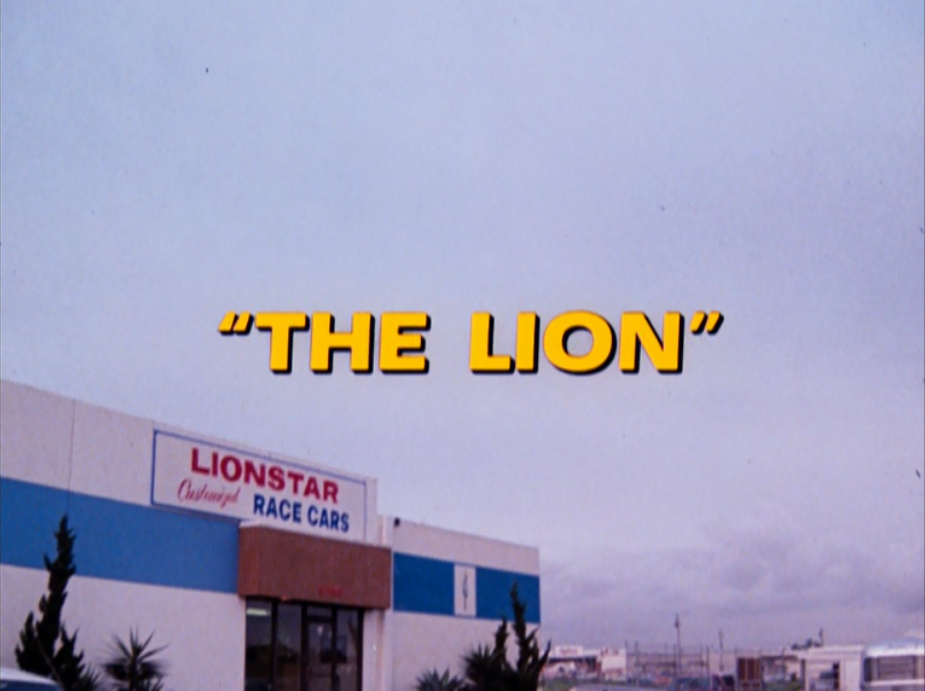
Beyond Westworld: "The Lion" (Unaired)


In "The Lion," John Moore (Jim McMullan) is rooting for his friends at Lionstar Motors to succeed in an important test drive of an experimental new car with a "gasahol" engine  The so-called Lion could thus revolutionize travel. 

Unfortunately, there is a terrible (apparent) accident during the test drive, and driver Corey Burns (Michael Cole) is injured, and left paralyzed, much to the chagrin of his future wife and the heir to the Lionstar Company (Christine Belford).


Enraged by the injuries to his friends, John investigates and learns that Quaid's (James Wainright) robots are somehow involved at Lionstar Motors.  

Apparently, Quaid controls several oil rich countries in the Middle East, and now wants to control a fuel-efficient car too.

When Corey gets back in the car to drive the Lion, the robots plan to finish him off. 

But John Moore drives defensively to save his friend...


The first of the two unaired Beyond Westworld is just as terrible as one might expect, given the quality of the episodes that were broadcast in 1980. 

Once more we have an utterly ridiculous premise that finds Quaid thinking small time instead of big time, attempting to influence the outcome of a test car race.  Again, this is a man who can build exact robot duplicates of heads of state, airline pilots, celebrities, and so forth.  Imagine the havoc he could wreak on a global stage.

Instead, this is a repeat of  "My Brother's Keeper," wherein he tries to control a company or corporation.

The episode reaches ridiculous eights after one character reveals in a briefing that Quaid is already in control of several small countries in the Middle East, controlling their oil.  Now that sounds like a big deal to me; a much bigger deal than a family-owned car company and its struggles with a special fuel efficient engine. I would have loved to seen an episode involving that premise.

And indeed, it seems like John and Pam (Connie Sellecca) might want to devote their time to helping those foreign countries fight back against Quaid, rather than worrying about Lionstar's attempt to bring the experimental engine market.

Another ridiculous moment comes later. We watch as Quaid performs surgery on a robot. He installs the robot's programming on a mini-cassette.  So yes, the Westworld robots all run on 1980s mini cassette tapes. Pretty amazing.

Or pretty analog.

Fans of cult-TV will be intrigued to note that Russell Johnson -- the Professor on Gilligan's Island (1964-1967) plays Quaid's new flunkie in "The Lion, replacing the character played by Severn Darden in early installments. Also the great Michael Pataki is here, in a nothing role.


Finally, I don't like being one-sided in my reviews, so I should add that "The Lion" features one very entertaining scene.  

Specifically, Quaid wishes to meet with John, and arranges a rendezvous in a trailer.  There, he implores John to join him.  "Imagine what we could accomplish together," he implores.

John refuses to team with him, and Quaid -- actually in a different location -- detonates an explosive at John's location. That means that he isn't really talking to Quaide at all, but a robot duplicate.

The series really, really needed more surprises like this one. 

Next up, tomorrow, the final episode of Beyond Westworld: "The Takeover."

Saturday, May 14, 2016

Saturday Morning Cult-TV Blogging: Blackstar: "The Mermaid of the Serpent Sea" (October 3, 1981)


In "The Mermaid of the Serpent Sea," the Trobbits gather together a shipment of "power fruits" and "knowledge nuts" for the Mermanites of the Red Crown Reef.  

They sail to the reef, but find that the gentle water dwellers have been attacked by a phantom ship and minion of the Overlord called Captain Typhod.

Typhod wants the shipment of fruits and nuts for himself and his master, and transforms the Mermanites into savage sea serpents. 

Fortunately, Blackstar, Klone and Mara come to the rescue...


In this episode of Filmation's Blackstar (1981), audiences meet Typhod, another colorful minion of The Overlord. He's a nasty sea captain or pirate with a powerful ship at his command. The phantom ship can cloak during battle, and also fire teleporting beams at prey.  In other words, the ship's mast-had (shaped like a dragon), opens its mouth, and a beam comes out that captures victims, like the Mermanites.


Blackstar goes up against that beam in "The Mermaid of the Serpent Sea," and I don't know if I've mentioned it before in these reviews, but his star-sword makes a bionic sound effect when in use. 

Specifically, Blackstar re-uses the familiar sound effect from The Six Million Dollar Man (1973-1978).


"The Mermaid of the Serpent Sea" also begins to explain why the Overlord places such a premium on controlling the Trobbits and their tree.  Their tree produces "power fruit" -- which enhances physical strength and power, and the humorously named "knowledge nuts," which augment intelligence.  So the tree is not just a home to the Trobbits, it is a source of power and energy.


This is an enjoyable episode of Blackstar; one which develops the world and inhabitants sufficiently. For example, there is a nice flashback in the episode showing the crew of the golden galley defeating Captain Typhod in the past, and defending the Mermanites. 

About the only negative quality I can tag about this episode involves Klone.  He has a prominent role, but the writers do nothing to develop his character.  Is this shapeshifter a one-of-a-kind like Deep Space Nine's Odo?  

From a race that lives on Sagar?  

Why is he allied with Blackstar and Mara?  


The character, while useful for his changeling abilities, has no depth at this point. We know nothing of his people, his personality, or even his governing philosophy (like Vulcans and logic, for example).  

Next week: "The Quest."

Tuesday, May 05, 2015

The Films of 1980: Death Watch


An obscure science fiction film that was lost, and then found after a 2012 DVD re-release, Bertrand Tavernier’s Death Watch (1980) is a beautifully-made, thoughtful motion picture about a (future?) age in which everyone gets fifteen minutes of fame…whether they want it or not.

Shot in and around Glasgow, Death Watch is based on the 1973 novel The Unsleeping Eye (or The Continuous Katherine Mortenhoe) by David Compton. The premise involves a near-future world in which new surgical techniques make it unlikely that anyone will die of disease or illness. 

Because of this fact, the public has largely become “distanced” from death and mortality. 

Accordingly, NTV network Vincent Ferrihan launches a reality TV series called “Death Watch” wherein people can tune in to see a real person succumb to illness and death over weeks, if necessary. 

Vincent views the program as a kind of public service to keep people anchored to the concept of death.

Others see the program as a moral obscenity, and an invasion of privacy.

As this premise clearly indicates, Death Watch concerns the boundary between private and public lives, and raises the possibility that TV is a kind of bread-and-circus distraction from other, more important issues.  

Although the movie doesn’t delve deeply into the future society’s underpinnings, it seems a remarkably unhappy place, especially since death is all-but conquered.  

What, then, accounts for the desire to invade the privacy of another?  The movie doesn't provide many specific answers, except perhaps, those to be found in the vicissitudes of human nature.  In the end, we may simply all be....voyeurs.

As you can guess, Death Watch's theme is not irrelevant in today's world of CCTV, and the so-called "surveillance state."  

Elegiac and intimate, Death Watch plays out in restrained, human fashion, eschewing special effects and even caustic satire to dramatize its emotionally affecting tale of two characters who come to know each other under a difficult, even impossible situation.


“This lady won’t die easily for us, Vince.”

Death Watch focuses on one woman -- the lively and passionate Katherine Mortenhoe (Romy Schneider) -- who is informed by her doctor that she is dying, and then, under pressure from the press and paparazzi, is basically forced to participate in a reality-TV show about the situation.

Katherine refuses to play along (even after signing a contract) and flees the city, but Death Watch's producer, Vincent (Harry Dean Stanton), has one final trick up his sleeve.

He has surgically-implanted highly-advanced cameras inside the eyes of an experienced camera-man, Roddy (Harvey Keitel), and, then secretly arranged for him to accompany Katherine on a journey to visit her ex-husband (Max Von Sydow). 

Katherine is unaware that that her new “friend” is filming her every moment, her every reaction.  As she weakens, she comes to cherish Roddy's fellowship, never suspecting his terrible betrayal. However, Roddy finds it more and more difficult to continue, and to live with what he is doing.

Meanwhile, the nation watches the reality-show in avid interest, hanging on every moment of Katherine's decline.


“Not everything has to mean something.”

First and foremost, Death Watch concerns the dangers of technology. If people can have cameras implanted in their eyes -- without your knowledge -- how can you ever know that they are who they say they are? Or that they are in your life for the reasons they claim?  

What if they are just recording a reality show, taking your most secret and treasured moments away with them?

Katherine is betrayed in the film by society and by Vincent too, but most importantly by Roddy. He pretends to be her friend, and yet exploits her terribly. He transmits her every move and every thought back to NTV for editing, without her permission, without her knowledge of his actions.  

Creepily, Roddy is betrayed by the same forces as well.  

At one point in the film he visits his ex-wife, and attempts to have sex with her. Back at the TV studio, Vince doesn’t turn off the feed, however, noting that he wants to wait and see what happens.  

Roddy and his wife end up not sleeping together, but that’s not the point.  The camera is always on -- the feed is always live -- and nobody is going to turn down the experience to vicariously experience someone else’s life…or death.

We are all voyeurs, the film tells us.  And worse, many of us even feel that we have been given permission -- by network programming, YouTube, or other visual presentations -- to be voyeurs.


Without being obvious or sensational, Death Watch also reveals how reality TV can obsess and consume a culture. Bill-boards for the fictional reality show are plastered everywhere, even on city buses, in the film. And before Katherine has even signed the papers to appear on the series, she is confronted with her face on an advertisement.  

Basically, at the most private time of her life -- having just learned of a terminal illness -- Katherine is used without permission to sell a product.

The press soon gathers at her house, and chases after Katherine as if she were Hillary Clinton visiting Chipotle. 


The one thing Katherine desires -- time to think, process, and be alone -- she is explicitly denied. 

But as bad as the press is, we have come to expect its vulture-like behavior. 

By contrast, Roddy’s behavior is a whole dimension worse.  Katherine lets down her guard for him, and he exploits her, over and over, minute-by-minute, day-by-day.  At one point in the film he suffers an extreme punishment for his behavior, and yet we still feel sorry for him. Although he keeps filming, he clearly also grapples with what he is doing.

Indeed, Death Watch is even-handed in approach because it doesn’t make anyone (save for Vince) into a real villain. At one point, Katherine asks the question of Roddy: “which is worse, being disappointed by somebody, or disappointing somebody else?”  

The film’s answer, as is clear from Roddy’s journey, is disappointing someone else. 

In time, Katherine seems to forgive Roddy, but he has a harder time forgiving himself.  He used Katherine, and he was used himself. The worst thing Katherine did was trust another human being.  She has nothing to feel regret over, except the loss of her privacy. Roddy, by comparsion has stolen something that he can never give back.  And the price is his ability to do what he loves, to be a camera-man.

Death Watch has a final surprise in its third act regarding NTV and Katherine’s illness, and it is the thing that exposes, finally, how reality-TV programming plays with people’s lives for no other reason than to entertain viewers.  It’s the final insult to Katherine's journey, and it destroys more than one life.  

The point is that in this future world where death no longer matters, the sanctity of life no longer really matters, either.  A person’s privacy is just a thing that can be manipulated and toyed with.

Although prophetic, Death Watch is not nearly caustic enough in its depiction of reality-TV as we know it in the 21st century. Today, I suggest it would be very difficult to find someone like Katherine, someone who turns down a chance of fame, even if it coincides with her own death.  

We have seen from more than a decade of the form -- and examples like Temptation Island, Joe Millionaire, and Here Comes Honey Boo-Boo -- that there is always someone willing to go on camera and look a fool, a narcissist, or a monster.  The fame is apparently worth it, though in Death Watch, Katherine feels quite the opposite. She wants to provide for her second husband, have a chance to say goodbye to her first husband, and die in peace.

How can society deny her that?  

Well, if society can keep people alive through technology, perhaps it believes it has a right to watch people die through technology as well.  One hand giveth; the other taketh away. 

This conceit certainly makes for an interesting side-by-side comparison. Katherine believes she is living the last, precious days of her life.  Roddy thinks, at the same time, that he is crafting great television. He telephones Vincent at one point and tells him how long to hold one shot, and when and where to cut another.  

For him -- at least at first -- it’s all a job. Only later, upon spending time with Katherine, does Roddy start to see that there is more than “entertainment” in her story.

Death Watch gets right the ubiquitous nature of TV advertisements and reality TV, and another early scene seems to forecast writing in the Internet Age. Katherine is a writer of “computer books.”  

This means that she talks to a computer on her TV (named Harriet) and provides a formula for a romance novels. Harriet determines where that formula would sell best (regionally-speaking), and then writes the book for her human masters.  But Harriet is just plugging in templates and formulas.  

If you look at some YA books (and the similarities, say, between the Roswell High books and the Twilight books), you start to understand, perhaps, how authors rely on book-buying data and stats to tell a story pre-sold to be a success. It's not about creativity. It's about shuffling and re-shuffling the same deck.


Although Death Watch is saddled with an abrupt and unsatisfying ending, the film remains a beautifully-shot effort.  As a healthy viewer, you may question Katherine’s final choice, but one must respect her rage-against-the-machine solution to her predicament.  

Her life -- and her death too -- is finally her own, and to the end, she is unwilling to let society take it.  

Rod’s journey is darker, because he has “disappointed” someone else, and he will likely spend the rest of his days trying to make sense of what he did, wh id it, and if he can ever make himself right, and whole again.

Science fiction film fans should go into a screening of Death Watch knowing exactly what to expect. This is a quiet, intimate film about morality in the age of technology. There are no special effects or action scenes to galvanize the attention, or to add pace. The trade-off, of course, is the introduction of a great, memorable character -- Katherine Mortenhoe -- and the director's meditation on the way society tries to package our most intimate moments for mass consumption.

The problem -- as Harriet the Computer might observe -- is that only 37% of the audience would find what happens to Katherine on Death Watch “obscene.”

Movie Trailer: Death Watch (1980)

Friday, December 26, 2014

From the Archive: Saturn 3 (1980)


Stanley Donen's Saturn 3 is a half-crazy, occasionally-inspired mating of Frankenstein and 2001: A Space Odyssey...one that plays out between three humans and a giant robot against a high-tech, futuristic backdrop.

Taken on those simple terms, the film is enjoyable, literary, occasionally exciting, and consistently watchable, despite all the bad reviews you may recall from its theatrical release.


Saturn 3 depicts the the story of the psychotic Captain Benson (Harvey Keitel), a scientist who travels to the Experimental Food Research Station on Saturn 3 during a twenty-two day eclipse and communications black-out called "Shadow Lock."

There, the good captain provides "assistance" to two scientists working to alleviate a famine on our overpopulated, polluted planet Earth. Major Adam (Kirk Douglas) and his young romantic partner, the beautiful and innocent Alex (Fawcett) are wary, however, of Benson's form of help: a colossal humanoid robot named Hector, the first of the "Demi God" series. Hector boasts human intelligence (not to mention human brain tissue...) and can even pattern his personality on the direct input he receives from human beings. Since Benson is psychotic, this means that Hector is also psychotic. In short order, the robot begins to develop the same lustful feelings for lovely Alex that Benson has rudely begun to demonstrate...

Named after the Trojan Prince beaten by Achilles outside the walls of Troy, the robot Hector represents Saturn 3's embodiment of the classic Frankenstein Monster, a lumbering abomination given life by a Prometheus-style scientist, here essayed by the over-dubbed (but still creepy...) Harvey Keitel.


Hector has been created, it seems, to glorify Benson; to prove to skeptical (and off-screen) co-workers that he is a genius. As is the case in Victor Frankenstein's tragedy, there's a high degree of vanity involved in the genesis of this new life. As Victor sought to "bestow animation" upon "lifeless matter," so does Benson seek to introduce intelligence and even "human learning" to cold machinery. And again like Victor, Benson pioneers a "new way," or new science to achieve his aims. Though he is not technically breaching "the awful boundary between life and death" that Shelley artfully described, Benson is breaching the barrier between man and machine.

Hector's biology also merits comparison to the Frankenstein Monster. This Demi-God class robot is a collection of metallic spare parts and pure brain tissue grown in a lab, not organic corpse parts given life.But much like the Frankenstein Monster, Hector boasts the interesting (and unusual...) combination of a fully formed (or adult) physicality with a naive, almost child-like sense of intelligence. And, as the Frankenstein Monster quickly determines, it is "miserably alone," and seeks companionship. 

Interestingly, Hector seeks companionship too...sexual companionship with Alex.

In both stories, the "child" (the monster) turns on the Bad Father, the Creator. In the case of Frankenstein, the rejected/unwanted child draws out the process of killing the parent ("I will work at your destruction, nor finish until I desolate your heart so that you shall curse the hour of your birth...") In Saturn 3, Hector quickly kills Benson and turns his attention towards dominating Alex, a subtle acknowledgment, perhaps of a more sexually-liberated culture in the 1980s.

Going back to 1968's 2001: A Space Odyssey, one might also be temped to gaze upon Hector as HAL's child: a computer with a menacing, ambulatory physicality to go along with the parent's cold, calculating brain. 

In the Kubrick film, however, one never knows why HAL goes insane and murders the crew of the Discovery.The reasons for Hector's instability are plain in Saturn 3, and they reflect the Frankenstein story again. Benson, like Victor, is a bad father. One who, through his own intrinsic psychological flaws, overreached and was not able to handle the role of parent. And in this case, the son has inherited the father's psychosis.

Saturn 3 also fascinates in the manner it re-purposes the Biblical story of Adam and Eve. In the Old Testament, God created Adam and Eve and provided them a glorious Paradise in Eden. This couple wanted for nothing until a serpent invaded the Garden and tantalized Eve with the apple from the Tree of Knowledge.

This simple story is re-cast in explicitly technological (and secular, scientific...) terms in Saturn 3 with a character named, of course, Adam dwelling in isolated bliss with his lover, Alex. Their facility is an Experimental Food Research Station featuring an abundance of greenery, a hydroponics bay that could easily be interpreted as...a "garden."

The film also defines the lives of Adam and Alex as ones of unending bliss. Their facility is like a health spa. They exercise regularly, jogging the curving, empty corridors. They live in love and peace, sheltered away from the modern, polluted world. Alex is a total innocent, never having visited Earth and knowing nothing of its customs.


Into this paradise arrives the Serpent (or Serpents, in this case) -- Hector and Benson. It is not the apple that Benson offers Alex, but lustful sex and recreational drugs, the latter in the form of psychedelic "Blue Dreamers." He awakes in Alex, at the very least, the realization that she has lived a sheltered life. He spawns in Alex a desire to see Earth, which Adam also encourages.

In the coda of Saturn 3, following Adam's sacrifice to defeat Hector, Alex leaves the sealed-up paradise, boards a spaceship and heads for Earth. The Garden is left behind permamently. Alex has tasted the fruit of the tree of knowledge and now returns to the world of fallen man.

There's a nice, commendable simplicity to the narrative of Saturn 3. Against the plainly mythological and literary backdrops, there are but few characters and locations. The movie cleverly isolates its dramatis personae in a trap within a trap within a trap. They're in a hermetically sealed facility on an inhospitable planet during an eclipse. 

Thus -- again like their Biblical counterparts -- Adam and Alex are really in a sort of "bubble world." The outside world doesn't exist for them, and that means there is no chance of a rescue operation. The future of man (and machine...), it seems, is to be settled here, in this place, with just these few people and their values.

Hector also makes for a powerful, memorable villain. Although he apparently lacks human genitals, Hector has been (inadvertently) programmed with a physical lust for Alex, making him one of the screen's most memorably randy robots (though probably nobody can give Demon Seed's Proteus a real run for his money...). Hector is a murderous child, a sadist, and entirely malicious. At least with the Frankenstein Monster, you felt some sense of compassion. He was "malicious" because he was "miserable." Hector is somehow...colder.

The sets, special effects and costumes in Saturn 3 are all top-notch too, at least for 1980 vintage. And then, of course, there's the late Farrah Fawcett in a central performance: effortlessly exuding innocence and sexiness at the same time.As in her other roles, there was a winsome and fetching quality to Fawcett. Saturn 3 makes fine use of her naturalness, her seeming sin-lessness, even as it exploits her amazing good looks.


Perhaps the aspect of Saturn 3 that I enjoy most involves Adam's journey, however, not Alex's. 

Adam deeply fears contamination from the outside (from Earth). He has thus set up a utopia on Saturn 3, a perfect little existence. While Earth starves, he possesses plenty of food. While lust and casual sex dominate among Earthers far away, Adam has found a perfect, innocent mate who truly loves him. He has attained the goal of intimacy.

But when Hector and Benson arrive, they bring "the tree of knowledge" with them. On Earth, Adam would have feared being at the mercy of society, of the government, of his peers. Well, suddenly, in his perfect world, he is at the mercy of Hector, a psychotic who can control every aspect of his environment. Hector controls the air, the food supply, the temperature...everything. Adam is thus made slave to the very technology he has always feared and disdained, and that's a metaphor for the life he fled: one of regimented control where he was but a cog in the wheel. Perhaps that is the reason why Adam chooses to fight Hector to the death, because like Alex, he too has been ejected from paradise by the arrival of this interloper.


Saturn 3 even closes with a commendable message: that it is the capacity for self-sacrifice that ultimately separates a human soul from artificial intelligence. Hopefully, that's the message that Alex takes back to Earth and preaches. That mankind -- in his ability to put the welfare of those he loves before his own life -- can conquer the machines, overpopulation, lust and the other bugaboos that threaten to destroy a species in perpetual crisis.

With DNA culled from the Old Testament, the work of Mary Shelley and even Stanley Kubrick, Donen's somewhat silly Saturn 3 sure has a "great body." 

May I (respectfully...) suggest...you use it?

30 Years Ago: Chris Carter's Millennium (October 25, 1996)

Frank Black (Lance Henriksen), his wife, Catherine (Meghan Gallagher) and their daughter, Jordan (Brittany Tiplady) move into a beautiful ye...