Showing posts with label Ask JKM. Show all posts

Thursday, January 16, 2020

Ask JKM a Question: You (Season Two)


A reader, Chuck, writes:

"I know you have been busy and, frankly, I was not sure if you still have time for “Ask JKM a Question” feature on your blog (I know it has been a while). But my wife and I just finished binge-watching both seasons of the series You on Netflix and, for the first time in a long time, I felt inspired to send you a question because I was so curious as to what your thoughts on this series might be. 

And, if I am being honest, the main reason I thought of you is because season 2 of You reminded me so much of an old episode of The X-Files"Terms of Endearment." It seems like a weird comparison to make, but I guess everything in life can be distilled down to at least one X-Files episode if you try hard enough. 

Anyway, I enjoyed season 1 of You but felt that season 2 was far superior. This is due, in no small part, to the outstanding performances of actors Penn Badgley and Victoria Pedretti. If you ever do get a chance to watch the series (I know it can be time consuming with ten episodes each season), I would love to know your thoughts.

Thanks as Always (and Happy New Year!)"


Happy New Year to you, Chuck, and thank you for the question.  I am still happy to answer "Ask JKM" questions, and was happy to see yours.  Any readers who have questions are welcome to pose them, and I will respond as soon as I can.

I do apologize for having to step away from the blog more than I would have liked, in the last 12 months.  I am hoping to return to it on a fuller basis, when it is feasible.

Before I answer any questions about the series You, I should probably post a "SPOILER ALERT" here.  

Don't read on, fair readers, if you have not seen the entirety of the second season.


Still here?

Okay.

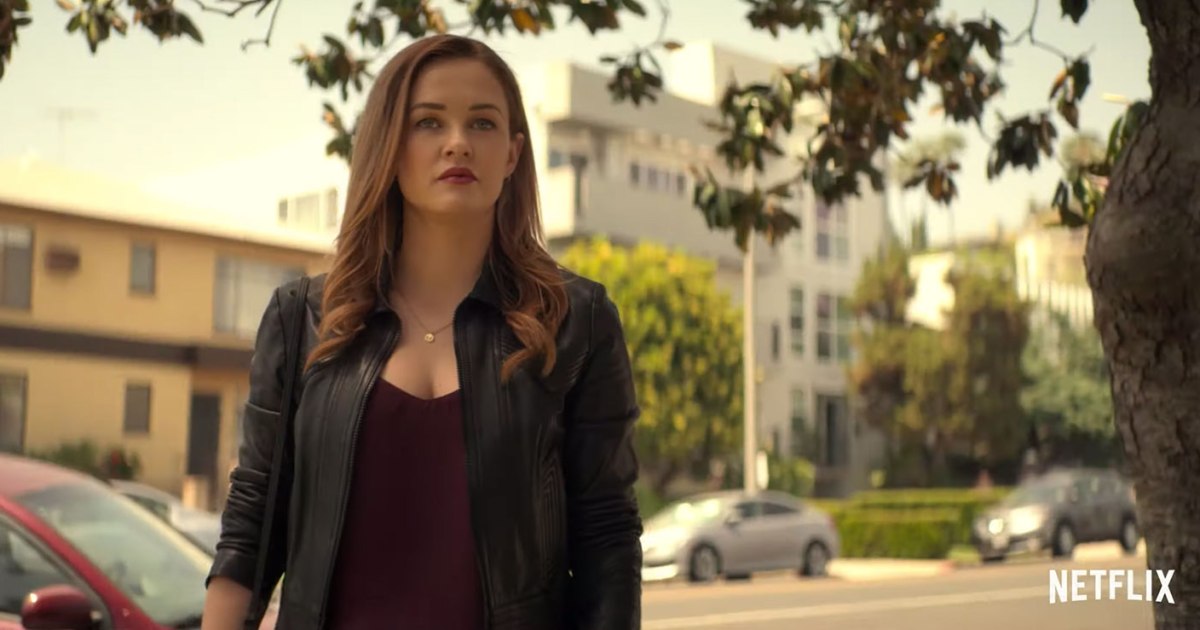
I have seen both seasons of You (2018 - ) and the answer is that I think that is a terrific, well-made series. The first season had a fantastic New York vibe, and I was worried, honestly, when I heard the second season would be moved to Los Angeles. I worried that everything that made the series so appealing to me would be gone in the second season, especially given the fate of Beck, a character I adored.

Boy, was I wrong. 

Instead of repeating the same formula, You absolutely re-invented itself via its Los Angeles location, and ended up as an edgy, wicked, and absolutely on-point commentary about Hollywood, Me Too, Woke Culture, Self-Help, dieting, and more. I agree with your assertion that Season Two was actually stronger than (the superb) season one, and I do credit that success to the writing and acting, but also to the location change that I had fretted about.  The switch to L.A. infused the series with new energy, and deepened the discourse in a way I wouldn't have imagined possible.  This year, Joe entered a city where everyone was as dangerous, obsessed, and, really, narcissistic as he was.  Compared to some of the people he encounters in Season Two, he seems like an amateur in terms of stalking and obsession, in fact.


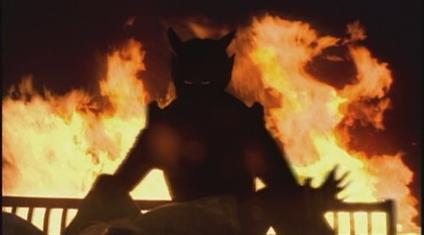
Your comparison to "Terms of Endearment," a sixth season episode of The X-Files (1993 - 2002) is apt, and very insightful.  For those who don't recall it, that episode stars Bruce Campbell as a husband and father-to-be named Wayne.  His secret, of course, is that he is, literally a monster.  Specifically, he's a demon.  But as the episode reveals at its climax, he is not the only monster in his relationship.   

The second season of You could be interpreted as a non-supernatural variation on the same story.  Joe/Will is a monster of the human variety, a psychopath, I would guess, and he enters a relationship with Love Quinn,  a woman whom he puts up on a pedestal as this pure icon of beauty, a kind of feminine ideal.  If you've watched the second season, you know that Joe gets quite the surprise, come end the of the ten episode catalog.  It is an ending that very much mirrors the idea of "Terms of Endearment."  So that connection is there, even if the supernatural element has been replaced with human psychology. 

What is so fascinating to me, about this paradigm, however, is what it tells us about Joe. In both seasons of the series, he falls in love, honestly, with the idea of love. He becomes infatuated and obsessed with a woman, and with his ideas of who she is.  When she is not who he believes she is, Joe becomes dangerous, even murderous.  The second season reckons with this idea, that men in general (and Joe in particular) fall in love with illusions that they have made themselves, not the actual woman who is the object of their affection.  Joe grows -- maybe -- at the end of the season, by realizing that he has not really "seen" Quinn, and instead of murdering her when he does really see her...he settles down with her.

I don't know if this notion of Joe and Quinn in domestic bliss will work in terms of Season 3, but again, I applaud the creators and writers on the series for ambitiously moving beyond a formula that would quickly become stagnant: Joe falls in love, acts obsessively and dangerously, commits murder, and has to run to a new city.  Rinse and repeat.  The last episode of Season Two promises that Season Three will be a whole new ball game, and that's good.

I think you are correct, too, Chuck, to credit Penn Badgley, who plays Joe/Will, with much of the series' success.  He is the anchor for everything, and is compelling, and strangely sympathetic. Much of the second season involves Joe going head to head with a nemesis, Candace. By all rights, our sympathy should be completely with her. He nearly killed her. And yet, our sympathies are not with her.  We want to see Joe succeed, despite the fact that he has committed horrible acts, and that she is right about everything (as even he comes to admit, near season's end).  This is kind of fucked up, and actually serves on a commentary regarding how women are viewed in our culture. 

Yet if we did not, at some level, love Joe, You simply would not work, and would also likely face accusations in the press that it is misogynist, and that it encourages sympathy with the devil.  But Penn Badgley's performances are sympathetic, even if the character he plays is an awful human being.  And we are capable of experiencing nuance in terms of our understanding of Joe. He is a monster, but he is also a human being. Season Two brings in flashbacks to his childhood, for instance, so we get a better understanding of how he became who he is.  

Another reason we love Joe: He sees everybody for all their bullshit.  What I like about Season Two is that his eyes are finally opened, indeed, to his own bullshit.  In Season Three, I assume we will learn whether Joe grows in that regards or backslides.

So You is absolutely a new favorite in my house, and it's going to be a long wait until the next batch of episodes in 2021.

Readers: You can e-mail me questions at Muirbusiness@yahoo.com, if you like!

Monday, July 24, 2017

Ask JKM a Question: Savage Cinema Fridays?


A reader named Gene writes:

"Savage Fridays was my most anticipated entry on your blog several years back. Is there any chance of you possibly bringing this back in the short-term? "


Gene, your question takes me back!

I believe it was 2012 -- already five years ago!! -- when I devoted Fridays to the Savage Cinema.  

As readers may remember, the savage horror films (not necessarily supernatural...just violent) are among my favorites. These films symbolize a recognition, it seems to me, of life's essential absurdity, randomness, and chaotic nature. I love their brutal qualities, and their equally blunt social commentary.

Some of the films I reviewed in the series include Straw Dogs (1971), Deliverance (1972), Last House on the Left (1972), I Spit on Your Grave (1978), and Irreversible (2002), as I recall.


There are still many savage cinema entries I haven't reviewed on the blog, including my all-time favorite: Martyrs (2008).  Another of this type that I enjoy, and need to review is Wolf Creek (2005).

As far as getting back to those films and reviving the blog series, I would love to have the opportunity!

In fact, I want to extend my thanks to everyone who has stuck with me and the blog this summer, as my posts have been less frequent.  

I am teaching two classes all summer (Intro to Film and Public Speaking), and when not teaching, I have been with my son, who is off from school for the summer. He is ten, and we have been gaming, playing with Legos, and having other adventures together. Most of his friends are away at camps or on vacation for the summer, so we spend a lot of (wonderful) time together.

So it has been more and more difficult to find time to blog. It has been a real challenge. I still haven't gotten to my review of War for the Planet of the Apes!  

However, I am anticipating and planning a re-birth of and re-commitment to blogging once I am back at school full time, and Joel is also back at school full time. That's mid-to-late August.  So if you can hang around till then, I can plan to revive Savage Fridays, and start with Martyrs and Wolf Creek.

Thank you for asking the question!

Don't forget to ask me your questions at Muirbusiness@yahoo.com

Monday, July 06, 2015

Ask JKM a Question: Movie Composers?


A regular reader, Jason, writes:

“The passing of James Horner finally spurred me to suggest another question for you: who do you think is the greatest composer of film music?  

Whom do you like best?  

Who are the up-and-comers you think we need to be paying attention to?”

Jason, those are some tough questions, and I don’t know that I can answer them all adequately. 

There are so many great composers out there whose work I adore, and I’m afraid that I will forget someone important.  If I do, I humbly apologize.  

But here goes…

Who do I think is the greatest film composer of all time?  For me, it is a photo finish between three artists.


Bernard Herrmann (1911 – 1975)

Certainly, Herrmann is one of the most influential film composers of all time, and he composed – unforgettably -- for virtually every genre imaginable, working on films as diverse as Citizen Kane and Psycho, the 7th Voyage of Sinbad and The Birds to name just a few. 

His score for Psycho absolutely dictated the sound of horror films for several generations.


Jerry Goldsmith (1929 – 2004)

Goldsmith score for Planet of the Apes (1968) added so much menace and atmosphere to that film, augmenting the visuals almost infinitely. 

But that score was just one among many triumphs for Goldsmith, who also composed the scores for Chinatown (1974), The Omen (1976), Logan’s Run (1976), Alien (1979), Poltergeist (1982) and Gremlins (1984).

His Star Trek theme, created for The Motion Picture (1979) and re-used in The Final Frontier (1989), First Contact (1996) and other films (and TV series) remains the best Trek music, in my opinion. I get chills when I hear it, or when I watch the Enterprise in drydock in The Motion Picture. I also love the martial alien-ness of his Klingon theme.


And last but not least in my top three:


John Barry (1933 – 2011)

Barry scored a whopping eleven James Bond films in the 1960s, 70s, and 1980s, and I absolutely love those scores. I have them all on vinyl.

These adventurous, romantic scores haven’t aged, in my opinion, and define, at least for my ears, the universe of 007.  I think his best is the score for On Her Majesty's Secret Service (1969).


Other composers have succeeded Barry on the series, but none have replaced him. 

But outside of the Bond films, Barry produced one of the most beautiful genre sound-tracks ever: Somewhere in Time (1980), as well as King Kong (1976) and The Black Hole. 

Outside of the genre, he scored such classics as Walkabout (1971) and Out of Africa (1985).  His music, more than any other composer’s, can literally cause swooning in listeners.

I appreciate the works of other composers as well, and honestly, I connect them specifically with the works of a specific director.

For example:

John Carpenter should always score his own films. The combination of his music and images is incredibly potent.  There's nothing else in the world like that particular vibe.  I find myself looking for it often, and never quite finding it.

And if I’m watching a Tim Burton film, I want it to be scored by Danny Elfman.

If I’m screening a film of David Lynch, by contrast, I want to hear the music of Angelo Badalamenti.

If it’s Steven Spielberg, or George Lucas in the director’s chair, some John Williams is an absolute requirement.

If I’m watching an Atom Egoyan or Mira Nair film, I want a Mychael Danna score to accompany it.

I’m in an Argento or Tarentino film, I must have some Ennio Morricone music.

In terms of underrated genre composers, I’ve must point to two favorites: Elliot Goldenthal, whose Alien3 score is amazing.  And, in my opinion, Christopher Young is the only composer who should ever be permitted to score a Hellraiser film.

James Horner, meanwhile, as I wrote in his tribute a few weeks back, is a musical voice from my childhood and teenage years that I absolutely adore.  His work on Star Trek II and III are immortal to me, and take me right back to the first time I saw those films.

As far as up and comers, I really like the work of Marc Streitenfeld (Prometheus, The Grey) and would like to hear more from him.  


Alas, outside of that example, I find that a lot of the big franchise movies in the Tolkien and Marvel universes sound pretty indistinguishable to me. 

You didn’t ask about television, but for me, Mark Snow is tops there, for his work in the productions of Chris Carter. I also love Barry Gray's work on the productions of Gerry Anderson.


Don't forget to ask me your questions at Muirbusiness@yahoo.com

Monday, April 27, 2015

Ask JKM a Question: Favorite Superhero Franchise?


A reader named Jason writes:

"Summer's just around the corner, which makes it the perfect time to ask: What is your favorite superhero franchise?"

Jason, that's a great question.  

We are definitely living in the age of Superheroes Triumphant, and superhero films are more popular now than at any time in cinematic history.

My tastes are pretty out-of-step with the vast majority of fans, I suspect. 

I hope I won't sound (or read...) like a curmudgeon when I note that two of my favorite superhero franchises are defunct in the format/approach that I appreciated them most.  


I loved the original Superman film franchise of the 1970s and 1980s, particularly Superman: The Movie (1978) and Superman II (1981). 

I respect, too, what Bryan Singer attempted to accomplish with Superman Returns (2006). For the old timers like me, that film was a nice send-off in tone and style to the hero of the 1970s and 1980s as we loved him.

But I deeply disliked Man of Steel (2014).  

Still, I look forward to the Batman/Superman smack-down in 2016. I have no doubt that Henry Cavill can be great in the role of Superman, so I'm still very open to seeing how the franchise plays out.


I was also incredibly fond of the Sam Raimi Spider-Man franchise, particularly Spider-Man (2002) and Spider-Man 2 (2004), and -- mea culpa -- I have not watched the recent re-boots.  

If ever the meme "too soon" seemed apt, it was in the case of that superhero series going back to the beginning just a decade after Raimi's extraordinary origin tale and fantastic follow-up. I saw absolutely no creative or artistic reason for one middling movie (Spider-Man 3) to scuttle the whole universe Raimi and Tobey Maguire constructed so lovingly.

My other favorite superhero is Captain America, and I have very much enjoyed Captain America (2011), and Captain America: Winter Soldier (2014).  Looking forward to Civil War tremendously.  
Also, I feel very enthusiastic about the possibilities of The Fantastic Four (2015), not only because I have always loved that property in comic-book form, but because Josh Trank, the talent behind Chronicle (2012), is directing.  

I suspect his creative vision is going to be dangerous and different, and with so many superhero movies hitting theaters in the coming months, dangerous and different might be just what the doctor (Doom?) ordered.

Going down the line, I loved the original Iron Man (2008) ,but have found the follow-ups, the Hulk and Thor movies -- and even The Avengers (2012) and Guardians of the Galaxy (2014) -- to be largely over-praised.


I realize that my viewpoint offends the sensibilities of many, many film fans who love the Marvel Film Universe. That is not my intent.

I keep watching these movies, note-pad eagerly in hand, and keep coming out of them with nothing of real substance to write about. The big set-pieces feel interchangeable, and somehow oppressive in their utter sameness. 

And the meaningful ideas underlining the action are so basic and simple they can be categorized in a simple sound-byte or catchphrase. Unfortunately, the films last for three hours in many cases. The ideas in them, frankly, tend to be thin. 

What would make these superhero films great, in my opinion?  

Cut their budgets by fifty percent, and force the filmmakers to tell a story about the characters as flawed, feeling people, instead of creating these too-big-too-fail, industrially-extruded "event" films with obligatory, world-shattering action scenes. 

I'm not sure how, but Marvel has managed to escape this fate in some cases, particularly with the Captain America films. So far, they feel individual and human to me in a way the other movies simply don't.  They don't look or feel like film-making by committee and focus groups.

The Nolan movies aren't my favorite interpretation of the Batman mythos, but I could never draw the same conclusions about those films: there's a lot to critique and discuss there, culturally and aesthetically-speaking, even if they doesn't suit my personal preference in superhero movies. I liked Batman Begins (2005) quite a bit.


Right now, I must admit, I am tremendously enjoying the Arrow TV series. I feel that it has balanced character, action and narrative in nearly perfect fashion, and without growing tiresome or stale.

Don't forget to ask me your questions at Muirbusiness@yahoo.com

Monday, April 20, 2015

Ask JKM a Question: Jim Henson's The Cube (1969)


A reader named Ray writes:

“I thought I would ask you about an old, non-Muppet Jim Henson work I recently discovered by accident. 

Named "The Cube" and produced in 1969 it seems to be part of an NBC series of one hour T.V. movies.

Live action and very dark and strange.

I did a quick search of your site and found no mention of it but it seems like something you might cover. It's on YouTube and I was wondering if you have ever heard of it or seen it.


Thanks for the great site and the books you've published.”


Ray, thank you for such kind words, they mean a lot to me. I'm glad you found me, and I'm glad you brought up this subject.

Regarding The Cube…until you mentioned it (and directed me to it), I had never even heard of it, honestly.  

The information that I’ve discovered so far about it is basic but intriguing.  The Cube is about 53 minutes long (designed for an hour time slot in American television), and ran as part of the NBC Experiment in Television.  

It has aired only twice in history.  The first time was February 23, 1969.  It was rerun in 1971.

Uniquely, the program was shot at the same Canadian facility where The Starlost (1973-1974) was lensed, under the auspices of Glen Warren Productions. It also shares a cast member with that series: William Osler. He plays a scientist in The Cube, and was the voice of the Earthship Ark in The Starlost.

On your recommendation, I have watched The Cube, and to call it avant garde is a massive under-statement.  

The Cube is experimental, ambitious, and, in its final revelation, downright disturbing. I understand, from additional research, that many kids watched the program on its first airing, and were very frightened by it.   I can see why the program would stay with someone, especially someone very impressionable. The program is different from conventional or traditional television, both in its visual presentation and in terms of its concluding thought.

I loved seeing this piece of “missing” or at least obscure TV history, and I’ll post a full review of The Cube tomorrow morning at 6:00 am.  Thanks for asking this question!

Don't forget to ask me your questions at Muirbusiness@yahoo.com

Monday, April 06, 2015

Ask JKM a Question: Gerry and Sylvia Anderson vs. Irwin Allen?


My friend and a regular reader, David, asks a fascinating question:

“Okay, John here's one for you.

Who made better, more lasting science fiction television of the 60s and 70s television era: Gerry and Sylvia Anderson, or Irwin Allen?

Why or why not?  Does it even make sense to compare them?

David, that’s a fantastic question, because, in a sense, the artists you named tend to be compared in relation to the work of another creator: Gene Roddenberry. 


Irwin Allen and the Andersons each have a supreme space adventure to their names (Lost in Space and Space: 1999, respectively), that is frequently compared (and found lacking in regards to…) Star Trek.

Also, there are indeed two commonalities in the works of the Andersons and Allen that are worth noting. 

So to answer one of your questions, comparisons do make sense in this case.

The first commonality comes down to a philosophy of man and his technology. 

Specifically, technology is a double-edged sword, the thing that carry man into the future, and the thing that can bring about his destruction in the works of the Andersons and Irwin Allen.  Both Lost in Space and Space: 1999 commence with a space-age accident, one that could have been avoided…but wasn’t. 

In the universe of Star Trek, by comparison (and with few exceptions such as the M5 Computer), man has generally mastered technology so that it serves him well. Roddenberry called this idea “Technology Unchained.”

What this means on a practical level is that Lost in Space and Space: 1999 (and UFO) are actually less idealistic or romanticized presentation than Star Trek is. 


The works of Anderson and Allen often focus on the procurement and conservation of resources, or the practical aspects of space travel.  Because man does not live in a perfect world in these series, he still possesses real foibles, as Dr. Smith and Commissioner Simmonds clearly indicate.

The second common point the TV work of the Andersons and the Allens involves visual presentation. 

Both artists feature superior, stunning production values and special effects. On these grounds, Roddenberry’s Star Trek isn’t even in the same league. 

If you gaze at the effects in Lost in Space (first year in particular), Voyage to the Bottom of the Sea, Land of the Giants, UFO or Space: 1999, you can see that they are top-notch.


I am a child of the 1970s, so I must confess that I do prefer the work of Gerry and Sylvia Anderson. 

UFO and Space: 1999 speak to me in a way that, by contrast, the works of the 1960s don’t quite.  I am enjoying re-visiting Lost in Space for the blog this year, and there is real value there, despite conventional wisdom.  But I’d rather be watching Space: 1999 or UFO.

The difference may be, simply, that the 1970s ventures of Gerry and Sylvia Anderson had a slightly more adult pitch in terms of storytelling, and particularly in terms of characters.  Episodes of UFO, for example, see main characters grappling with a problem marriage (“Confetti Check A-OK,”) family tragedy (death of a child in “A Question of Priorities”), casual sex (“The Responsibility Seat”) and even drug culture (“The Long Sleep.”) 

Space: 1999 stories (at least in Year One) are adult in a different way, exploring the universe in terms of philosophical and metaphysical ideas. The series, in some sense picking up the baton from 2001: A Space Odyssey, moved into complex issues such as relativity and alternate universes.

As much as I enjoy Lost in Space or Voyage to the Bottom of the Sea, those stories tend not to be as adult in theme and concept. They are more mainstream in a sense, featuring straightforward action and adventure. 

For that reason, I do give the Andersons the nod in terms of artistic superiority.

Now, if you were to compare Lost in Space or Voyage to the Bottom of the Sea to works like Stingray or Supercar, they’d be on the same plateau, in my opinion. They are all imaginative programs, aimed at kids, which feature great action and special effects.

Perhaps if Allen had seen more success on TV in the seventies (rather than becoming cinema’s “Master of Disaster,”) he would have altered his approach as well. 


But the works of the Andersons are much more mature and fully developed in the disco decade, than the impressively visualized Irwin Allen sci-fi ventures of the 1960s. 

 For me (and this is even putting Star Trek in the mix...) Space:1999 Year One is at the pinnacle of 1960s-1970s space adventure/sci-fi.

Monday, March 09, 2015

Guest Post: Rebuttal to Ask JKM: J.J. Trek Haters


By William Johnson

Just by chance, I was bouncing my second child on my knee and flipping through channels and Star Trek: The Next Generation’s ‘Devil’s Due’ came on. A great episode.

Sure, when you think of Captain Picard going up against the devil, the last thing you projected was the examination of centuries old legal contracts or a pretty-Earthy arbitration hearing but hey … TNG made something that sounds mundane on paper really pop. Plus, there were stakes. If Picard lost … okay, I’ll quote ‘lost’ for reasons I’ll explain in a second … If Picard ‘lost’, he’d have to bang this super-hot devil lady for the rest of his life. Once again, this is if he loses!

Anyway, every other human being besides me looks at this adventure and thinks “I know Picard is going to win because this is episodic television” but we kind of put it to the side. An acceptable sacrifice for the suspension of disbelief (and I say every other human being because I would lose on purpose so I can bang hot devil lady so I’d expect Picard too also).

Side bar: because I’ve used bang twice in the last two paragraphs, I am contractually obligated to add ‘brah’ to the end of the next sentence as I am clearly trapped in a 21 year old frat boy’s mind … brah.

You'd lose on purpose too
 And that train of thought got me thinking about TNG as a whole and how we view it compared to more ‘normal’ storytelling.

In ‘Devil’s Due’, we naturally accept the idea that the episode exists in a vacuum. We know episodes continue before and after and we know the conventions of episodic television so we just let it go. 

Frankly, unless you’re a weird pervert like me who likes saucy con-artist devil ladies who can transform into anything, you don’t even really think about it. The tension exists and we accept it.

But ‘Devil’s Due’ also kind of sums up the TNG experience during one exchange between Data and Picard in Picard’s Ready Room. I’ll just summarize from memory because I’m lazy:

Picard: Ah, Mr. Data. I was reviewing history … as one is to do when facing a situation in a perfect world in which nothing like this has ever happened before or since the Federation existed … and I was studying something called the ‘con game’.

Data: Ah yes … Are you stating that you feel hot devil lady …

Picard: Ardra … yes … oh yes …

Data: … Ardra is a ‘con artist’?

Picard: Well done Mr. Data. Yes...

Now, during this scene, Picard says the two words ‘con game’ for about 45 seconds because:

1) he’s never said it before in his entire life and 

2) because we, as an audience, have to accept that these characters are studying something foreign to them but familiar to us.

All joking aside, this brings to mind the idea of archetypes of which both original series characters and TNG characters consist of. They are characters, yes, but they are literally a bunch of traits that are formed by two things:

1)     time

2)     the situations they are put in

Over the time of a series, each actor and small backstory allows some life to be breathed into the characters. But what forms the backbone of the characters is their exposure to elements foreign to them. In a sense, TOS and TNG exist as metaphors: some small, some large and we accept it because from the get go we’ve kind of accepted that these characters aren’t necessarily full-fledged human beings (or other alien races) because they exist as a brick in the story wall.

That’s not to say TOS, TNG, DS9, SVU, CSI: CYBER HOMELAND GALACTICA don’t all have great individual character moments or moments of breadth and dimension. But for the most part, especially in the original two series, it was more about exploring ourselves through broad archetypes being faced with broad, high concept ideas.

This idea, while excellent for television, had a tough time translating to the big screen. The creators of the TNG films had the ridiculous task of trying to please fans of the TV show while bringing in new viewers (which makes it double secret ironic that the two most successful non-JJ films are sequels of sorts to television episodes). You’d think, using the archetype vs. idea or idea vs. idea plot device that a movie would be simple. Hell, it worked for Star Wars.

Well, most of Star Wars...
Now to the core of this whole thing: JJ Trek haters. I had to seriously examine some of what JKM wrote about a month ago in regards to this issue and the TNG films in particular:

Now, please, inform me, what specifically of Gene Roddenberry’s vision or social commentary is present in Generations?  Or Nemesis?  Or First Contact, for that matter? 

Picard absolutely learns personal lessons in those films (not to long for the life he can’t have, not to forget that all people have the capacity for evil, and that there is no profit in revenge, respectively).  

I’m not talking about that, however. I’m discussing ideas that have a pro-social currency in the larger national dialogue.  That is a core precept of Star Trek, and you can't find it in the Next Gen movies.

Rather plainly -- like or hate the message itself -- Star Trek Into Darkness is the first Star Trek movie, quite possibly, since the Glasnost entry The Undiscovered Country (1991) to carry a relevant societal message. 

It might therefore be considered, rightly, a restoration of Gene Roddenberry’s vision, not an abandonment of it.

Now, JKM and I have a rather tortured history when it comes to Star Trek. 

Now, even though he is editing this article for me, I am going to tell the truth. JKM is a {REDACTED} {REDACTED} {REDACTED} of Jean-Luc Picard and {REDACTED} {REDACTED} {REDACTED} {REDACTED} {REDACTED} {REDACTED} {REDACTED}.

Plus, he slept with my wife. But we are still friends.

Regardless of all that has happened between us, I agree with his take on JJ Haters but slightly disagree on the above statements he made. 

For one, I think Star Trek’s taken-at-face-value reputation as a deliverer of relevant social commentary is over-rated. While I view Star Trek as a morality play or a fable, I still think the effect is personal. Something like The Undiscovered Country is an example of an exception, not the rule.

Star Trek is most definitely a franchise that exists for the purpose of saying something meaningful but I think the perceived scope is out of whack, especially when people talk about Roddenberry’s vision. 

Because some of the works of Star Trek went beyond a people-speaking-in-a-conference room level of discussion regarding ideology (a lot of Trek’s societal message is between multiple characters sitting together on a couch, in a conference room or trapped in the holodeck discussing how they view the universe), people sometimes inflate its purpose.

To me, Roddenberry’s vision was a lot more subtle. To me, most of Trek’s most stunning adventures are personal and the existence of a national dialogue went beyond current events but deep into our souls. It is very relevant for Star Trek Into Darkness to discuss a post-9/11 world and for The Undiscovered Country to discuss the fall of the Soviet Union because when those films respectively came out, those were big issues.

However, what makes Trek timeless to me is the emotions and conditions … the national dialogue of the mind and soul, if you will … that exist through any time period through human history. Trek, at least to me, spoke out to me at that level. Which is why I tend to not really buy into the JJ Trek stuff. I don’t want to get into that at the moment because I wasn’t asked to discuss that and you’ll never get me to stop (Plus, I can’t use big words JKM uses, like Glasnost. What the hell does that mean anyway)?

But I am here, with this perception in mind, to defend the TNG films. As JKM said, TNG had a lot of personal journeys that occurred. And his point, not quoted above, about how sometimes Trek had to ‘dumb’ itself down for ratings (more color, action, etc) is very, very true. Think the extraordinary saucer crash in Generations or the goofy ATV ride in Nemesis in which goofy gargoyle creatures shoot bullets at Picard.

So, before I continue my defense, let’s go ahead and get the really stupid shit out of the way because, I know, the comments section will be like ‘yeah, but Riker does the thing with the thing’. I know. Not everything is perfect. Let’s get it out of the way.


Stupid.

Stupid.

 
Stupid.

 
Stupid
NOT stupid. I like it. Shut up.

Okay???!!! We got it out of the way now. There are some pretty dumb ass moments in the TNG movies. But, putting those aside, let’s look at these movies with a new eye.

Taking my concept of the more subtle Trek world view, each Trek film offers some pretty powerful messages.


Star Trek Generations

As writers of the film, Ronald D. Moore and Brannon Braga will tell you they introduced far too many themes in Generations (if only Braga could admit he introduced too many themes … and ideas … and himself … to story meetings for Voyager). But when you have to shoehorn Kirk and his ideals into a film that seems rooted in The Next Generation, you end up with a mixed bag.

Generations has three major themes going at once:

1) Picard and his family
2) Soren has his thirst for an escape from his troubles
3) Kirk and his desire to make a difference.

*yes, I’m considering Data’s emotion chip a subplot with tangential connections to the main themes

Of the three, #3 felt the schlockiest. I always felt that the writers wanted to sum Kirk up into a stereotype and ret-conned some back-story for him to service both the plot and some of what the writers were trying to say.

And, as for #2, I felt the concept was underused. Soren has a great speech in the middle of the film but, for the most part, his desires and his deadly addiction are played more to move the plot along (again) than to actually examine anything. So I’ll fault the film there and agree with the naysayers.

However, issue #1 is a powerful concept because, like I said about Trek as a whole, the concept of family … of generations … goes beyond just moving Picard and the script from A to B but it also runs through almost every aspect of Star Trek itself as presented in that two hour running time. In quick summary: Picard loses his brother and nephew … the last heirs to the Picard name … in a fire. Picard examines his life: proud of his choices yet haunted by them as well.

This very specific concept of Picard becoming the last of his family line exists in the realm of the fictional film’s plot itself. But Generations functions as a second series’ finale for a television show that ended only a few months before its release as well. The idea of time and character’s lives ending and, in the case of moving on to further generations (DS9, VOY, etc) exists in a meta-way outside the film. But even that has layers. The concept of a historic franchise expanding and growing (while pieces of it die) is a portion of this theme. And all this is relegated to just Star Trek the franchise.

Like any great teaching moment in TNG, and continuing with my idea that Trek is more of an internal and timeless entity, Generations represents the very Roddenberry idea of mankind’s journey into the unknown, a more metaphysical and philosophical idea than a ‘message’.

Nothing else is quite like the final frontier than the eternally mysterious lifespan we all lead. We know the beginning and we know the end … but what happens in-between?

What Generations attempts to do … and mostly succeeds in doing… is showing how our essence as a human being with a soul is made up of experience, and the concept that the final destination is death. It is what we do with the time between that matters and, in a sense, allowing the fantasy to come to you (like The Nexus) instead of making your own fantasy (or missing out on making it) is what makes us who we are.

Roddenberry’s original idea was for a Wagon Train to the Stars. And while many Western tropes existed in Trek, most specifically the frontiers of space (just like those who explored the frontiers of the West and encountered new ideologies and different cultures), the concept went beyond the physical. Generations explores the frontiers of the mind and soul and, even without a statement on our nation per se, says a lot about general society. In other words: a true representation of Roddenberry’s vision.

From a purely film aspect, a lot of arguments state that Generations plays out like a bigger-budgeted two parter of the television series. I can’t think of a better compliment. Questions of morality and philosophy played out on a large scale with incredible action sequences.

From a technical standpoint, the Enterprise-D sets and costumes were made for a television screen, size wise. So when it came time to shoot the film, a lot of camera tricks and slight costume redesigns had to be done to accommodate the larger screen format.

Director David Carson’s smartest move was to hire John A. Alonzo as cinematographer (Oscar nominated director of photography for Chinatown). I dare you to find a more stunningly shot film in the Trek film oeuvre then Generations … and all because of actual limitations. Check out these differences between the boob tube and the silver screen.


But that’s why they destroyed the ship (sadly) because of the continual technical problems the sets would present in future films.

Besides the actual physical filming, the Enterprise-D model proved to be equally cinematic when presented in full CG. It was an awkward ship to shoot but that was what made it unique: it looked completely different from six or seven different angles. Added with seven years of television, the Enterprise-D was like a home: something the Enterprise-E could only pretend to be.

So on that physical examination alone, Generations is as close to the Roddenberry vision of his future … and his show … as the four movies would get.


Star Trek: First Contact

Arguably the most successful of the TNG films, First Contact is a sequel to not only a two part episode of the series but of a concept introduced and common knowledge to those who watched the show: the Borg. 

How did the most successful of the TNG films succeed by being based so completely on internal continuity?


Even though Ronald D Moore and Brannon Braga, who returned to write this one, introduced almost as many themes and subplots as Generations, they were all connected together and flowed freely. And despite the connection to existing continuity, the writers were able to seamlessly write expository dialogue to explain that which was unknown to viewers new to Trek AND introduce ideas that are inherently Roddenberry and inherently Trek.

The theme of the film is actually a more personalized version of the theme running through Star Trek II-IV: the needs of the many outweighs the needs of the few or the one. In Treks II-IV, the stakes were a lot higher (it seems) but those films personify the Roddenberry theory I support. So does First Contact. You have three main plots converging on this one theory:

1)     Picard’s quest for revenge against those that hurt him most … or the Moby Dick plot

2)     Data’s desire to be human and his seduction by the Borg Queen … or the Pinocchio and/or Jesus plot.

3)     Zefram Cochrane’s true desire to make money rather than usher in a new era of peace … or the … uh … James Cromwell plot

All three of these idea culminate in life changing moments for the characters. Picard learns his revenge, which has now traversed time, puts the ideals he loves at risk, not to mention the people. He decides he’d rather die for the ideals he’s always lived for and be stranded in the past than let his personal desire for vengeance literally cause a scorched earth.

Data eventually resists his temptations and fights for his friends/ideals as well.

And, of course, with Riker and Geordi chirping in his ear, spreading the good word of the Great Bird, Cochrane realizes his inner Spider-Man, that with great power comes great responsibility. The reluctant hero accepts his role and, in a reverse of Picard and Data, rejects his former selfish ideals.

Picard’s storyline … the main portion of the film … proves its timelessness by referencing Moby Dick directly. Moby Dick, written in the 19th century, isn’t necessarily a timely depiction of the then-current society or its ills. The prevalent themes are those of man’s internal struggle and those who fall victim to their own tragic flaws. Before Moby Dick, centuries back, these ideas existed in Shakespeare’s tragedies. Shakespeare’s heroes, like Othello and Hamlet (though less ambiguous than Captain Ahab and more ambiguous than Captain Picard), had tragic flaws that led to their downfall.

Being Roddenberry’s Trek, Picard doesn’t go so far as to be destroyed by his near-tragic flaw … and that is the point. Trek’s ideals exist to show the consequences of actions we, as humans, should be better than our temptations. Data’s arc is amplified by his desire to be the ideal human. His lessons are to not only conquer his temptations but also learn how humans should be. Add Cochrane’s change of heart and you get a nice, clean resolution to a dramatic problem with lessons thrown in. Timeless lessons that will continue through many different political administrations and changes of societal ideologies.

Plus robot sex.. Yeah brah!

Star Trek: Insurrection

Well, we’ve come to this. The moment where I will lose readers or gain them. Insurrection. Even though the film is written by a different person than the previous two films (Michael Piller with additional story elements by Rick Berman), some of the same ideas from First Contact carry over. Though Picard and Co. ‘break the rules’ (their insurrection/rebellion is entirely justified without any ambiguity or moral confusion), they fight for their ideals.

The film’s biggest problem is tone. Even if we were dealing with exactly the same plot as First Contact, Insurrection’s soft approach to most of the ideas lessens its impact.

It can be admitted that Insurrection is goofy and silly. And as a result, truly complex and dark ideas that came out of First Contact could have been amplified here for all involved. Take Geordi’s vision returning? What if he decided: I can’t go back to being blind? I have to defend the evil Admiral’s plan? Or what if Riker’s rediscovered love for Troi led to him rethinking his career path and he decided to leave Starfleet? What if Worf’s puberty and Crusher’s boobs getting bigger … ok, never mind.

Insurrection allows the moral ambiguity to be shouldered by the made-up-just-for-this-movie’s villains. The writer’s absolutely miss the dramatic tension available by using the temptations of a Fountain of Youth could have on our main characters. And in the end, that’s okay that it didn’t.

We just saw Picard and Data go through their darkest moments and TNG was not always doom and gloom … sometimes it was bright, fresh and funny. Insurrection’s jokes fall flat sometimes (though I found many portions of it charming) and it pushes its luck with the cutesy moments but it still has something to say in a broad way. But by reverting the tension to a villain and a village we don’t really care about, the message loses impact. But it is still there … buried.

Plus, if it doesn't get a little dusty in your viewing room when this scene comes on, you have no soul. *Sniff*


Star Trek: Nemesis

I find Nemesis an interesting film for what could have been. The idea that I think was meant to happen was this: what happens if the same exact person was born and bred in a different environment.

Would any of the good come out, or would only the bad rise to the top?

Because, even though he doesn’t looking anything like Picard at all, Shinzon IS Picard. He is a clone of Picard but instead of being raised amongst vineyards and lovably gruff brothers, Shinzon was a slave and ‘cannon fodder’ for wars he had nothing to do with.

Another concept I think the film tried to show was that Picard and Shinzon succeeded with pure force of will. Picard was a fierce competitor and made virtually all his dreams and accomplishments to come true being a good person. Shinzon did the same, using his charisma, strength and allegiances to escape his slavery and rule an empire.

This idea was also attempted with Data. What if Data wasn’t a perfectly made android with aspirations and a built-in moral code?

All nice ideas. Just really, really, really, really, really, really, really, really, really, really, really, really, really, really, really, really, really, really, really, really, really, really poorly executed.

None of those ideas actually come across very well … they exist, in the film’s ether … but they kind of lay there in wait, waiting for a day that will not come: the day they become fully realized concepts shown visually.

Instead, we get some really random shit: truck driving, mental rape scenes, a Jonathan Frakes love scene (*shudder*), singing (worse than Insurrection) and that ironic moment when a really good director makes a cameo in a film directed by a shitty director.

So you got me there. Nemesis has approximately 18 minutes of good stuff. The problem is the movie is at least 120 minutes long. And while the ideas above are nice concepts, they aren’t necessarily ideals on any level. I think of Dark Helmet from Space Balls when I see Shinzon:


Tom Hardy and Patrick Stewart have three really good scenes together while Picard and Riker have a beautiful moment at the end, but that’s about it (I did kind of like Shinzon getting impaled … that was pretty intense). No real ideals, Roddenberry or otherwise, presented nor attempted though they could have been.

Three out of four ain’t bad, right?

So there. That’s my defense. I’m sure, in the end, you’ll all realize John Kenneth Muir is a genius and I am a goofy moron but hopefully I shed some light on the TNG films for you and you can enjoy them a little bit more.


(John's note: I want to thank Will again for contributing this post, and urge readers to check out his blog, The Paxton Configuration)