


Subscribe To JKM

 Posts
All Comments
Posts
All Comments
Wednesday, January 04, 2017
The Super Friends Snorkel Set (Swim Mask an Snorkel)

 award-winning creator of the web series Abnormal Fixation (2024), the audio drama Enter the House Between (2023) and author of 35 books including Horror Films FAQ (2013), Horror Films of the 1990s (2011), Horror Films of the 1980s (2007), TV Year (2007), The Rock and Roll Film Encyclopedia (2007), Mercy in Her Eyes: The Films of Mira Nair (2006),, Best in Show: The Films of Christopher Guest and Company (2004), The Unseen Force: The Films of Sam Raimi (2004), An Askew View: The Films of Kevin Smith (2002), The Encyclopedia of Superheroes on Film & Television (2004), Exploring Space:1999 (1997), An Analytical Guide to TV's Battlestar Galactica (1998), Terror Television (2001), Space:1999 - The Forsaken (2003) and Horror Films of the 1970s (2002).
The Super Friends Bed Sheets
 award-winning creator of the web series Abnormal Fixation (2024), the audio drama Enter the House Between (2023) and author of 35 books including Horror Films FAQ (2013), Horror Films of the 1990s (2011), Horror Films of the 1980s (2007), TV Year (2007), The Rock and Roll Film Encyclopedia (2007), Mercy in Her Eyes: The Films of Mira Nair (2006),, Best in Show: The Films of Christopher Guest and Company (2004), The Unseen Force: The Films of Sam Raimi (2004), An Askew View: The Films of Kevin Smith (2002), The Encyclopedia of Superheroes on Film & Television (2004), Exploring Space:1999 (1997), An Analytical Guide to TV's Battlestar Galactica (1998), Terror Television (2001), Space:1999 - The Forsaken (2003) and Horror Films of the 1970s (2002).
Coloring Book of the Week: The Super Friends (Whitman)
 award-winning creator of the web series Abnormal Fixation (2024), the audio drama Enter the House Between (2023) and author of 35 books including Horror Films FAQ (2013), Horror Films of the 1990s (2011), Horror Films of the 1980s (2007), TV Year (2007), The Rock and Roll Film Encyclopedia (2007), Mercy in Her Eyes: The Films of Mira Nair (2006),, Best in Show: The Films of Christopher Guest and Company (2004), The Unseen Force: The Films of Sam Raimi (2004), An Askew View: The Films of Kevin Smith (2002), The Encyclopedia of Superheroes on Film & Television (2004), Exploring Space:1999 (1997), An Analytical Guide to TV's Battlestar Galactica (1998), Terror Television (2001), Space:1999 - The Forsaken (2003) and Horror Films of the 1970s (2002).
Lunch Box of the Week: The Super Friends


 award-winning creator of the web series Abnormal Fixation (2024), the audio drama Enter the House Between (2023) and author of 35 books including Horror Films FAQ (2013), Horror Films of the 1990s (2011), Horror Films of the 1980s (2007), TV Year (2007), The Rock and Roll Film Encyclopedia (2007), Mercy in Her Eyes: The Films of Mira Nair (2006),, Best in Show: The Films of Christopher Guest and Company (2004), The Unseen Force: The Films of Sam Raimi (2004), An Askew View: The Films of Kevin Smith (2002), The Encyclopedia of Superheroes on Film & Television (2004), Exploring Space:1999 (1997), An Analytical Guide to TV's Battlestar Galactica (1998), Terror Television (2001), Space:1999 - The Forsaken (2003) and Horror Films of the 1970s (2002).
Theme Song of the Week The Super Friends (1973-1985)
award-winning creator of the web series Abnormal Fixation (2024), the audio drama Enter the House Between (2023) and author of 35 books including Horror Films FAQ (2013), Horror Films of the 1990s (2011), Horror Films of the 1980s (2007), TV Year (2007), The Rock and Roll Film Encyclopedia (2007), Mercy in Her Eyes: The Films of Mira Nair (2006),, Best in Show: The Films of Christopher Guest and Company (2004), The Unseen Force: The Films of Sam Raimi (2004), An Askew View: The Films of Kevin Smith (2002), The Encyclopedia of Superheroes on Film & Television (2004), Exploring Space:1999 (1997), An Analytical Guide to TV's Battlestar Galactica (1998), Terror Television (2001), Space:1999 - The Forsaken (2003) and Horror Films of the 1970s (2002).
Tuesday, January 03, 2017
Star Trek 50th Anniversary Blogging: "The Gamesters of Triskelion (January 5, 1968)

Stardate: 3211.7
While
preparing to transport down to Gamma II to inspect equipment there, Captain
Kirk (William Shatner), Lt. Uhura (Nichelle Nichols), and Mr. Chekov (Walter
Koenig) are unexpectedly whisked to the distant world of Triskelion.
There,
they are trained as gladiators by Master Thrall Galt (Joseph Ruskin).
After
such training, they will spar at the pleasure of their new masters, the unseen Providers. Kirk is also trained by Shahna (Angelique
Pettyjohn), a beautiful green-haired human who has never known anything but
slavery and servitude.
Kirk
soon learns that the Providers are actually disembodied brains who like to
gamble on the results of the gladiatorial contests.
He
proposes a risky gamble: his life -- and the
lives of the Enterprise crew -- if he loses in combat.
But
if Kirk wins his gladiator match, the Providers will free all the thralls from captivity and train
them to be self-governing.

“The
Gamesters of Triskelion,” by Margaret Armen features colorful aliens, colorful
fight scenes, and even colorful alien brains too.
It is one of those perfectly entertaining Star Trek episodes that adroitly mixes action with romance, philosophy, and didactic morality (the concept that
slavery is wrong, and evil).
Here, Kirk
essentially plays Spartacus to lead a slave revolt on a distant planet.
Like
some other episodes of the original series, “The Gamesters of Triskelion” is “perfectly
entertaining” without being particularly creative, or innovative. In short, nothing really new or surprising happens in
the story, except that Lt. Uhura is nearly raped by her drill thrall, and Kirk,
in protest, mispronounces her name.

But
seriously, below a surface level, this is a story of clichés we have seen many, many times on Star Trek before (and will see again).
There are a number of “fighting” or gladiator
episodes in the canon, actually, from Pike’s Rigel fantasy in “The Menagerei,” to the more
central personal combats of “Arena,” “Amok Time” and “Bread and Circuses.”
Another
example of creative idling: the “B” story here is totally predictable. From the Enterprise’s bridge, Mr. Spock
attempts to locate his missing captain while Dr. McCoy (and even Mr. Scotty)
snipe at him to work faster, or give up, or admit he was wrong, whathaveyou.
The
odds of finding Kirk are not good, yet find the captain Spock does.
He always
does.
And McCoy always second-guesses him.
In this case, their banter and bickering is just there to eat up time. Certainly, McCoy would know Spock well enough by this time not to press him so hard, especially with Jim's life at stake.
Meanwhile,
Kirk has a planet-bound romance with a beautiful alien woman, and teaches her
the meaning and value of such words as “love” and “kiss.” Then, he out-talks aliens, takes a big risk
(the lives of his crew for the freedom of the thralls), and wins big too.
In other words, he is lover, a fighter, a leader and cocky as hell.


By
this point, it all seems rather....mechanical. "The Gamesters of Triskelion" is a smooth running machine, but mechanical
in concept and execution nonetheless. The
episode succeeds in part, I would suggest, because it has a comforting feeling of Star
Trek-kiness because of the sheer number of series clichés reshuffled.
And
it is entertaining. I enjoyed seeing it again.
But deep analysis is not warranted.
If one looks too deep, Kirk seems reckless for risking his
crew. What if he tripped and broke a leg during combat? He'd be delivering 431 people into a life of slavery (and maybe even generation of slavery).
If one looks too deep, Kirk seems cruel, too, for so clearly
manipulating Shahna. He makes her think he loves her. He may have affection for her, but she is never as important to him as returning to the Enterprise is. Her freedom and his desire to escape just happen to coincide for a time.

So I suppose it’s my opinion
that one shouldn’t look too deeply at this episode's implications, and enjoy it simply as a
really colorful “adventure.’
Like
many episodes of the original Trek, “The Gamesters of Triskelion”
is a pop-culture touchstone, and has been referenced on The Simpsons and South
Park among other programs. It is
remembered by so many, I propose, not because it is great, but because, as I've noted, it
regurgitates so many key “parts” of the original series and therefore feels
emblematic of the series "vibe" or "aura."
Really,
the series is a lot “brainier” than this particular episode suggests.
Next week: "A Piece of the Action."
award-winning creator of the web series Abnormal Fixation (2024), the audio drama Enter the House Between (2023) and author of 35 books including Horror Films FAQ (2013), Horror Films of the 1990s (2011), Horror Films of the 1980s (2007), TV Year (2007), The Rock and Roll Film Encyclopedia (2007), Mercy in Her Eyes: The Films of Mira Nair (2006),, Best in Show: The Films of Christopher Guest and Company (2004), The Unseen Force: The Films of Sam Raimi (2004), An Askew View: The Films of Kevin Smith (2002), The Encyclopedia of Superheroes on Film & Television (2004), Exploring Space:1999 (1997), An Analytical Guide to TV's Battlestar Galactica (1998), Terror Television (2001), Space:1999 - The Forsaken (2003) and Horror Films of the 1970s (2002).
Movie Trailer: Tell Me How I Die (2016)
award-winning creator of the web series Abnormal Fixation (2024), the audio drama Enter the House Between (2023) and author of 35 books including Horror Films FAQ (2013), Horror Films of the 1990s (2011), Horror Films of the 1980s (2007), TV Year (2007), The Rock and Roll Film Encyclopedia (2007), Mercy in Her Eyes: The Films of Mira Nair (2006),, Best in Show: The Films of Christopher Guest and Company (2004), The Unseen Force: The Films of Sam Raimi (2004), An Askew View: The Films of Kevin Smith (2002), The Encyclopedia of Superheroes on Film & Television (2004), Exploring Space:1999 (1997), An Analytical Guide to TV's Battlestar Galactica (1998), Terror Television (2001), Space:1999 - The Forsaken (2003) and Horror Films of the 1970s (2002).
Monday, January 02, 2017
Ask JKM a Question: Best Genre Films of 2016?

A regular reader, Max, writes:
"As we look forward to a new year, do you have any thoughts on the best films of 2016?"

Hi Max, and thank you for the question.
I usually shy away from year-end "best of" lists. This is so, in part, because I don't get to see every movie in the theater in a timely fashion, so such lists would have gaps based on my erratic viewing schedule.
But in terms of 2016 I do have some runaway favorites. My caveat is that I only write here about genre films, so I'll limit myself to genre films here.
My favorite film of the year, and the best film I saw in theaters was -- hands-down -- Shin Godzilla.
I thought it was a great Godzilla film, and a work of art that beautifully captured the current Age of Brexit vibe. It was an invigorating re-think of a classic monster, and a film that speaks trenchantly about the time we live in.
In terms of other franchises, I thought very highly of both Rogue One and Star Trek Beyond. They were also two of my favorite films of the year. These films re-ignited my fascination with Star Wars and Star Trek, respectively.
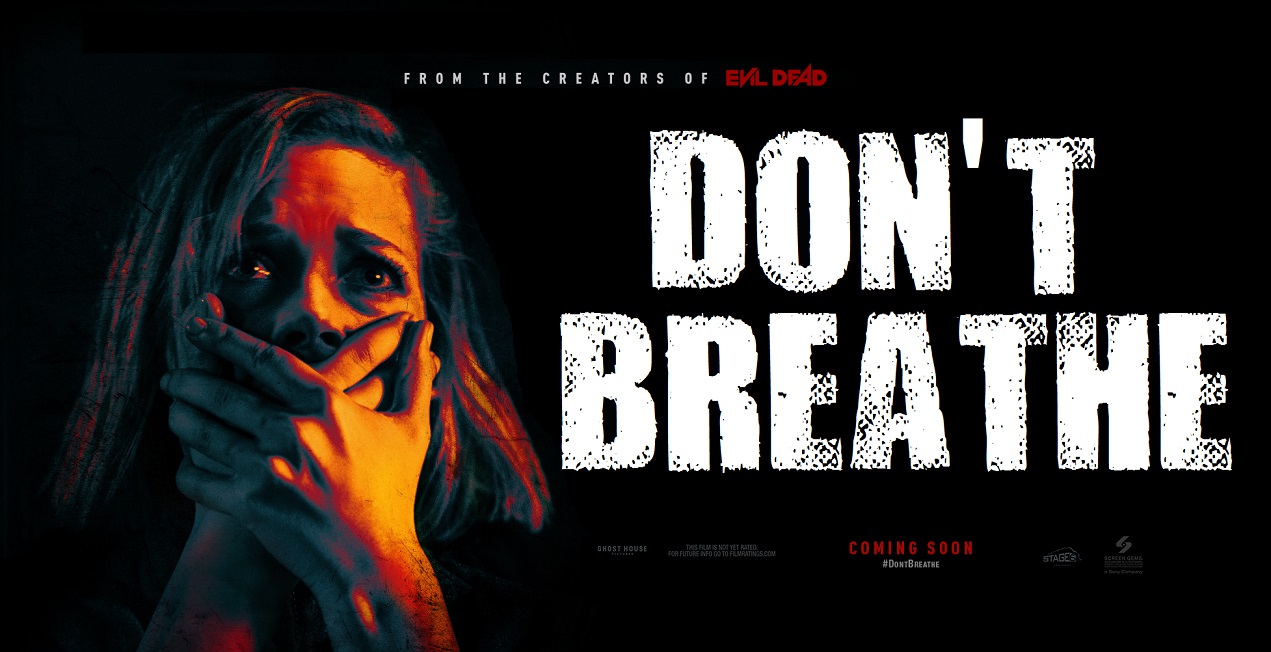
In terms of horror, two titles stand out: Don't Breathe and Green Room.
Like Shin Godzilla, both of these movies work beautifully on both a surface and sub-textual level. Don't Breathe was about the people left behind in the Recovery from the Great Recession, and their sense of desperation. And Green Room was about the streak of race hatred in America that refuses to die, and seems resurgent, in 2016.
Like Shin Godzilla, both of these movies work beautifully on both a surface and sub-textual level. Don't Breathe was about the people left behind in the Recovery from the Great Recession, and their sense of desperation. And Green Room was about the streak of race hatred in America that refuses to die, and seems resurgent, in 2016.
I know you didn't ask me about TV, but it was a great year for television too. First off, I thought The X-Files revival was staggeringly ambitious, imaginative, and unconventional, making it a real joy of 2016.


Returning series Black Mirror and The Walking Dead also riveted my attention, despite the naysayers on the latter. Every year, people complain about The Walking Dead, and it's still one of the best damned shows on television.
I also loved Netflix's Stranger Days and am currently hypnotized by The OA. I will admit to being disappointed by the third season of The Fall.
In terms of colossal disappointments this year, I would also point to Batman vs. Superman: Dawn of Justice, which I still haven't been able to bring myself to review.
Don't forget to ask me your questions at Muirbusiness@yahoo.com.
award-winning creator of the web series Abnormal Fixation (2024), the audio drama Enter the House Between (2023) and author of 35 books including Horror Films FAQ (2013), Horror Films of the 1990s (2011), Horror Films of the 1980s (2007), TV Year (2007), The Rock and Roll Film Encyclopedia (2007), Mercy in Her Eyes: The Films of Mira Nair (2006),, Best in Show: The Films of Christopher Guest and Company (2004), The Unseen Force: The Films of Sam Raimi (2004), An Askew View: The Films of Kevin Smith (2002), The Encyclopedia of Superheroes on Film & Television (2004), Exploring Space:1999 (1997), An Analytical Guide to TV's Battlestar Galactica (1998), Terror Television (2001), Space:1999 - The Forsaken (2003) and Horror Films of the 1970s (2002).
Cult-TV Theme Watch: Smart Phones

Circa
2017, Americans can’t live without their smart phones.
Or, at the very least, they don’t want to do
so.
Smart phones of the 21st
century typically possess computing abilities and storage that exceeds the
technology of NASA’s space shuttle.
Smart
phones are cellular phones that perform many of the functions of a computer, a
camera, and a telephone.
They are closer, actually, in function to Star
Trek’s (1966 – 1969) tricorders than they are the cell-phone like
communicators of the original series.
From
smart phones one can text, take photographs, access the Internet, download new
apps, and play games like Pokemon Go.
Given
the versatility and mobility of these light-weight devices, it is no surprise
that modern cult-TV series have integrated the smart phone and its capabilities
into their narratives.

On
the re-boot of The X-Files (2016) for example, Dana Scully (Gillian Anderson)
uses Mulder’s (David Duchovny) cell-phone to track his position in the
limited-event series finale, “My Struggle 2.”
Similarly, we see Dana receive a call on her smart phone from William in
“Home Again,” but it is not her son; rather her brother who is calling. The smart phone screen is seen clearly, and the appearance
of the name “William” both raises hopes and perpetuates the mystery of William’s
fate.

Other
modern series use the smart phone, simply, as a method of communication, or as
an example that communication is not occurring.
When characters leave messages for one another on The Vampire Diaries
(2009 – 2017), for example, we see the phone light up, and the notation of a
missed call.
Sometimes, this is a major
plot point.


Other
series that have featured smart phones include Dexter (2006-2013), Fringe
(2008-2012), Teen Wolf (2011-2017), Sleepy Hollow (2013 - ), and iZombie (2014 - ).
It will be
fascinating to look back at this era of video programming after the smart phone has
gone out of vogue, and we have the next technological advance at our
fingertips, perhaps a smart implant, or smart eyelids.
Then, when we watch these old shows, it will
be like watching Star Trek or Space: 1999 with the recognition
that they didn’t anticipate the advent of the Internet.
award-winning creator of the web series Abnormal Fixation (2024), the audio drama Enter the House Between (2023) and author of 35 books including Horror Films FAQ (2013), Horror Films of the 1990s (2011), Horror Films of the 1980s (2007), TV Year (2007), The Rock and Roll Film Encyclopedia (2007), Mercy in Her Eyes: The Films of Mira Nair (2006),, Best in Show: The Films of Christopher Guest and Company (2004), The Unseen Force: The Films of Sam Raimi (2004), An Askew View: The Films of Kevin Smith (2002), The Encyclopedia of Superheroes on Film & Television (2004), Exploring Space:1999 (1997), An Analytical Guide to TV's Battlestar Galactica (1998), Terror Television (2001), Space:1999 - The Forsaken (2003) and Horror Films of the 1970s (2002).
The Cult-TV Faces of: Smart Phones
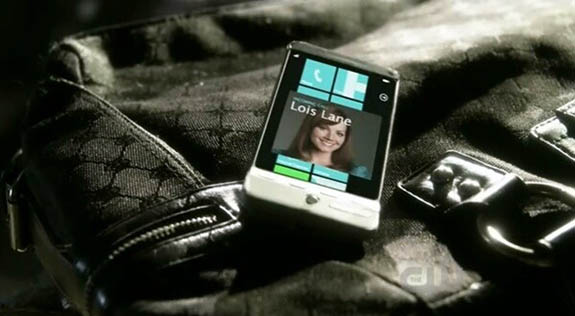 |
| Identified by Hugh; Smallville. |
 |
| 2 |
 |
| Identified by Hugh: Fringe. |
 |
| 4 |
 |
| Identified by Hugh: Teen Wolf. |
 |
| 6 |
 |
| Identified by SGB: Once Upon a Time. |
 |
| Identified by Chris G: iZombie. |
 |
| Identified by Chris G: Black Mirror. |
 |
| Identified by Mr. C: Scream. |
 |
| Identified by Mr. C: The X-Files (revival): "Home Again." |
 |
| Identified by Chris G: The OA. |
award-winning creator of the web series Abnormal Fixation (2024), the audio drama Enter the House Between (2023) and author of 35 books including Horror Films FAQ (2013), Horror Films of the 1990s (2011), Horror Films of the 1980s (2007), TV Year (2007), The Rock and Roll Film Encyclopedia (2007), Mercy in Her Eyes: The Films of Mira Nair (2006),, Best in Show: The Films of Christopher Guest and Company (2004), The Unseen Force: The Films of Sam Raimi (2004), An Askew View: The Films of Kevin Smith (2002), The Encyclopedia of Superheroes on Film & Television (2004), Exploring Space:1999 (1997), An Analytical Guide to TV's Battlestar Galactica (1998), Terror Television (2001), Space:1999 - The Forsaken (2003) and Horror Films of the 1970s (2002).
Sunday, January 01, 2017
Happy New Year, 2017!
 award-winning creator of the web series Abnormal Fixation (2024), the audio drama Enter the House Between (2023) and author of 35 books including Horror Films FAQ (2013), Horror Films of the 1990s (2011), Horror Films of the 1980s (2007), TV Year (2007), The Rock and Roll Film Encyclopedia (2007), Mercy in Her Eyes: The Films of Mira Nair (2006),, Best in Show: The Films of Christopher Guest and Company (2004), The Unseen Force: The Films of Sam Raimi (2004), An Askew View: The Films of Kevin Smith (2002), The Encyclopedia of Superheroes on Film & Television (2004), Exploring Space:1999 (1997), An Analytical Guide to TV's Battlestar Galactica (1998), Terror Television (2001), Space:1999 - The Forsaken (2003) and Horror Films of the 1970s (2002).
Subscribe to:
Posts (Atom)
50 Years Ago on WPIX: Space:1999: "The Metamorph" (September 26, 1976)
'In “The Metamorph,” Moonbase Alpha emerges from its second encounter with a space warp, six light years from its previous position. The...

-
 It is an indisputable fact that fan service and good drama don’t always go hand-in-hand in the cinema. In fact, sometimes these factors div...
 -
 It is quite difficult to believe, but in 2024, Ridley Scott’s Alien (1979) turns 45 years old. Perhaps the most amazing thing about Alie...