Friday, July 15, 2005

Stuff from San Diego Comic-Con

Here's an early Friday morning wrap-up of a couple of news-type stories out of San Diego's big Comic-Con. Both articles are of interest to genre geeks, the first about the perceived problems in the Star Trek franchise (and the article mentions the new Battlestar Galactica by way of comparison). Here it is, direct from The Disembodied Brain: Trek's Problem: It wasn't Enough Like Galactica.

The second article looks at the plethora (or should I say glut?) of superhero movies coming out of Hollywood right now. Check out CNN's Who's the next great film superhero?

Personally, I'm a big Captain America fan, and think a film could be done well. Iron Man too. Then again, I'm not thrilled with how Doom looks in the Fantastic Four, so I'm not sure Iron Man's costume wouldn't look pretty lame.

On the other hand, I am delighted that Joss Whedon is working on Wonder Woman. He's got creds in this genre with Buffy the Vampire the Slayer -- perhaps the best superhero TV series of all time. He can make one hell of a movie.

Thursday, July 14, 2005

Geek Convergence

I've just been e-mailing with pop culture observer (and folk musician...) John Voorhees over at Soundacious, where he's posted an interesting theory on Geeks that fits right in with the Geek Conversation I had with the Flick Filosopher yesterday at Geek Philosophy. Yikes, is that a sentence or what?

Anyway, John has assembled a sort of Geek Movie Paradigm (in other words, the necessary ingredients of a Geek Movie success). Among his components are: A formerly fallen-franchise, now in disrepair but still beloved, a grown-up fan-boy-style director, a critically acclaimed actor (but not someone too famous, like say Tom Cruise), and a new focus on dramatic elements of the franchise, rather than the traditional fantasy aspects. I think he's got a pretty good point, and the blog is a valuable addition to the Geek Debate.

He's already mentioned in the post how it applies to Batman, Battlestar, and Doctor Who, and I thought immediately of Sam Raimi's Spider-man.

But I'll tell you something - Star Trek (one of my all time favorite franchises...) needs a face lift. We can't keep having replicative fading like Enterprise. Imagine Sam Raimi or Christopher Nolan on that project? Paramount, are you listening? Not likely, given my current traffic, but it's still a good idea...

Toy Flashback Thursday

Ah, a state-of-the-art toy, circa 1978. It's 2-XL (from Mego Corp.), the talking robot that will (according to the box):

*tell jokes
*Ask you True-False Questions.
*Ask you Multiple Choice Questions.
*Tell you if you're right or wrong.
*Give you more information on many different subjects.
*Play games with you and your friends.
*Play standard 8-track cartridges as well as 2-XL cartridges.

Wow, does anyone remember owning this? I found it at a flea market (Sweet Union) here in Monroe, North Carolina, still in its box (with a working power pack!) for $2.00. I probably overpaid..

Just think, from 2-XL to the PSP in less than thirty years. The great thing is, mine still has one of the 8-tracks (and it still plays!) I do think it's strange, however, that the machine is purportedly capable of telling "if you're right or wrong." Wow! Everyone in government and big business should have one of these little buddies...

Wednesday, July 13, 2005

Conversations with Geeks

Just wanted to draw everybody's attention to Geek Philosophy again, this time my conversation with Geek Goddess MaryAnn Johanson. Her blog about Gen X, Geeks and pop culture is a current obsession with me, and I was honored that she selected me for the first in a series of "Conversations with Geeks."

We had a great time gabbing about our deep, dark geek secrets and other goodies on the subject. I highly recommend the blog, not just because I'm featured (as are photos from toy-filled office!!) but because I think MaryAnn is doing great things on Geek Culture. She is fast-becoming the Geek Guru to a Net-savvy generation of admirers who were first attracted to her incisive, whip-smart, so-sharp-it-stings movie reviews at Flick Filosopher and are now enjoying her delightful and funny musings on everything from the Geek/Dork/Nerd Paradigm to Friday Cat-Blogging.

I have the feeling that Conversations with Geeks - like the rest of Geek Philosophy - will soon be must-read material for the Geek Inclined.

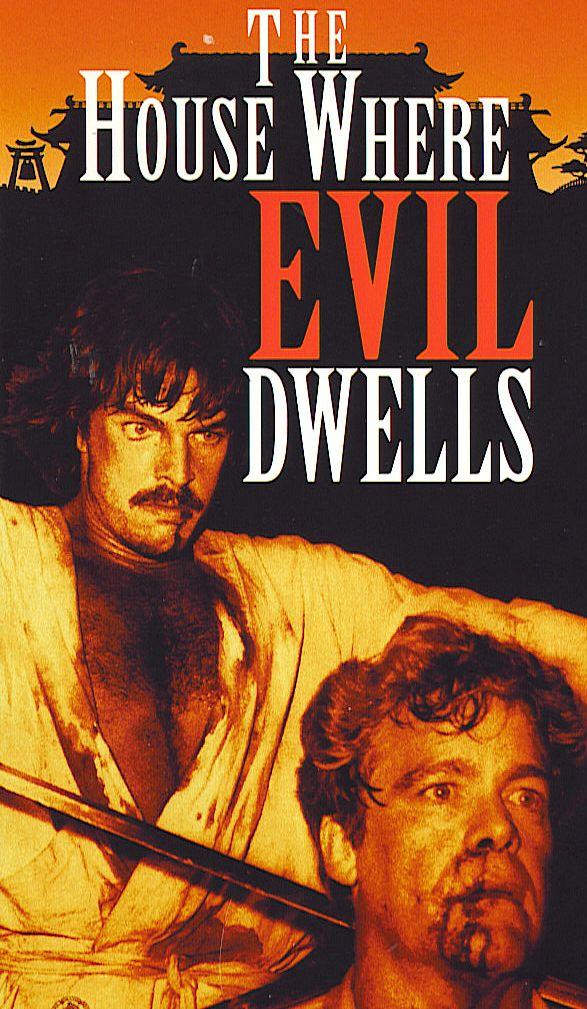
The House Where Evil Dwells

No, I'm not writing about the White House and its current occupant.

Instead, I'm talking about a film I screened last night for my current project, which requires that I watch lots and lots of horror movies made during the 1980s. The film I'm talking about is Kevin Connor's The House Where Evil Dwells (1982), which focuses on a nice middle-class American couple (Edward Albert and Straw Dogs' Susan George), who happen to move into a haunted house in Kyoto, Japan. They found the house courtesy of their friend and business associate Alex Curtis (Doug McClure), and now Ted and Laura Fletcher (and their daughter Amy) think all their problems are solved. Only problem is this: Three ghosts "live" there already, and are hellbent on re-creating the love-triangle that resulted in their brutal triple murder/suicide back in 1840.

In essence, this movie has the same plot as a 1980 low-budget effort starring John Saxon entitled Beyond Evil. In both films, blissfully ignorant Americans move to a strange land without understanding the culture and are subsequently haunted by local spirits. It takes local knowledge (in the form of a zen monk in The House Where Evil Dwells and a doctor in Beyond Evil) to help the tormented Americans understand how they have trespassed in things they don't understand. Sometimes that help comes to late, but that's a lot like life, isn't it?

What I enjoyed about The House Where Evil Dwells is that its director, Kevin Connor (Motel Hell, The Land That Time Forgot, At the Earth's Core, Space:1999, From Beyond the Grave) takes no prisoners in his approach to the material. The film opens with a nasty decapitation, features several soft-core quality sex scenes featuring the lovely Ms. George, and then climaxes with lots and lots of blood and a totally unhappy ending. But in between the opening and closing bookend decapitations, Connor includes the best sequence: a scene in which helpless little Amy and her babysitter are mysteriously overrun by skittering crabs as they sleep. These (huge!) crabs crawl all over the sleeping girls, their mattresses and bed sheets, and then chase poor Amy up a tree. The special effects are rudimentary (though good for 1982...) but there's something intense and terribly disturbing about this scene. It absolutely works in a skin-crawling kind of way. I also love the look and texture of Connor's film, which was shot by Jacques Haitkin, the great cinematographer who also lensed Wes Craven's A Nightmare on Elm Street in 1984. This may be exploitation filmmaking, but gosh darn it, it's quality exploitation filmmaking.

The House Where Evil Dwells makes for an interesting B movie, and how long has it been since we've had one of those? I've always admired Motel Hell as a gonzo cult classic, and I had the opportunity to discuss it with Mr. Connor at Main Mission 2000, a Space:1999 convention held in Manhattan a few years back. The House Where Evil Dwells isn't quite as good as Motel Hell, in part because it lacks that's film's sense of campy humor, but I found the film watchable and entertaining, and even kind of tragic.

The core idea of the story (based on a novel by James Hardiman) is that the three ghosts are doomed karmically, to relive their past crimes again and again, but taking new prisoners along the way. Funny how personal vendettas often take just such turns. I also like the idea of strangers in a strange land, in this case Japan. "Demons and ghosts are not confined to your Christian world," warns the helpful monk near the film's climax, and that's a lesson that the film's doomed characters just don't seem to learn.

Anyway,this is a worth a look, especially within the context of director Connor's impressive (but mostly unexplored...) career in horror. Some energetic fan boy somewhere needs to do a retrospective on this guy. His films never fail to be unique, energetic and visually enthralling, even if slightly cheesy.

FantaSci


On Saturday, July 23, 2005, I'll be spending a glorious and exciting day in Chesapeake, Virginia at the annual fantasy and science fiction convention called FantaSci. I'll be presenting one of my favorite seminars there from 12:45 pm to 2:15 pm: SPACE:1970s - SF TV in the Disco Decade!

During this talk, I'll focus especially on the much-maligned, but intensely cinematic and fascinating series Space:1999 (1975-1977), the subject of the first book I ever wrote, way back in 1997, Exploring Space:1999: An Episode Guide and Complete History of the Mid-1970s Science Fiction Television Series (reprint edition: 2005, McFarland, $24.95).


This snippet is from the book's introduction:

"...the first 24 episodes of Space:1999 featured a richly-visualized world where space was a terrifying, confusing and spectacular mystery. Each story explored the unknown and portrayed the Alphan space voyage as a journey into wonder, awe and horror. Unlike the futuristic superheroes of Star Trek, the travelers on Moonbase Alpha were recognizably human and contemporary. They were unprepared both technologically and psychologically for a long voyage into deep space, and as a result their emotions, fears and attitudes often caused more harm than the aliens or space phenomena they encountered.

While Star Trek treated all problems as soluble and offered enjoyable stories laced with light social commentary, Space:1999 episodes were often downright grim. The series was obsessed with mankind's failings and dark questions of existence. As performed by series leads Landau and Bain, the main Alphan characters were tightly-focused and hyper-intense. There was just no time for these men and women to engage in the saucy banter that had won over so many viewers to Star Trek. In many ways, Space:1999 was much more a child of Joseph Stefano's The Outer Limits (1961-62) or Rod Serling's The Twilight Zone (1959-64) than of Gene Roddenberry's Star Trek. Replete with effectively dark photography, stylish feature-film techniques, gothic story lines and a Wagnerian musical score Space:1999 presented the dark side of space adventure..."

So if you want to learn more about this amazing and oft-neglected TV series, as well as other 1970s initiatives including UFO, The Fantastic Journey, Logan's Run, The Starlost, Battlestar Galactica, Planet of the Apes and Land of the Lost, and you happen to be in town on Saturday the 23rd, stop by to visit! Also, visit my Retro TV Files for a look at many of these shows.

I'll be joined at FantaSci by a bevy of interesting guests including authors Pamela Kinney, Elizabeth Massie, David Niall Wilson, Patricia Lee Macomber, Stephen Mark Rainey, Elizabeth Blue, Tony Ruggerio, Richard C. White, Joseph Maddrey, Christopher Curry, and Marshall Thomas, as well as animator Elizabeth Pascieczny, modelmaker David Merriman, Dr. Madblood's Craig T. Adams and Debra Burrell, Saving Star Wars director Gary Wood, Tidewater Alliance's Rick Baer and Odessa Steps Magazine's Mark Coale. Some of us will be doing a panel in the afternoon called "Gone but not forgotten," which looks at great sci-fi TV shows and movies of yesteryear.

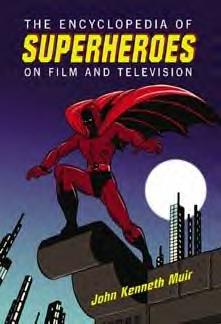
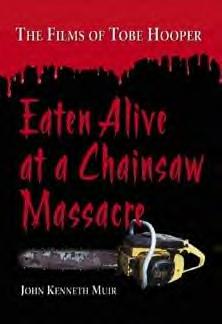
I'm really looking forward to this con, and plan to have a table where I will be selling some of my horror videotapes, as well as copies of Exploring Space:1999 and other books (Eaten Alive at a Chainsaw Massacre: The Films of Tobe Hooper, The Encyclopedia of Superheroes on Film and Television, etc.)

Superhero Event in Williamsburg, Virginia

On Thursday, July 21, 2005, I'll be at the Williamsburg Public Library (515 Scotland Street, Williamsburg, Virginia, 23185) at 7:00 pm to present an hour-long talk on the history of superheroes in films and television, the subject of my book, The Encyclopedia of Superheroes on Film and Television. Before and after the show, I'll be selling copies of that book, as well as others, so if you're in Virginia, stop by to see the show.

Here's a taste of what I'll be discussing (from page 26 of my book):
"Looking at the history of superheroes in broad strokes, it is interesting to note the overall shape of their evolution. Superheroes went from being iconic, ideal-bearing national heroes (the 1940s and 1950s) to clowns (the 1960s). Then they became reflections of a simpler age (1970s), at least until morphing into dark, angst-ridden, revenge hungry vigilantes (the 1980s). Next, they transformed into demon-baiting women (1990s) before becoming ultra-realistic, almost inconspicuous "regular joes" (with the advent of Unbreakable, Smallville, Spider-Man) and other 21st century productions)."

Basically, I'll be discussing how each age of the twentieth century (and now the 21st) gets the superheroes it deserves, the ones reflecting the prevailing Zeitgeist. Examples include the 1960s Adam West Batman, Tim Burton's variation on the material in 1989, the 1970s Richard Donner Superman, TV's The Incredible Hulk, Buffy the Vampire Slayer and many more.

Tuesday, July 12, 2005

Cat Nap Tuesday


Over at my favorite blog,
Geek Philosophy, MaryAnn posts Cat-Blogging Fridays, devoted to her (beautiful...) feline friends. Friday cat-blogging is something of a tradition on many blogs, I understand, and I only steal from the best, so... today I'm presenting Cat Nap Tuesday.

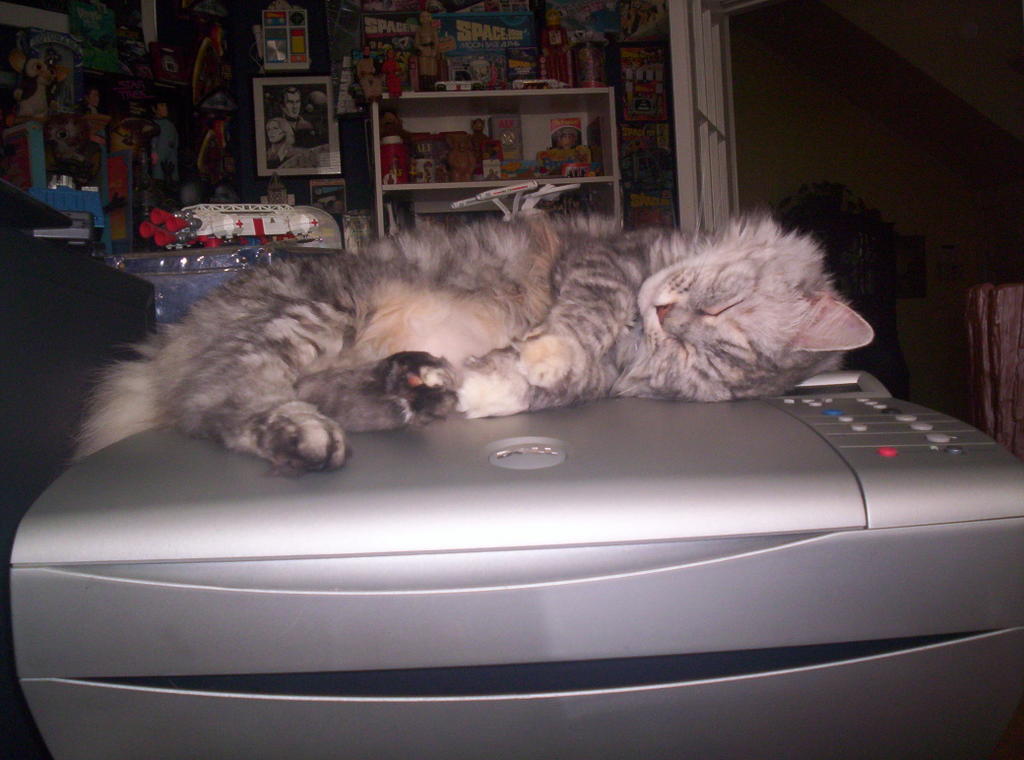
That's my beautiful Lila, sound asleep on my A940 All-in-One Dell Printer. She's sawing logs while I sit two feet away, working on movie and TV books (one for McFarland and one for Applause). Enjoy. She's a sweetie, isn't she?

Saturday, July 09, 2005

Sapphire and Steel

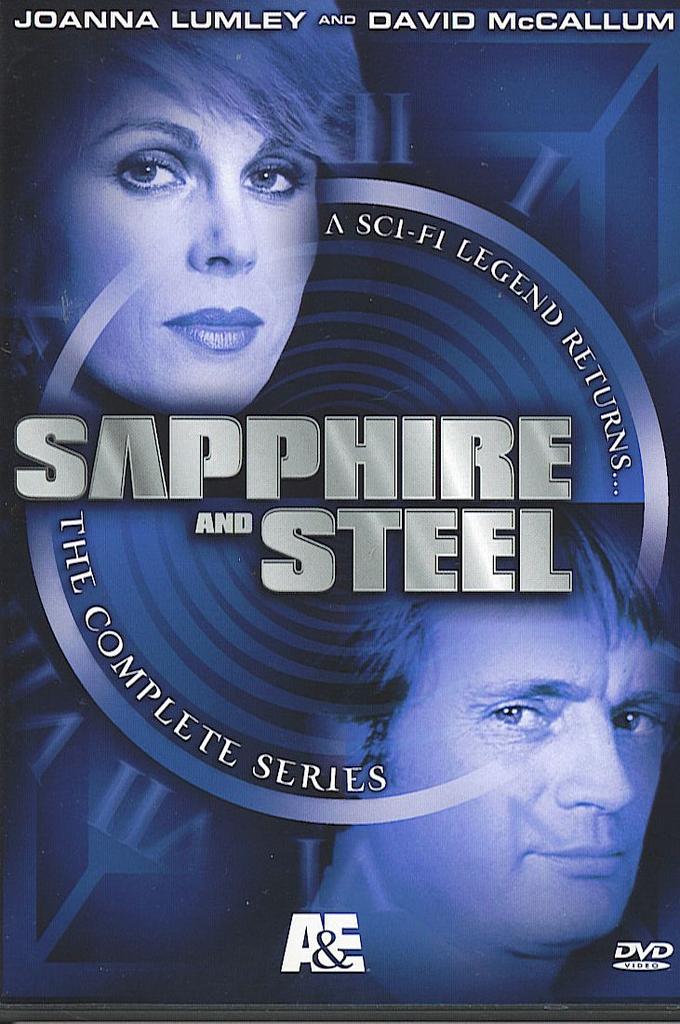
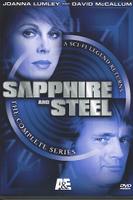
This strange (and kinda obscure...) TV series (DVD box set from A&E shown left) is my current obsession. Sapphire and Steel is a British-made series that ran on UK TV from 1979-1982, and starred Joanna Lumley and David McCallum as a pair of very unusual paranormal investigators. They are - as their names suggest - elements rather than people, assigned to troublesome cases by some unknown superior force (God, perhaps?) Their missions are strange too, almost always concerning sudden rips in time and space, and other weird phenomena. Although the cases seen during the six serials (34 half-hour shows) occur in London, their purview is wide - from time travel to pocket universes, to strange poltergeists and other manifestations.

Sapphire and Steel - like Mulder and Scully on The X-Files - bring their own skill sets to each unique assignment. Sapphire (Lumley) can simply touch an object and know everything about its composition and history, and even who has handled it before her. She is a formidable telepath who also has the capacity to turn back time twelve hours. You'd be surprised how handy a tool that can be while battling spirits from outside time who are trying to burst into our reality!

Steel is less powerful, it seems, but is possessed of more will and discipline. He is incredibly strong physically, and can reduce his core body temperature to absolute zero. But mostly he is valuable for his razor-sharp mind. Steel is a calculating, emotionless and difficult being, and he will do anything to accomplish his mission -- including sacrifice human beings. This cold-bloodedness often puts him at odds with Sapphire, who is a nurturer and seems to care about the humans who are involved in their cases.

Sapphire and Steel occasionally receive help from other agents/elements, including the tech-head Silver ( David Collings), and even Lead - a hulk of a fella - but for the most part seem to be entirely on their own. They appear at the site of a disturbance already fully briefed (though we as viewers are never privy to these briefings...) and then, acting in tandem, go about solving mysteries and repairing time.

The six episodes in Sapphire and Steel are:

"Escape Through a Crack in Time:" - The reading aloud of an ancient lullaby in an ancient country house causes a rip in the fabric of time, and eerie historical manifestations steal a mother and father away from their children. Sapphire and Steel investigate their disappearance, and realize that to rescue the parents, they must first solve the mystery of the house's construction hundreds of years earlier. This story is like Poltergeist before Poltergeist. Only even creepier...

"The Railway Station" - An army of angry ghosts from all of England's pre-1980 wars gather on an abandoned train platform, ready to serve the will of an encroaching evil, an amorphous black mass that is devouring everything in its path. Sapphire and Steel are assigned to the case, and team up with a ghost hunter named Tully, who may know more than he's letting on. Sapphire is possessed by the darkness and Steel must find a way to negotiate with pure evil to get her back.

"The Creature's Revenge" - A scientific team from the distant future has returned to the year 1980 in a cloaked time-capsule to observe life in a primitive city, London. Unfortunately, their time device is powered by an increasingly self-aware creature who is the end result of generations of humanity's cruelty to animals. Sapphire and Steel investigate, and receive technical assistance from Silver. This serial about animal-rights, and mankind's long crimes against the wild kingdom, also involves a baby suddenly full-grown and som other disturbing images.

"The Man Without a Face" - Sapphire and Steel find themselves in an old antique shop, where a strange being without any facial features is pulling people out of old photographs and bringing them to creepy, sepia-tone life. The entity is thoroughly malevolent, and traps a lodger in the building inside an old photograph and then burns it - killing the unlucky human being. Sapphire and Steel battle their most defined adversary yet in this assignment, and must work hard to avoid being trapped in old photographs themselves.

"Dr. McDee Must Die." - A London-based business celebrates its 50th anniversary with a costume party harking back to the 1930s. Unfortunately, murder is on the mind of one of the guests. Soon time itself reverts to the 1930s, and Sapphire and Steel - disguised as party goers - must either prevent or accommodate a terrible crime. Depending on which they do, the human race may or may not survive the night.

"The Trap" - Sapphire and Steel join Silver in a strange pocket universe , a roadside gas station and diner. Nothing is as it seems there, and neither are any of the customers. In fact, some may be assassins with a plan to kill Sapphire and Steel. This is the last serial and it has one humdinger of a climax...

Why am I obsessed with Sapphire and Steel? For one thing, the stories are brilliantly written and filmed, and they work totally without benefit of anything resembling modern special effects. On the contrary, the intensely frightening and suspenseful mood is all generated by characterization, sudden sound-effects, low-key music, and most of all, exquisite camerawork. It's been a long time since I've seen any production that uses its camera angles and movements to so boldly and efficiently. Some people have complained the show is boring because each serial is set in one locale, but I find the opposite to be true. The series is riveting. You hang on every word of dialogue as you try to sort out the mystery.

Plus, the characterizations are classic. Lumley and McCallum are charismatic, enigmatic and charming in these unique and unusual roles, and one of the joys in the series is seeing how Sapphire and Steel relate to one another as partners. Are they lovers? They certainly flirt from time to time. And then there's the matter of the kiss in one story. These are great investigators to follow, and Sapphire and Steel, according to AE (quite truthfully) feels like the genuine "spiritual precursor" to The X-Files.

One of the most appealing aspects of Sapphire and Steel is that the creator (P.J. Hammond) endowed the show with an almost fairy-tale like, gothic horror feel. The first program, "Escape Through a Crack in Time," feels like a dark version of The Lion, The Witch and The Wardrobe or some such fantasy. It is so good it does bear comparison with literature, and it will capture your attention quickly. The last story is a nail-biting adventure with oodles of suspense. It features the heart-wrenching final assignment of these paranormal detectives, but leaves viewers wanting more.

You can purchase the Sapphire & Steel DVD box set at Amazon or A&E Store for not much more than fifty dollars. For those of us who miss The X-Files, discovering this program is like pure bliss. Again - be prepared for the fact that there are no special effects to speak of, but then simply immerse yourself in these bizarre stories and wonderful characters. You'll be glad you did.

Friday, July 08, 2005

Is 13 a Lucky Number? Two Assaults in Two Eras

I just got around to viewing the 2005 re-make of John Carpenter's 1976 classic, Assault on Precinct 13. My wife and I did a "Precinct 13" night and watched the re-make first, then the original, just to see how they would stack up when put side to side.

Sad to say that the new film, starring Laurence Fishburne and Ethan Hawke, can't hold a candle to the 1970s exploitation hit. The new film looks like a 1990s-style action-flick, sorta Die Hard in an Abandoned Police Station, and it plays out as an utterly routine example of the genre. Nothing really wrong there, per se. Some moments are rather exciting, and the action is convincing. But this movie has no real heart or life of its own, it just sits there on the screen. Ho hum.

It's illuminating to point out the differences between the two films. In the stunning, explosive original, all the events that played out were random. All of that verisimilitude has been wiped away in the remake, and replaced with Hollywood screenwriting machinery so old it creaks.

To recap the original: a gang of interracial thugs(?) in Los Angeles steal a cache of automatic weapons from the cops and go hunting on the streets. They happen upon an ice cream vendor, who they attack. At the same time, they brutally murder a little girl who just wanted a vanilla twist. Enraged, her father steals the vendor's pistol, kills a gang member, and flees to an abandoned police station on the night it is closing. It just so happens that this very night is Lt. Bishop's (Austin Stoker's) first night on the job, and worse - a group of cutthroat criminals are incarcerated in his jails because one of them has fallen ill. Realizing that the vanilla twist girl's dad is inside, the interracial gang (Street Thunder) lays siege to the precinct...all night. The cops and the criminals join forces to hold off the bad guys, but never even know who they are fighting, much less why.

There's something wonderfully realistic about this approach. Action leads into action, and people don't always know motivations or reasons for brutal acts. That's fate, baby, and the original film reflects this fact, especially in the horrible, straight-faced murder of that vanilla twist tyke. Pretty cold-blooded, hardcore stuff. But that's why we love it, right?

Now here comes the razzle-dazle, big-budget remake in the age of packaged movies. In the new version of Assault on Precinct 13, a criminal boss, played by Laurence Fishburne holds up at an abandoned station run by Ethan Hawke in Detroit, on the night of a terrible snow storm. He knows too much about corrupt cops, so the cops lay siege to the precinct, even though some of their own are inside. In this version of the story, we know exactly why the villains are attacking (must...prevent...Fishburne's...testimony...), we get an unncessary back-story about Fishburne's character, and there's plenty of psychological trauma to substitute for characterization. Hawke's character, you see, was once in a situation where he was responsible for a team of cops -- and they all died when an undercover op went bad. He took the job at this abandoned station so he will never have to confront responsiblity again. Care to hazard a guess as to whether he's up to the task of leading men into battle?

I won't even get started on the obsessive-compulsive psychologist. I bet that idea looked great for a one-line character description in a story outline

But basically, the new Assault on Precinct 13 - while being an efficient actioner - takes all the surprises and twist-and-turns out of Carpenter's original story (which was an homage to the John Wayne/Howard Hawks classic, Rio Bravo). In the new show, every character goes through a carefully prescribed and predictable arc; every character has his big moment; every motivation is known, understood and boring.

As a result, the original is still the version with all the piss and vinegar. It's bold, reckless, daring, occasionally cheesy, and downright original. Carpenter has already re-made the picture in a Los Angeles Church (Prince of Darkness) and on Mars (in the underrated Ghost of Mars), so it's really hard to see why another remake - without Carpenter at the helm - was even necessary.

So here I am again, saying the old is better than the new. I pray that Hollywood will soon broach a re-make that I can fawn all over and rave about. Just to prove I'm not an embittered old guy...

Thursday, June 16, 2005

Fantasmo Cult Cinema Explosion!


On Friday, July 1st, I'll be the special guest speaker at the Chesapeake Central Library's Fantasmo Cult Cinema Explosion!, a monthly double-feature of cinematic weirdness and obscurities. July's topic (and Episode 4 in the Fantasmo series): cult auteur Tobe Hooper!

The library will be unspooling two classics from this director of The Texas Chain Saw Massacre: The Funhouse (1981) and Invaders from Mars (1986). I'll be doing a meet-and-greet (and selling some books) before the screening, at 7:00 pm and then doing an hour-long author talk starting at 7:30. My comments will cover the career and history of Tobe Hooper, and especially some details on these two classics from his career.

In my book, Eaten Alive at a Chainsaw Massacre: The Films of Tobe Hooper (McFarland, 2003), I call The Funhouse "an accomplished film that captures the raw edge of early Hooper...as well as the new, more disciplined Hooper (exemplified by the pristine Salem's Lot.)"

And Invaders from Mars, I wrote, "accomplishes exactly what it sets out to do, to recount a crazy adventure from the viewpoint of a slightly off-kilter, smart aleck, media-exposed kid. Hooper's camerawork is laudable, his pacing is good, and his tongue planted firmly in cheek. At times, when the picture involves the shadowy and unfriendly faces of whispering adults plotting secret matters, Invaders from Mars evokes the isolation and discontentment of childhood in a very tangible way."

So if you're in the neighborhood of the Chesapeake Central Library on Friday, July 1, 2005, stop by to catch this cult double-feature. You'll go home with shivers, I promise...

Guest Post: "Teenage Sex and Death at Camp Miasma"

As Sondheim wrote, "Every Day a Little Death." By Jonas Schwartz-Owen   Two worlds run through Jane Schoenbrun's  Teenage Sex ...