Monday, July 04, 2016

The Cult-TV Faces of: The American Flag

Identified by Lonestarr357: Adventures of Superman

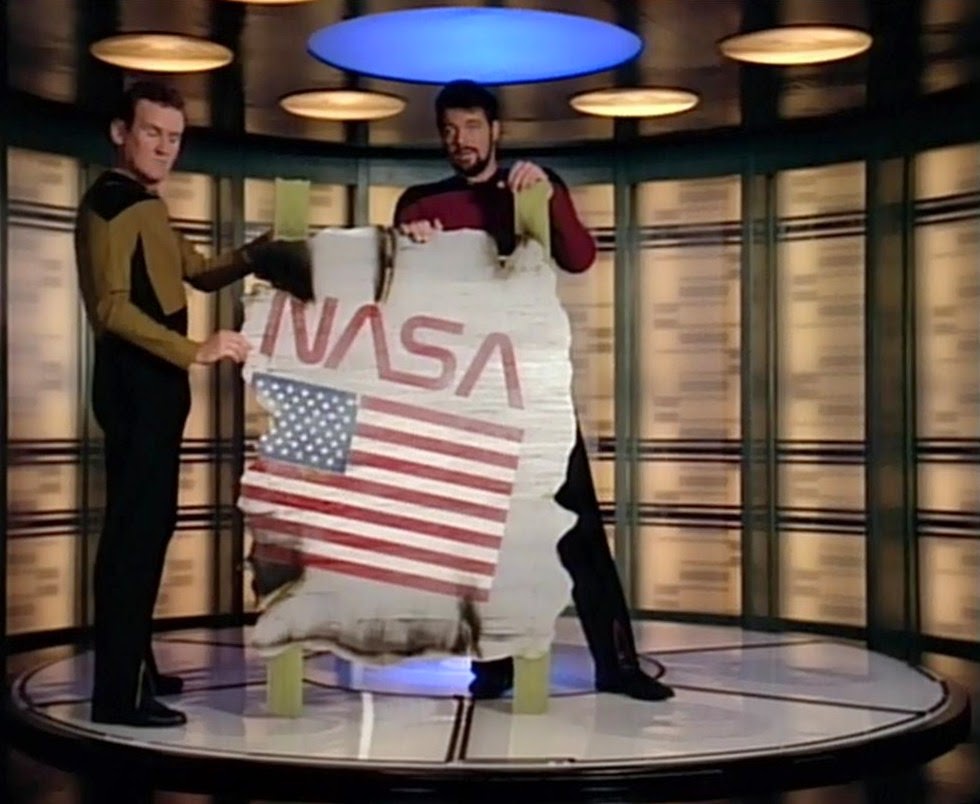
Identified by Hugh: Star Trek: "The Omega Glory"

Identified by Hugh: Return to the Planet of the Apes.

Identified by Lonestarr357: Wonder Woman.

Identified by Lonestarr357: Schoolhouse Rock ("Tyrannosaurus Debt")

Identified by Lonestarr357: Star Trek: "The Royale."

Identified by Lonestarr357: The Simpsons

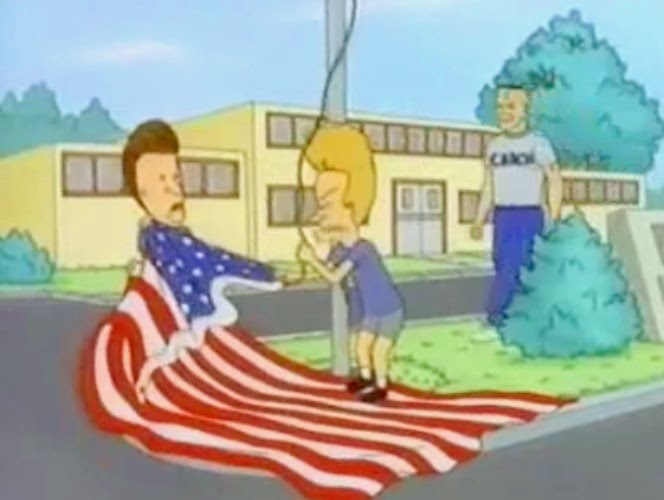
Identified by Lonestarr357: Beavis and Butthead.
8

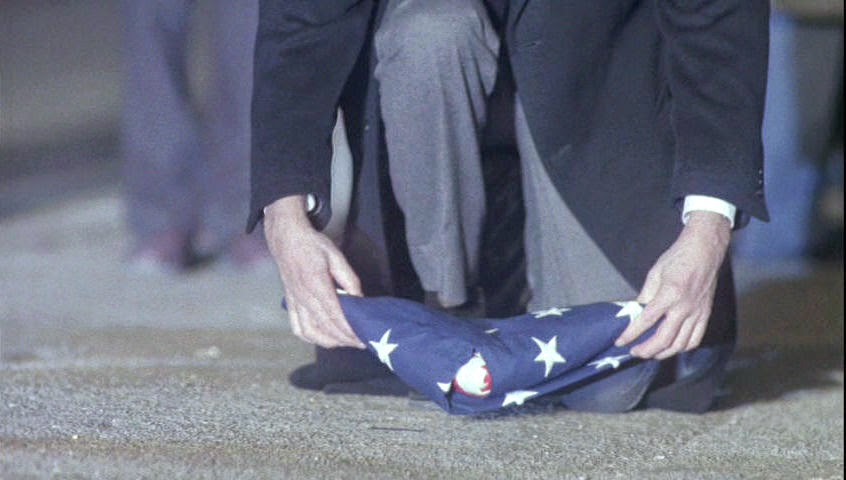
Identified by Hugh: The X-Files.

Identified by Hugh: Star Trek Enterprise: "Storm Front"

Identified by Hugh: Smallville

Identified by Hugh: Doctor Who

Sunday, July 03, 2016

Advert Artwork: Wacky Races Cereal Promotion


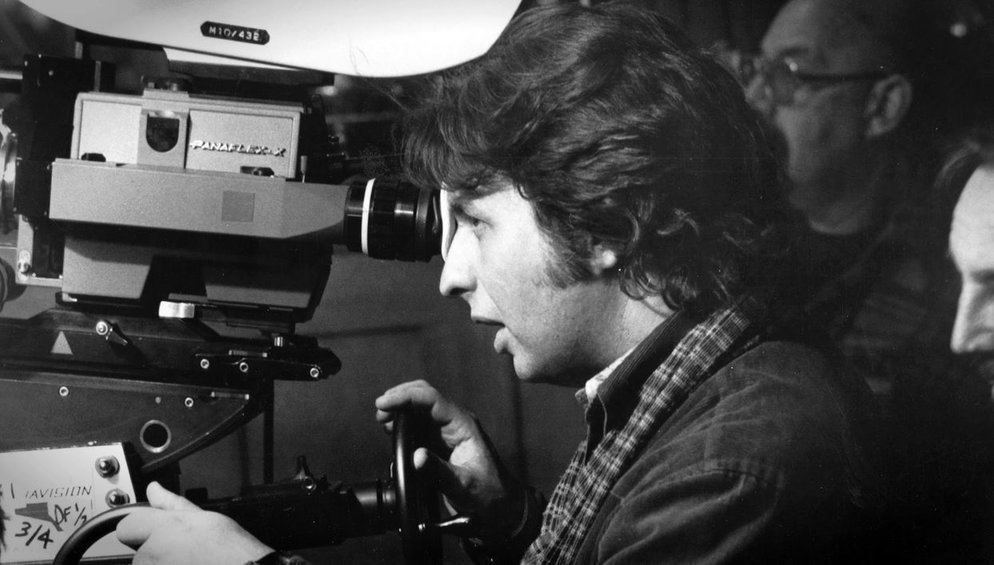
Tribute: Michael Cimino (1939-2016)


The press reported yesterday the passing of Hollywood legend and Academy-award winning director Michael Cimino (1939-2016).

Cimino -- a dazzling visualist -- directed eight feature films in his career.  

Among these are the Oscar-winner The Deer Hunter (1978), Thunderbolt and Lightfoot (1974), Year of the Dragon (1985) and The Sicilian (1987).

But Cimino is remembered, primarily, for one of the most notorious box office bombs in movie history: Heaven's Gate (1980).  

That film bankrupted United Artists, and transformed a promising directorial career into, essentially, a meme regarding catastrophic failure. 

To this day, deeply troubled productions are referred to as a new Heaven's Gate.

Cimino was a controversial creative figure to both critics and co-workers, and yet it seems patently unfair to paint the man's career with just one brush: expensive failure.  

To this day, Cimino's films -- even Heaven's Gate -- remain challenging, and visually remarkable. They often gazed at the angst surrounding the American psyche, and tread into uncomfortable territory. 

I hope that the filmmaker's death will prove an opportunity to focus the attention of film scholars and film lovers on Cimino's work -- and an honest evaluation of his art -- rather than simply rehashing stories about lost money, or the man's singular personality.

Rest in peace, Michael Cimino.

The Films of 1996: Independence Day


"In less than an hour, aircraft from here will join others from around the world. And you will be launching the largest aerial battle in the history of mankind. "Mankind." That word should have new meaning for all of us today. We can't be consumed by our petty differences anymore. We will be united in our common interests. Perhaps it's fate that today is the Fourth of July, and you will once again be fighting for our freedom. Not from tyranny, oppression, or persecution, but from annihilation. We are fighting for our right to live. To exist. And should we win the day, the Fourth of July will no longer be known as an American holiday, but as the day the world declared in one voice: "We will not go quietly into the night!" We will not vanish without a fight! We're going to live on! We're going to survive! Today we celebrate our Independence Day! "

- President Whitmore (Bill Pullman) delivers an historic address in Independence Day (1996).


Independence Day (1996) remains one of the big “event” movies of the 1990s, a sci-fi blockbuster of monumental, almost unimaginable proportions.  The crowd-pleasing film successfully tapped into the decade’s unending fascination with aliens and UFOs (The X-Files, for example) and significantly augmented that interest too, resulting in a slew of further alien films and TV programs from Dark Skies (1996) to Men in Black (1997).

As an inside-the-industry cautionary tale, Independence Day also represented the (unfortunate) cementing of the Emmerich/Devlin blockbuster “formula” -- a revival of 1970s disaster film tropes.  This format would meet its Waterloo in 1998’s Godzilla, but nonetheless continues right into this decade with films such as the dreadful 2012 (2010).

Of all the Emmerich genre fare, I’m most fond of 1994’s Stargate, as it seems to strike the right balance between spectacle and intelligence.  After that film’s release, the scales in further efforts kept tipping towards spectacle and away from brains, and so the ensuing films suffer mightily for the imbalance. 

That established, I was certainly part of the enthusiastic audience for Independence Day upon its summer release, and I still remember how great the film looked on the big screen.  A recent re-watch confirms how terrific the miniature effects remain.  The scenes of awesome alien saucers lumbering to position over major world cities -- though obviously reminiscent of Kenneth Johnson’s V (1984) -- remain downright staggering.

What ages Independence Day most significantly, instead, is the pervasive shtick and the schmaltzy, sentimentality-drenched characters. At every step of the way during its narrative, Independence Day punctures its end-of-the-world majesty and gravitas with low humor and over-the-top sentimentality, qualities which today render the whole affair close to camp. 

Science fiction fans, of course, experienced conniption fits over Independence Day’s unlikely finale: a third act which sees an Earth-produced computer virus successfully uploaded to an alien computer aboard a mother-ship, thus giving humans the opportunity to strike back…on July 4th, no less. 

The movie doesn’t pay even lip service to the idea that aliens from another solar system might have developed anti-virus software (!), let alone computer systems totally incompatible with our 20th century Earth technology. 

Given how badly things go for Earth in the first hour of Independence Day, it’s difficult to countenance the film’s final veer into outright fantasy as every heroic campaign – with split-second timing – comes together perfectly.

Despite my misgivings about the film’s humor, sentimentality, and narrative resolution, however, I still find the grave, apocalyptic, anxiety-provoking tone of Independence Day’s first hour worthwhile, especially the President’s grim choice to deploy nuclear weapons in an American city to drive off the aliens.   

It would be absolutely foolish to deny, too, that some of Independence Day’s imagery has become iconic in the annals of cinema history.  We all remember that portentous shot of hovering saucer pulping the White House for instance.  Thus -- even while criticizing this over-sized beast -- I've got to give the Devil his due for getting matters right on a visual terms

In terms of theme, Independence Day works overtime to remind all of us that although we are separated by oceans and other Earthly partitions, we are all nonetheless citizens of the same planet. It’s a laudable message in an age of hyper-partisanship to be certain, even if delivered with little nuance or subtlety.  This through-line in the film is consistently and well-conveyed, both in terms of incident and in the make-up of the diverse dramatis personae.  Who would have imagined our precious Earth could be saved by a war veteran, a drunk crop-duster, a Jewish cable repairman and an African-American fighter pilot?

Movie critics were understandably divided on Independence Day.  At The New York Times, Janet Maslin wrote: “Guess what: "Independence Day" lives up to expectations in a rush of gleeful, audience-friendly exhilaration, with inspiring notions of bravery that depart nicely from the macho cynicism of this movie season. Its innocence and enthusiasm are so welcome that this new spin on "Star Wars" is likely to wreak worldwide box-office havoc, the kind that will make the space aliens' onscreen antics look like small change.”

Writing for The Washington Post, Rita Kempley opined: “"Independence Day" is primarily a $70 million kid's toy, a star-spangled excess of Roman candles and commando games designed to draw repeat business from 9- to 12-year-old boys. Little girls won't find any role models among the barnstormers, though a plucky exotic dancer is featured among the heroines. Even with the end of the world in sight, she shakes her booty. It's for her kid. No, really.  Maybe the moviemakers' mission was to boldly go where everyone in Hollywood has gone before: the bank.”

Honestly, I can see both sides of the critical equation in this case. Independence Day is such dumb fun, and yet fun nonetheless.

“A toast...to the end of the world.”


The people of planet Earth watch with anxiety and wonder as three-dozen alien saucers descend from orbital space to take up positions over cities around the globe.  President Whitmore (Bill Pullman), a former jet pilot in Desert Storm, advises calm, but new information from genius cable repair man David Levinson (Jeff Goldblum) suggests the alien ships have initiated a countdown and are preparing a coordinated attack.

As the countdown ends, Levinson’s suspicions are confirmed, and the alien ships destroy Los Angeles, Washington D.C., New York and other population hubs. President Whitmore survives the attack on the Oval Office and escapes by Air Force One.  He promptly orders a retaliatory strike.  Pilot, top-gun, and would-be astronaut Steven Hiller (Will Smith) downs an alien ship during battle, and captures one of the fearsome aliens for study.  The rest of the fight, however, is a rout, and the U.S. jets are unable to penetrate alien shields.  Humanity stands upon the edge of extinction.

The President visits the secret military base at Area 51, and learns there that scientists there have been experimenting with an alien ship for close to fifty years.  When Hiller arrives, the President attempts to communicate with Hiller's captured alien, but finds the being implacably hostile.  The aliens, he soon learns, are like locusts.  They travel from solar system to solar system using up planetary systems and then moving on…leaving only carnage and waste in their wake.

After nuclear weapons prove ineffective against the aliens, President Whitmore is at a loss how to save the planet, or the human race.  But David comes through again.  He believes he can take the captured alien ship at Area 51 to the mother-ship and upload a computer virus there, thus bringing down alien shields…at least for a few minutes.  When Steven volunteers to fly that risky mission, it’s up to the President himself to coordinate and lead a huge aerial attack against the alien saucers, both in America, and world-wide…

“It's a fine line between standing behind a principle and hiding behind one. You can tolerate a little compromise, if you're actually managing to get something accomplished.”


For a film about such a terrifying topic – an alien invasion – Independence Day frequently plays thing...light.  At least a half-dozen major supporting characters in the film are defined by their shtick. Judd Hirsch plays a nagging Jewish Dad, Julius Levinson, and his lines and delivery are pure Borscht Belt ham-bone.   Harvey Fierstein plays another kitschy character, Marty, who hams it up and makes jokes about his therapist and his (presumably overbearing...) mother.  Harry Connick Jr. portrays a cocksure pilot who provides the film at least one dopey gay joke.

But the worst character is likely Randy Quaid’s Russell Casse, a drunken crop-duster (and alien abductee) who joins the air battle against the aliens during the film's denouement.  Quaid’s dialogue is so incredibly dreadful that it has become the stuff of legend and MST3K fodder.  “I picked the wrong day to stop drinking,” springs immediately to mind. 

Among all these actors hamming it up and stealing time, Brent Spiner likely fares the best as aging ex-hippie and scientist Dr. Okun. Spiner comes off as weird and eccentric, but not so dreadfully hammy that you want to turn away from the screen in shame for watching.  His last scene -- played with alien tentacles pressing against his larynx -- is also genuinely unsettling.

Why do I have a problem with the film's pervasive moments of low humor?  Well, Independence Day already boasts Jeff Goldblum and Will Smith continually cracking wise in leading roles.  Their dialogue is dreadful too, from "Welcome to Earth" to "Now that's what I call a close encounter!"  Given all this material from our leads, do we really need Judd Hirsch, Harvey Fierstein, Harry Connick Jr., Randy Quaid and even Brent Spiner dishing out lame one liners too?  The ubiquitous nature of these characters makes Independence Day, at times, resemble an overblown sitcom.  Maybe if the material were stronger, these characters would not seem so objectionable. I guess what I'm saying, is that these moments are rarely actually funny.

Another weak character is Secretary of Defense Nimzicki (James Rebhorn), a man who in one scene advises the full scale nuking of many American cities, but in a later scene argues against a “risky” maneuver to attack the alien mother-ship and upload the virus.  His objections to the (ultimately) successful plan make no sense, and aren’t consistent with the “war hawk” image he projects in the film all along; a guy who advises going to Def-Con 2 before the President has made his final decision.  Instead, Nimzicki is contradictory simply so the audience can boo at him, and the President can dress him down…thus appearing tough and resolute. 


While I have real disdain for much of the writing and characterization in Independence Day, I do feel that the film's visuals often still shock, and often still carry real emotional resonance.  One shot, set on July 3rd, reveals the Statue of Liberty toppled, face down in the harbor...a massive saucer hovering low in the sky.  Colored in autumnal browns,  this is a terrifying composition of American culture annihilated.  

It’s tough indeed to compete with the amazing Statue of Liberty imagery of Planet of the Apes, yet this moment in Independence Day remains quite upsetting.    The film is also anxiety-provoking in the way it reveals American military might crushed before a more technologically-advanced enemy.  The battle sequences, the nuclear option, and other heavy moments are all deeply scary because one realizes that if America can’t save the world…the world ain’t getting saved.  Indeed, Independence Day plays up the alien threat so successfully in terms of spectacular visuals and special effects that there’s almost no way the scripted, climactic victory can ring true.  It’s like we’ve slipped into an alternate movie or something.


The first half of Independence Day is undeniably the strongest, as alien saucers push through storm and cloud fronts, and emerge over our cities, casting dark shadows upon bewildered and amazed populations.  These moments continue to impress, and pack an almost visceral gut punch.  We’ve all wondered if, one day, we’ll wake up to something like this imagery…a new dawn in which we learn definitively we are no longer alone.   As much as I deride Independence Day’s silly humor and bad dialogue, I have no quibbles whatsoever with the way that these scenes of “arrival” are vetted.  As I said in my introduction, many of these scenes still carry a staggering punch.

From its first shots to its final ones, Independence Day also makes an interesting point about mankind being unified by a threat from the outside.  The film opens with imagery of a plaque on the moon which reads “We came in peace for all mankind.”  That’s a wonderful thought, the movie seems to suggest, but then the filmmakers set up a paradigm by which that hopeful expression of common cause is tested.  Suddenly, all mankind must work together to defeat the alien threat, putting competition and petty differences aside.  This idea is expressed through scenes set in Iraq, the location of America’s most recent war (Gulf War I).  There, in the desert, British and Iraqi soldiers join the battle against the mother ships.  The implication of such scenes is that mankind is indeed capable of working together.


The same idea is presented in the film in the (positive) character of President Whitmore.  Before the alien crisis, he is viewed not as a warrior, but as a “wimp.”  He can’t even get his Crime Bill passed by a hostile Congress.  Whitmore laments that “it’s just not simple, anymore” and that people don’t seem to understand that compromise is the only path towards moving everyone ahead, together.  He then works with the nations of the world to defeat the aliens, and in the process transforms an American holiday into an Earth holiday.   Again, the message implicit in Independence Day is that we can apply ourselves to solve big problems, not just alien invasions.  Why can’t we all band together to keep our neighbors and our neighbors' children from starving?  Or to eliminate poverty?  Once we acknowledge our common humanity, petty partisan differences shouldn’t really matter, should they?

In this sense, Independence Day -- set in part on July 4th -- acknowledges a new, evolved brand of patriotism.  It is a patriotism not merely to party or to one nation, but to all of humanity.  As a fan of Star Trek and a person who believes we can achieve great things if we sometimes accept compromise, I appreciate the film’s ultimate message of hope about human nature.  This consistently-applied theme almost mollifies my concerns about the film’s ridiculous and ill-conceived conclusion, and the surfeit of characters who spew cliché after cliché, bad joke after bad joke.  Almost, but not quite.    Still, I know I'm spitting in the wind against an 800 million dollar blockbuster, a veritable entertainment machine.

So am I a hopeless sentimental for recognizing Independence Day’s entertainment and social value, even amidst so many stupid groaners and moments of cynical, calculated humor?  

Or, like Randy Quaid's character...did I just pick the wrong day to stop drinking?

Saturday, July 02, 2016

Saturday Morning Cult-TV Blogging: Blackstar: "The Overlord's Big Spell" (November 21, 1981)


The Overlord conjures an evil and powerful spell, one which draws all the magic from all locations and beings on Sagar to his location, in the ice palace.  

This spell has an unfortunate effect on Mara, whose life force is sustained by magic. She starts to vanish, a little at a time, becoming intangible.

Blackstar understands the risk if The Overlord is successful: “evil things will run wild” on Sagar, and there will be no chance left to stop the Overlord. Mara will die.

Meanwhile, the ever-more-powerful Overlord summons a new minion, a devil creature called Brilerand.  The demon is so evil, even Overlord cannot control him.

Because of this development, Blackstar and Overlord agree to a temporary truce.


“The Overlord’s Big Spell” is another “my enemy, my ally” story in which sworn enemies must put aside their differences so as to vanquish a dangerous and immediate threat.  

Here, the Overlord’s magic-sucking spell allows him to summon a big, red, gargoyle-like monster that refuses to accept his dominion.  In one funny scene, the Overlord demands that Brilerand obey him, and Brilerand replies by shooting laser beams at him, repetitively.


Blackstar and the Overlord join forces, though for different reasons. Blackstar wants to save Mara before she vanishes all-together, and Overlord knows that he cannot defeat the demon alone.  As soon as Brilerand is vanquished, the Overlord is back to his old tricks and the truce is definitively off.

This is a good episode of Blackstar, even though it follows the series formula rigorously since it features yet another evil spell. Mara’s predicament adds an emotional appeal to the story, and it is rich indeed to see the Overlord forced to work with his nemeses.  “Helping trobbits…it pains me!” he croaks.


Next week: “The Crown of the Sorceress”

Saturday Morning Cult-TV Blogging: Flash Gordon: "Survival Game" / "Gremlin's Finest Hour" (November 6, 1982)


In “Survival Game,” Arkon Bay, a bounty hunter (and reptile man), is hired by Ming to retrieve Flash Gordon, dead or alive. 

When Flash and Arkon crash land on a small island following a pursuit, they must work together to survive.

In “Gremlin’s Finest Hour,” Dr. Zarkov detects some unusual happenings in Mongo’s polar region.  

There, at the site of an ancient civilization, he is detecting unusual power readings.  Flash, Thun, Dale and Gremlin travel to investigate, taking along a “retro-scope” which permits them to see back in time thousands of years.

Once in the polar region, they encounter Ancients who mistake Gremlin for their lizard God.


Well, Filmation's Flash Gordon ends not with a bang, but with a whimper, with two underwhelming stories.  

“Survival Game is basically yet another “My Enemy, My Ally” story in which Flash and an opponent, here a bounty hunter, learn to respect and help each other so they can survive a crisis.  And yes, Flash Gordon just recently did a similar story in the second season: "The Warrior."


Meanwhile, “Gremlin’s Finest Hour” hauls out the old trope involving a tribe of ignorant natives mistaking somebody mortal for a God (see: Return of the Jedi [1983]).  Here, that individual is Gremlin, who sits on a dragon throne and eats berries with satisfaction while demanding that Thun fan him.


Both stories exemplify the problems Flash Gordon had after Season One. Basically, for all intents and purposes, Flash’s most interesting narrative ended with the fall of Ming. Season Two feels like an after-thought, a catalog of inconsequential adventures following the main event.  

A better approach, I submit, would have been to come up with a new arc for Season Two that would have kept all the characters occupied and in real danger.  

Personally, I think the “Gor-don” character, the once-ruler of Mongo (and Flash’s double) who was prophesied to return to Mongo one day, should have become the main villain as he returned to Mongo and invaded it. 

Ming could have still played a part, but our heroes would have been fully engaged and fighting for their lives (and freedom) as this new enemy arrived to take advantage of the power vacuum created by Ming’s fall.

I still love Filmation's Flash Gordon, at least it's first season.  But the second season was a grave disappointment.

Friday, July 01, 2016

Movie Trailer: The Legend of Tarzan (2016)

Here's the trailer for The Legend of Tarzan (2016) opening in theaters today.


Tarzan (Filmation): "Tarzan and the Golden Lion" (September 25, 1976)


The third Filmation Tarzan episode is titled “Tarzan and the Golden Lion.”

You may recognize that name if you are a fan of the Edgar Rice Burroughs’ books. Tarzan, in that story, befriends a golden cub, and raises it to adulthood. The lion then becomes something like a family pet, always loyal to Tarzan and his son and wife. The character of the “golden lion” recurs throughout the book series, following his first appearance in the ninth book. In the stories, he is known as Jad-bal-ja.

The Filmation episode that shares the book’s name is basically a two-part show.

The first part of the episode features N’Kima and Tarzan encountering the cub, and raising it to adulthood as a trusted friend. We see Tarzan teaching the lion in a kind of training montage. Apparently, years pass as it grows to maturity.


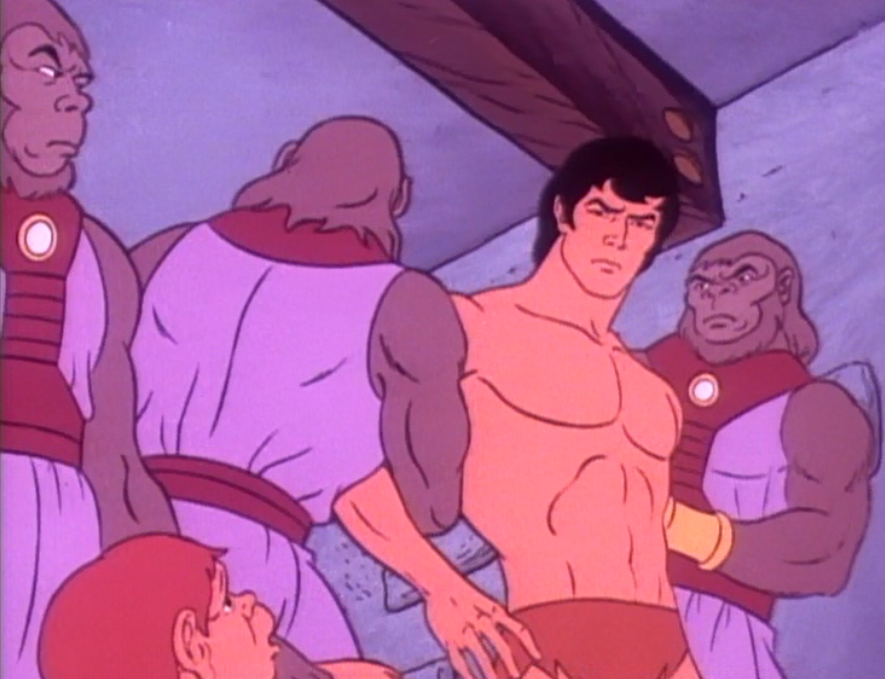
The second portion of the episode involves a group of gorilla-men who have taken N’Kima’s monkey friends as slaves.  Tarzan follows them to their kingdom to free them, and finds that these ape men are also enslaving a race of meek humanoids. These (speaking...) apes are known as the Bolmangani.

Tarzan teaches the primitives to fight, and that they are “slaves” to their fears.  When Tarzan is captured, one of the humanoid children leads a campaign against the ape-men, and the golden lion also arrives with reinforcements from the jungle.


I have to confess, I really loved this episode, especially the portion about the golden cub, Jad-bal-ja, at the beginning. The mother lion has died, and Tarzan notes that “Death is no stranger to the jungle.”  He then shows mercy and compassion for the lion, and there are lovely shots of him playing with the cub, training, it and, more importantly, living with the lion, and treating him as a friend.


The second part of the episode is as dogmatically moralistic as any Filmation show you can think of, with Tarzan lecturing the primitives about standing up for themselves.  


It’s a good message (“sometimes we must face our fears to do what is necessary,”) and the end is exciting, with the golden cub showing up with a stampede to stop the ape men.

Tarzan (Filmation): "Tarzan and the Vikings" (September 18, 1976)


The second episode of Filmation’s Tarzan (1976) is called “Tarzan and the Vikings” and in it, Tarzan and N’Kima unexpectedly see a Viking dragon ship sailing down a jungle river.

Tarzan saves the Viking crew, once it disembarks, from a black panther, but the Vikings are not impressed. They decide to take him back to their village as a slave.

In the village, Tarzan soon becomes involved in a local family issue. The leader Erik’s adult daughter, Karina, is betrothed to an insurrectionist named Torvalt, but is in love with a man named Bjorn. 

Bjorn wishes to be a law man, and so Karina’s father doesn’t respect him. He wants her to marry a warrior.  Tarzan reminds everyone that “courage comes in different shapes” and that “being able to fight does not mean you are a man.”

Threatened by Tarzan, Torvalt arranges at trap for him. Karina becomes trapped on a waterfall, and Tarzan goes to her rescue. Torvalt leaves Tarzan there, trapped, and tells everyone he is dead. 

But Bjorn comes to Tarzab;s rescue, and Tarzan is able to confront Torvalt and his lies. Erik comes to realize that heroes indeed can come in many forms.


This second episode of the animated Tarzan is not quite as engaging as the first, though the idea of a Viking culture taking root in an African jungle is a wonderful fantasy touch.  

During the course of the episode, Karina explains to Tarzan how a Viking ship was driven off course during a storm, because of Odin’s anger at the captain. The ship came ashore in the jungle, and a colony was formed. 


Other than that observation, it’s clear that this Tarzan series is mostly about Tarzan helping other people, and lecturing them, using his distinctive brand of wisdom to do so. There is not, at least so far, much going on in terms of Tarzan, his family, or background. 

Instead, each week he encounters fantastic kingdoms, and people in those kingdoms who need his help. That’s the formula.


Tarzan is portrayed in the series as a calm, fair individual. He never rises to take the bait when verbally abused by enemies.  He seems without ego. This i quite far from the image of a “wild man” that many hold of the character.

Advert Artwork: Tarzan (Filmation Edition) - CBS Saturday


Tarzan: Lord of the Jungle (1976): "Tarzan and the City of Gold" (September 11, 1976)


“The jungle. Here I was born. And here my parents died when I was but an infant. I would have soon perished too had I not been found by a kindly she-ape named Kala, who adopted me as her own. And taught me the ways of the wild. 

Now I share the friendship and trust of all jungle animals.  The jungle is filled with beauty…this is my domain…for I am Tarzan, Lord of the Jungle.” - The opening narration to Filmation’s Tarzan (1976).

Commencing in the fall of 1976, Filmation began airing on Saturday mornings an animated series called Tarzan: Lord of the Jungle. Although from its second year forward, the Tarzan show was part of an omnibus hour, the first season consisted of sixteen half-hour episodes devoted totally to the Lord of the Jungle. In total, Filmation produced 36 episodes involving Tarzan.

Remarkably, Filmation’s version of the material was one of the most faithful ever produced and even developed plot-lines direct from Edgar Rice Burroughs’ literary series.  

Tarzan himself was the educated, well-spoken man imagined by Burroughs, and did not follow in the semi-articulate manner of the early Weismuller Tarzans.

Jane did not appear as a regular on this series, and Tarzan’s most frequent on-screen companion is a tiny monkey named N’Kima, a character also taken from the literary adventures.


The Animated Series features an opening montage that recounts Tarzan’s origin (excerpted above), depicting his burned-out jungle home (where his parents died) and his rescue at the hands of a friendly she-ape, Kala.


Because animation allows a writer to travel almost literally anywhere, the Filmation Tarzan is rich in the “lost civilization” or “lost cities” Tarzan trope, taking the characters to a gold metropolis and to a kingdom of Vikings, among other exotic locations.  It's a very busy, very populated jungle.

Throughout the series, Tarzan is a steadfast voice for the persecuted, standing up to Queens and other rulers, and always fighting for the weak, or champion-less.  

He also has a special technique when facing hostile animals. He fights against them for a bit, and then tells them, in friendly terms, to surrender…to leave.  They always obey his entreaties, realizing they have picked the wrong battle.

The series’ first episode, aired on September 11, 1976, is titled “Tarzan and the City of Gold” and is an adaptation of  sorts of the Burroughs book of the same name, first published in April of 1932.  The book is the sixteenth in the original Tarzan continuity and involves Tarzan’s encounter with a gold city, and its tyrannical ruler, Queen Nemone.


In the episode, that gold city is named Zandor, and Tarzan first encounters it while on a trek to take home a lost maiden, Thia, from the neighboring city of Athne.  

Once captured in Zandor, Tarzan is forced to fight in the gladiatorial games against a warrior named Phobeg (Ted Cassidy).

Tarzan refuses to kill Phobeg in the arena, and so Phobeg befriends him. This turn of events qualifies the episode as a “My Enemy, My Ally”-type story, which I have written about in regards to Star Trek: The Next Generation (“The Enemy”), and Planet of the Apes (“The Trap”) to name just two variations of the tale. In narratives of this type, the most committed of enemies become friends, or at least work together towards common cause.

The episode culminates with Tarzan and Thia escaping custody -- with Phobeg’s help -- on a chariot. Thia is then returned home to Athne, and Tarzan returns to his jungle, where N’Kima awaits.

I’ve been watching a number of Filmation animated series from the late seventies and early eighties recently (namely season two of Flash Gordon and Blackstar), and it is a delight to report that Tarzan is pitched at a higher level, and seems a bit less slapdash.


First, there’s the commitment to creating Tarzan and his world as Burroughs envisioned it, even if some of the details are altered slightly.  

And secondly, the art work is rendered well. There are some beautiful vistas here, both of the jungle and various fantasy domains. 


This doesn’t feel like a cheap attempt to strip mine a popular brand, but a legitimate attempt to introduce a new generation to the adventures of Tarzan.  Not all the episodes are great, and there's a fair amount of moralizing (a constant in 1970s Saturday morning television), but many of the stories are exciting and well-rendered.

30 Years Ago: The X-Files: "Home" (October 11, 1996)

“They really went caveman on him…” -            Mulder in “Home.” I make no bones about the fact that “Home,” written by Glen Morgan and Jam...