Monday, January 15, 2007

More House Between Goodness


Well, I hope y'all checked out The House Between teaser trailer this weekend. I know some folks did, because my stats on the blog went through the roof. Thanks to the numbers I just saw on Saturday and Sunday, the blog actually had it's biggest week ever (since I started up in Spring '05). Nice!

Anyway, there's all kind of goodness and support on the net for this first glimpse of our independent production, and I humbly thank everyone for watching (and commenting), and supporting the effort. A new clip goes up here this Friday, (and every Friday leading up to the premiere of "Arrived" in February...), so if you like what you saw, plan on return visits.

Over at his outstanding blog, our Svengali-esque producer, author Joseph Maddrey penned a beautiful post that I think aptly (and poetically...) describes the process of creating the show. He's such a great guy, and the admiration society is definitely mutual! We couldn't have accomplished what we did without him, that's for bloody sure.

Anyway, here's a clip from Joe's blog. (And by all means, go read the rest at
Maddrey Misc):

A six-member cast and an eight-member crew converged on Charlotte, North Carolina, in June 2006. For the next week, we would be trapped in an empty house with blacked-out windows, completely oblivious to the “real” world. It was like being thrown into a dream reality, with a very sobering mission: We had seven days to shoot seven (dialogue-heavy) episodes. No easy task. I appointed myself task-master.

From day one, I was amazed by the talent and dedication of everyone involved. It was as if every single person there had been waiting for an opportunity to like this, and when the cameras started rolling, they all became consummate – and passionate – professionals. Somehow, John must have known that it would happen like this. The actors learned their lines on the spot. The crew knew exactly how to get around any problem that presented itself. As on any good production, the team simply gelled.

The project quickly became a collaborative effort that relied on everyone there for its continued success. There were times when the production seemed like a house of cards. If any single member of the team hadn’t been fully engaged, the whole thing would have come crashing down. But everyone we needed was there, and giving 110%. By the second day, we were moving forward at full speed. By the fourth day, we were circumventing production problems with relative ease. (Many of the problems stemmed from our lighting equipment, which didn’t weather the 16-hour shoot days quite as well as the actors and crew). By the fifth day, everyone was comfortable enough for wild improvisation – making for a great episode that renewed everyone’s energy for the home stretch. (Truth be told: The lack of sleep was starting to make us all a little loopy.) By the seventh day, our nerves were frayed… but everyone maintained an air of professionalism, and we managed to get the last show in the can just before a summer storm swept into Charlotte, and provided us with some great moody exterior shots.

Afterwards, we all went to John’s house for a late dinner, and sat around talking into the early hours of the morning. It had been an absolutely grueling week, but nobody wanted it to end..."


At his blog, Notes on Culture, Kevin Flanagan (one of our lighting gurus and my frequent writing collaborator...), also comments about the show. And my friend (and fellow Space:1999 aficionado), Phil Merkel, has the teaser trailer posted up at his great site too, Captphil Online, so you can see it there.

And of course, you can watch it again, just by scrolling down on this page!

SATURDAY MORNING CULT TV BLOGGING: Ark II: "The Balloon"

This week on Ark II, the Ark is on "automatic pilot," (*ahem*), as Jonah and the others explore Sector 14, Area 12. Jonah describes (in Log Entry # 51), the new mission. They are trying to open communication with people "who refuse to communicate with the outside world."

North Korea..

No, just kidding. There's another isolated village in the California desert, this one fearful of an epidemic that is claiming lives left and right. The Ark runs across several message balloons which describe the situation, and the crew meets up with young Ben and his grandfather, who are trying to save the village from extermination.

But then Jonah gets sick. And no, it's not because Adam the chimpanzee is again fixing lunch for the Ark II crew. (Would you let the monkey handle food? Even a talking monkey...). Anyway, in this episode, Adam fixes Samuel lunch, using a device to turn a pill into a plate of bacon and eggs.

Back to the main story: Ruth is able to fix a vaccine for the epidemic in - literally - seconds, and then inoculate all the villages. Message: "To block progress only stops growth."

Also, the myth that Ark II carries no offensive weaponry is quashed this week when the Ark fires a front-mounted laser to demolish several boulders blocking the path to the village. Oopsy.

Friday, January 12, 2007

The House Between: Teaser Is Up!


Hey readers!

The (very brief...) teaser trailer for The House Between is now up on YouTube, and playing right here on the blog.

This is a first look at the characters, sounds and imagery of my independently produced, seven-episode sci-fi series, and more clips will be online soon, leading up to the premiere of the first episode, "Arrived," in mid-February.

Hope you like it...


RETRO TOY FLASHBACK # 53: Lakeside's Intercept (1978)


Now here's a flashback from my misspent youth. I guess it was the Christmas of 1978 or 1979 when I ripped into a wrapped package to discover this great "electronic" game from a company called Lakeside(Leisure Dynamics, Inc., No. 9005). It was a gift from my folks.

It's called Intercept, "the electronic search and destroy game," and the box front trumpets that it comes with "the sounds and lights of fighter attack." Yep, Intercept is a Cold War era game that allows you to "BE THE ATTACK PILOT" or "BE THE DEFENSE COMMANDER." That means you can play either side in the nuclear armageddon with the Soviet Union, I guess...

Anyway, as the stalwart attack pilot, you are tested in this way (according to the box rear...): "Can you sneak past your opponent's surface-to-air missile sites and attack his Airfield? Manuever secretly across the tracking grid."

As the Defense Commander, you are tasked in this fashion: "Can you track down and destroy the Attack Jet? Use your logic to pin-point his position. Fire your rockets to score a direct hit."

The coolest piece on the board is a crimson "INTERCEPTOR DEFENSE COMMAND." Or as the box describes it: "This Special Aircraft, when placed on Target, ELECTRONICALLY locks on to the Attack Jet. It will program your rocket Fire and score a direct hit as the Attack Jet flares up on the tracking grid."

Ah, the days before video games, huh? Other pieces in the Intercept "Search and Destroy" Game include, "S.A.M Defense Sites," and "SIGHTING INDICATORS." As the Jet fighter, you control your fighter from an ATTACK COMMAND CENTER with a red knob that is the "ATTACK CONTROL." Midway down the board is a red "ATTACK ROCKET FIRE BUTTON."

You are entreated to "LISTEN TO THE SOUNDS" of "RADAR WARNING SIGNAL, "THE LAUNCH OF AIR MISSILES," and "THE SIGNAL OF A DIRECT HIT" in Intercept, a "self-contained portable electronic game." It takes one 9 volt transistor battery, and is a heck of a lot of fun. The one I have actually works now, which is doubly cool. Can't wait to show it to Joel...

Anyway, it's all very cool, especially from a disco decade kid's point of view, and this is one electronic game that I recall having fun with for hours when I was nine. Back in the year of the original Battlestar Galactica (1978) and the Atari-2600, this baby was absolutely high tech.

Did anyone else out there own of these too?

Thursday, January 11, 2007

McFarland January 07 Titles

Here's this month's list of film/tv/performing arts books from publisher McFarland, located in Jefferson, N.C.! If there's any media studies reader out there who's a Joss Whedon fan (or who wants to get all the skinny on his work so as to mount a studied assault against his pervasive influence..), there's a new book out this month on Buffy's controversial creator. I have a copy here in my office, and I plan to read it as soon as I get minute. I guess everyone knows where I stand: I love the guy's work, particularly Buffy and Firefly.


The Presidents on Film
With the prominence of the U.S. president and the presidency, the executive office and its occupant have naturally found their way into numerous cinematic expressions. Since 1903, presidents have been featured in no less than 407 commercial films. Ranging from respectful, biographical presentations to comic caricatures, the ways in which presidents are depicted on film reflects a great deal about contemporary perception of the office.This volume examines how filmmakers and their public have viewed the presidents and the presidency over the past 100 years. The book presents an all-inclusive list of commercial theatrical films that include an actual American president as a character, excluding documentaries, television productions and fictional characters. At times these roles are minor while in other instances they form one of the main characters of the film. In either case, however, an analysis of these depictions reveals a great deal about the president—and the filmmaker. The main body of the work is devoted to an examination, arranged in chronological order, of each of the 42 men who have served as president. A brief summary of each administration is provided along with a commentary on the overall nature of films in which the featured president appeared. Each relevant film is then discussed with the credits, plot summary, description of the presidential appearance and, when possible, an assessment of the presidential portrayal included. Photographs from notable films are also provided

The entertainment industry is all too much a man’s world, with Hollywood at its macho center. Thelma & Louise made film history with a female screenwriter, two female leads and a controversial, female-empowered storyline. The film is well worth studying for its impact on Hollywood and, in a broader sense, its reflection of women’s role in society.This book examines the cultural impact of Thelma & Louise, not only upon its release in 1991 but throughout the nearly fifteen years since. The book begins with a look at the role of women in media and the underrepresentation of women in the film industry, on and off screen. Next comes a thorough examination of Thelma & Louise’s public reception: the controversy it generated, the reviews it received, and the many ways it is referenced in popular culture. Case studies from newspapers across the United States, focusing on reviews and op-ed pieces in The Salt Lake Tribune, The Washington Post, The Boston Herald, The Atlanta Journal and Constitution and others, show how the film’s reception differed from region to region. The final chapter provides current female employment statistics for the film industry and offers insight into the present role of women in film.

On June 29, 1908, U.S. Attorney General Charles Bonaparte ordered the creation of a special force within the Department of Justice. Consisting of 28 agents and eight former Treasury Department investigators, it was designed to stop interstate crimes yet had no power to arrest perpetrators or carry firearms. Named the Bureau of Investigation, the agency was soon bogged down with its own inherent problems, becoming an object of corruption and contempt—until May 19, 1924. On that date, President Calvin Coolidge appointed J. Edgar Hoover to replace the corrupt director. Hard-working with a no-nonsense attitude, Hoover immediately set about reorganizing the bureau, setting a standard that he expected his agents to follow. Hoover, impressed by Hollywood’s manner of maintaining an image and manipulating the media, began to use some of these tricks to clean up his agency’s image. Thanks in part to his efforts, movies of the 1930s shifted from glorifying outlaws and gangsters to glorifying lawmakers—and who better to play that role than Hoover’s new, improved FBI?From crime-busting heroes to enemies of free speech, this volume examines the evolution of Hollywood’s portrait of the FBI over the last 75 years. The book looks in-depth at how Hollywood’s creative rewriting of history enhanced the FBI’s reputation and discusses the historical events that shaped the bureau off-screen, including the various figures who tell the real FBI story—the gangsters, the politicians, the journalists, the communists. The main body of the work examines the filmmakers, actors, technicians, writers and producers who were responsible for FBI films, following the FBI from the birth of a cultural icon in the 1930s, through the spy-busting war years and the threat of the Red Menace, and, finally, to death of Hoover and the scandals of the 1960s. Studio correspondence and once confidential FBI memos are also included.
This book is a critical encyclopedia of silent European films currently available on DVD, laser disc, and VHS. It provides concise and accurate summaries of the films, evaluates the quality of the prints, discusses the changing reputations of both films and filmmakers, and considers how the techniques developed during the silent period continue to influence filmmaking today.The book cites contemporary and recent criticism of the films and includes an extensive bibliography as well as a list of films by director. Numerous photos are also included.


This study examines the major works of contemporary American television and film screenwriter Joss Whedon. The authors argue that these works are part of an existentialist tradition that stretches back from the French atheistic existentialist Jean-Paul Sartre, through the Danish Christian existentialist Søren Kierkegaard, to the Russian novelist and existentialist Fyodor Dostoevsky. Whedon and Dostoevsky, for example, seem preoccupied with the problem of evil and human freedom. Both argue that in each and every one of us “a demon lies hidden.” Whedon personifies these demons and has them wandering about and causing havoc. Dostoevsky treats the subject only slightly more seriously.Chapters cover such topics as Russian existentialism and vampire slayage; moral choices; ethics; Faith and bad faith; constructing reality through existential choice; some limitations of science and technology; love and self-sacrifice; love, witchcraft, and vengeance; soul mates and moral responsibility; love and moral choice; forms of freedom; and Whedon as moral philosopher.

Wednesday, January 10, 2007

Update to Retro Toy Flashback # 21: 2006 Star Trek Hallmark Ornaments


I don't know if you Star Trek fans out there got to see (or purchase...) these collectibles, but Hallmark released two new ornaments in 2006 to celebrate the fortieth anniversary of the original series. My mother-in-law up in Richmond (who started off my collection of Trek ornaments in 1992...) bought them both for me, and I can testify...they're both gorgeous. Beautifully crafted.

First, there's the classic series U.S.S. Enterprise. The box reads: "A flagship of Starfleet, USS Enterprise NCC-1701 embarked on its historic five year mission in 2264. Commanded by Captain James T. Kirk, the STARSHIP ENTERPRISE transported us to the final frontier for unparalleled adventure."

Then, the second ornament is "The Transporter Chamber." The box on this one reads "...Captain Kirk, Science Officer Spock and Chief Engineer Scott enter the transporter chamber. The crewmembers are then converted into a beam of energy and reassembled in another location to begin their mission. No Starfleet vessel leaves spacedock without one."

I hope you collectors out there kept your eyes open for these. I was surprised when I opened the package. I didn't realize there were new ornaments released for Christmas '06, and was thrilled to see that both items were from the Original Series...still (and always...) my favorite Trek.

Catnap: Who's the Baby?


Well, Ezri clearly thinks that she's the baby in this house. We came down to the family room yesterday morning and were going to put our baby Joel in his "City of Domes" (that's what we call the Gizmo in the photos...), and we found that there were no vacancies.

Ezri had moved in. This is her house now. Watch out Joel, no trespassing!

Tuesday, January 09, 2007

Flash Gordon: The Series?

Hey, my buddy Fred sent me this interesting news tidbit from Geek Monthly:

Currently being developed by SciFi Channel under a cloak of secrecy is a new television series based on the classic comic book character created by Alex Raymond, Flash Gordon. Despite critical acclaim, SciFi’s stellar Battlestar Galactica re-imagination has had continued ratings erosion which network honchos believe may be attributable to the show’s dark tone.
It has been known for awhile that SciFi has been looking to develop “lighter” properties in the vein of their Stargate series, although it is expected that Flash Gordon will have a far more serious tone than the campy 1980 film starring Sam Jones, Melody Anderson, Timothy Dalton, Max Van Sydow and Topol.


Two thoughts on this:

1. A Flash Gordon series could be pretty impressive today, given digital technology and a *hopeful* fidelity to Alex Raymond's designs. Wonder if it will be set back during the era of America's War on Fascism, the original context. Oh, and hey, today show runners can do a season (or multi-season...) arc like the takedown of Ming the Merciless.

2. Battlestar Galactica is facing "continued ratings erosion"? Gee, who didn't see that one coming? The audience for the show has always been small, and though it has a vocal, militant fan base...I don't personally know a single long-time science fiction cinema/TV fan who actually likes (or watches...) the show. Sure, the mainstream critics drool all over it, and the re-imagination drew heavy curiosity viewing initially. But fads do fade. I chalk up the ratings slide to the fact that BSG eschews basically all sci-fi trappings to serve - as my friend Tony calls it - The West Wing in Space. That concept gets pretty tiresome pretty quickly...

Saturday, January 06, 2007

SATURDAY MORNING CULT TV BLOGGING: Ark II: "The Slaves"

The fourth episode of the 1976 Saturday morning sci-fi series Ark II is called "The Slaves." Written by David Dworski, it recounts the adventure surrounding Jonah's entry numbered #405, in the Area designated # 64 by his people. In particularly, Jonah hopes to "put an end" to the "miserable" and "immoral" practice of slavery in a nearby village controlled by a ruthless dictator, Baron Vargas.

Unfortunately, after noting in disbelief on the intercom that he "is actually looking at people who have become slaves," Jonah himself becomes a slave after being captured by Vargas. He learns from a helpful fellow slave named Gideon that the Baron maintains his iron grip on his slaves by claiming to possess magic powers. He says he can turn men into animals, and in fact, claims that he has turned Gideon's sister into a rabbit. He threatens to turn Jonah into a chicken.

"Shrink before the power of Baron Vargas," he commands, using fear and terror to keep his populace cowed and meek. Ah, but Jonah sees through the facade!

Playing the role of a post-apocalyptic Spartacus, Jonah sets out to free the slaves, unaware that there is a traitor among the insurrectionists. "You must fight fear," he tells the dominated. "He [Vargas] keeps you enslaved through your own superstition." Yeah, well, they don't have the Ark II's nifty forcefield or rocket pack either, though...tools that come in handy taking down tyrants.

At the end of the day, all's well that ends well, and Jonah reports that "unlimited power in one man's hand makes him a tyrant...and slaves of us all." Right on, Jonah!

"The Slaves," like other episodes of Ark II, features one really strange segment. Adam (the damned monkey...) is part of a plan to make a distraction, a decoy. The other Ark II'ers (Ruth and Samuel), dress him up in a cap and slave attire, and when Baron Vargas spots him, he asks, "who is that little man?"

Uh...that's the monkey, Baron Vargas. EMBRACE HIM! No, but really, Vargas doesn't seem to notice that Adam's a monkey, not a man. What's that about? It's like that moment in Jay and Silent Bob Strike Back when the stoners attempt to flee the Arena Diner with an orangutan in tow, and trick Will Ferrell (as Marshall Willenholly) by saying the simian's their adopted child.

Only this isn't a joke...

Wednesday, January 03, 2007

CATNAP 2007: The Cat Next Door


Okay, so this isn't one of my cats. This is Isabel, as Kathryn named her. She's one of the (several...) cats who got left behind by some neighbors who moved from our street last year. Like her buddies (Blackie, L.J. Fuzzie #1 and Fuzzie # 2 as we call 'em...), Isabel has taken up residence in and around our front and side yard.

We have quite a feline crew now (and I feed them all..), but this means that out our kitchen window - while we're eating breakfast - we now often see vistas like this. It also means we're slaves to the cats. One morning, when I forgot to feed them, one of the Fuzzies came up and crapped on our porch swing as a reminder...

Tuesday, January 02, 2007

Happy 2007!!!

Well, the holidays are over, and it's back to the blogging here! Hope you all had a happy holiday season and didn't party too hard on New Year's Eve.

Anyway, if you woke up this morning and decided you'd like to make 2007 a very John Kenneth Muir year (and let's face it, who wouldn't?), lots of interesting stuff will be happening in the months ahead. Both on the blog, elsewhere on the Net, and in bookstores too...

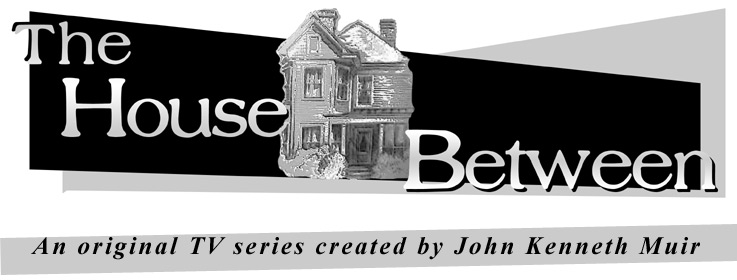
First off, my Internet sci-fi series The House Between will be premiering soon, with clips showing up here - on the blog - first. The show's first season (and yes, there will be a second season...) consists of seven half-hour dramatic episodes. The pilot episode is "Arrived," and naturally, it will "arrive" on the Net first. You can read more on the topic, and see pics at The House Between web site.

If books are more to your liking, I have three new film books coming out in 2007.

First off, there's my 800+ page goliathon called Horror Films of the 1980s. This heavyweight creepozoid should be published any day now. I spent my holidays indexing the book and proofing the manuscript (which was over 1500 pages). Fun! Anyway, I'm hoping this is my film book masterpiece...but that's for critics and readers to decide.

Here's the description from McFarland
: "
John Kenneth Muir is back! His Horror Films of the 1970s was named an Outstanding Reference Book by the American Library Association, and likewise a Booklist Editors’ Choice. This time, Muir surveys over 300 films from the 1980s. From backwoods psychos (Just Before Dawn) and yuppie-baiting giant rats (Of Unknown Origin), to horror franchises like Friday the 13th and Hellraiser, as well as nearly forgotten obscurities such as The Children and The Boogens, Muir is our informative guide through 10 macabre years of silver screen terrors.

Muir introduces the scope of the decade’s horrors, and offers a history drawing parallels between current events and the nightmares unfolding on cinema screens. Each of the 300 films are discussed with detailed credits, a brief synopsis, a critical commentary, and where applicable, notes on the film’s legacy beyond the 80s. Also included is the author’s ranking of the 15 best horror films of the 80s.


Also included in the book are interviews with director Tom McLoughlin (One Dark Night, Friday the 13th Part VI: Jason Lives), Thom Eberhardt (Night of the Comet, Sole Survivor), James L. Conway (The Boogens), Kevin Connor (Motel Hell, The House Where Evil Dwells), Lewis Teague (Cujo, Cat's Eye, Alligator), Fright Night editor Kent Beyda, and "final girls" Ellie Cornell (Halloween IV, V), and Rebecca Balding (The Boogens, Silent Scream).

Next up, in May of 2007, from Applause Theatre and Cinema Books, is The Rock & Roll Film Encyclopedia. Here's how Applause describes this one: "One great rock show can change the world” says Jack Black's character Dewey Finn in the 2003 Richard Linklater comedy The School of Rock. This exhaustive, highly-detailed, yet reader-friendly A-to-Z encyclopedia takes that lesson to heart by gazing at half-a-century of rock 'n' roll films, big screen epics both celebrated and obscure.From the 1950s and the age of “juvenile delinquents” in films such as Blackboard Jungle to more intimate, twenty-first century rock band portraits such as Metallica: Some Kind of Monster, this book by noted film authority John Kenneth Muir also features entries on rock documentaries such as Martin Scorsese's The Last Waltz, movies starring rock stars including the Sting vehicle The Bride, and even films boasting extensive rock soundtracks, for example George Lucas's paean to the age of cruising, American Graffiti.

The Rock and Roll Film Encyclopedia
includes 230 film entries from 1956 through 2005, including cast list, creative personnel, M.P.A.A. rating, running time, and DVD availability. Entries on the familiar conventions of this unique cinematic form, such as the Vietnam War, the ubiquitous press conference (in which band members wax philosophical), the rampant destruction of property (hotel rooms, specifically) and even the Yoko factor (meddling girlfriends).

Biographical entries on players who made significant impact on the silver screen, from Elvis Presley and the Beatles to Alice Cooper and Prince. Interviews with rock movie directors Allan Arkush (Rock 'n' Roll High School), Martin Davidson (Eddie and the Cruisers) and Albert Magnoli (Purple Rain). Peter Smokler, the cinematographer who shot the Rolling Stones' Gimme Shelter, the Jimi Hendrix film Jimi at Berkeley, and This Is Spinal Tap is also interviewed.

In addition to pure rock 'n' roll, the films included cover all genres of popular music, ranging from Johnny Cash to Madonna, rock-influenced musical theatre (Jesus Christ Superstar), tejano (Selena), disco (Can't Stop the Music, Xanadu), and reggae. Whether your “one great rock show” is a beach movie starring Frankie Avalon and Annette Funicello, a misbegotten horror/rock fusion like The Horror of Party Beach, or a rib-tickling, heavy metal mockumentary like This Is Spinal Tap, you'll find all your favorites remembered in the pages of The Rock and Roll Film Encyclopedia.

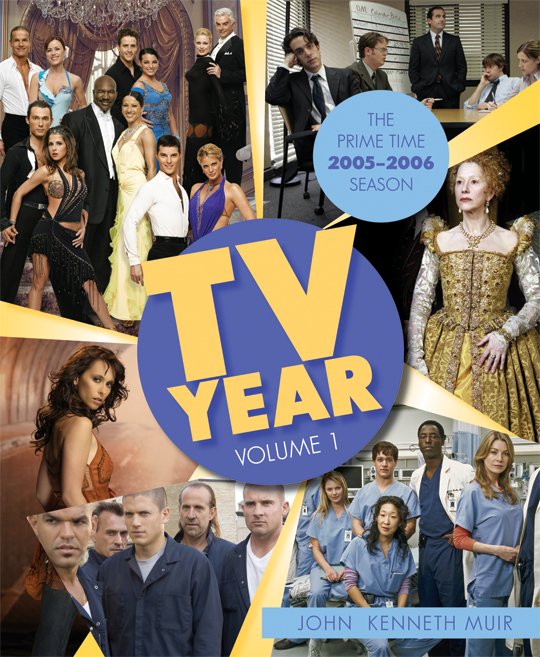
Finally, come June 2007, the first installment of my brand new book franchise premieres, TV Year Volume 1, 2005-2006. TV Year also arrives under the auspices of Applause and Hal Leonard, and here's the skinny on it:

Here is the inaugural edition of TV Year, a new survey of the most recent complete season of over 200 drama, comedy, reality, and game shows, and more, from all the major networks. Readers will now be able to make up their own minds as to whether or not we've entered “the new golden age of television,” as Jon Cassar remarked upon accepting his 2006 Emmy Award for best director for a drama series for 24.

This book includes: Every significant prime time (8 to 11pm) broadcast series, both new and returning, that aired on television from August 2005 through July 2006; complete credits and detailed, opinionated summaries of each show with excerpts of reviews and behind the scenes gossip. Initial air date and closing date, cast changes, and notations about cancellation. Each entry also notes the DVD availability of each series.

TV Year includes the season's mini-series and TV movies and lists the nominees and winners of the Emmy Awards. Film and TV expert John Kenneth Muir also can't help but add a few non-prime time shows as well that have become cultural events in their own right, including “The Daily Show,” “The Colbert Report,” and “Real Time with Bill Maher.

Also, and I'm thrilled about this facet, TV Year features a foreword from Hollywood screenwriter and TV legend, my friend Larry Brody (Automan, Star Trek: The Animated Series, etc.).

So there you have it, Muir-a-thon '07, coming your way...

20 Years Ago: Doctor Who: "The Girl in the Fireplace" (May 6, 2006)

When The TARDIS lands on a derelict vessel deep in space, The Doctor (David Tennant), Rose Tyler (Billie Tyler) and Mickey (Noel Clarke) inv...