Sunday, December 09, 2007

Model Kit of the Day: Masters of the Universe Talon Fighter Flying Vehicle (Monogram; 1983)


From the legend on the box: "This sleek, bird-like craft transports MASTERS OF THE UNIVERSE forces through the skies in their ceaseless quest for victory. The excitement of fantasy is captured in model kit form in this unique air-attack vehicle..."

The kit has a wingspan of 32.7 centiments, and is intricately detailed "from the thrusting eagle's head to the claw-like landing gear. It includes top-mounted gun turret, side-mounted laser cannons and a canopy that opens for easy access to the contoured cockpit."

Friday, December 07, 2007

RETRO TOY FLASHBACK # 71: MAXX FX Freddy (Matchbox; 1989)


During the height of the Freddy Krueger craze of the late 1980s, Matchbox released a unique toy that added Robert Englund's popular Dream Demon to the pantheon of classic movie monsters (including Dracula, Frankenstein's Monster and the titular character of Alien [1979]). The toy was Matchbox's "MAXX FX Now Showing: Freddy Krueger."

The box legend implores the buyer to "assist MAXX in recreating the greatest horror heroes in the history of Hollywood." Well okay, if I have to...

"Recreate all your favorite movie monsters with these authentically detailed body parts," the box went on to describe. "Clothing and accessories help you quickly transform the mild-mannered MAXX into spine-chilling monsters. You can even mix'n'match characters on Maxx's fully articulated body to create your own unstoppable menace."

The other benefits of the toy? "Completely poseable," "authentically detailed," "easy on/off assembly." The box also promises that the toy "lets you in on the secret world of Special Effects" and implores the customer to "collect the whole world of MAXX FX."

So basically, you've got your average Ken doll here, garbed in a yellow short-sleeved short and plaid pants, and then a variety of clothing accessories that transform this smiling, mild-mannered gentlemen into the scourge of Elm Street. Among the accouterments: a gruesome Freddy head, a stylish (but ratty...) fedora, the famous Freddy glove with finger knives, and that gnarly green and red striped sweater. So dress up Ken (err, Maxx...), and "you...make...the..the change...happen!" Yes, Maxx is indeed the "Quick change artist and the master of special effects."

This is a fun toy, and for those Freddy fans out there who wanted to see kindly Ken transformed into a brutal serial killer and then go after Barbie...MAXX FX's Freddy is the toy for you. Intended for kids ages 6 and up (I barely qualify...), I still have this toy in the box (my grandparents found it for me at a flea market in the early nineties...). However, I have never - in any of my collecting travels - seen any of the other three figures in the set (Frankenstein Monster, Dracula - with bat wings - or, most interestingly, the alien). Somehow, I don't think that they were actually released; that perhaps Evil old Freddy here was the Maxx test balloon...that popped. I'd love to get my hands on the Alien one of these days (if only to spit molecular acid on Barbie...) but none are to be found even on E-Bay.

Wednesday, December 05, 2007

CULT TV FLASHBACK # 41: Circle of Fear (1973): "Death's Head"

Today, I continue my recent survey of TV horror anthologies of decades past with a look at the less-than-inspiring Circle of Fear, which aired on NBC in the early 1970s. It's actually a continuation/modification of the short-lived series Ghost Story, which debuted in fall of 1972, but with a new title sequence and the removal of the Ghost Story narrator - Sebastion Cabot as Winston Essex. Whereas Ghost Story (produced by William Castle and developed for television by Richard Matheson) featured wraparound segments involving Winston Essex in his mansion, "Essex House," Circle of Fear cuts right to the chase, or in this case, the lack-of-chase. After an opening sequence featuring a hypnotic orange whirlygig spinning around (like Motel Hell's hypno wheel...), we find ourselves directly in a dull as dishwater hour-long horror tale, usually one about cosmic justice being meted out.

Last night I watched the first Circle of Fear episode "Death's Head" by Rick Blum and directed by James Neilson. It stars a way-too-thin Janet Leigh as Carol, an unhappily married suburbanite whose neglectful spouse, Steve (Gene Nelson) is a collector of insects. Steve says he "preserves" and "beautifies" bugs for his collection, but Carol hates insects. After she kills a spider she finds roaming her bedroom one night, Steve decides to stuff and mount the arachnid next to the pride of his collection: a death's head moth.

Steve's buddy and law partner, Larry (Rory Calhoun) drops by and when Carol practically drops trou for him amidst a sea of come-hither looks, talks to Steve about the fact that he's neglecting his wife, who - after all - is still a very attractive woman. "We've just developed different interests," says Steve, who then suggests that Larry take Carol out for the afternoon.

Larry agrees and takes Carol to a boardwalk where they look at voodoo dolls. Then, Carol finds her way to an herb shop that sells "potions and elixirs" as well as "all things real and imagined." There, Carol purchases poison from a gypsy woman. All she needs to be free is the poison and "an ounce of courage" to off Steve, so she can be with hunky Larry.

So that night, over cups of instant sanka, Carol politely poisons and killer poor Steve. Almost immediately, however, Carol begins to experience nightmares about Steve's death's head moth. A very fake-looking flapping moth silhouette menaces her by black of night, and she dreams of the gypsy: now old and menacing and taunting her. Oopsy.

Blogger's interjection: At this point in the episode I noticed that my wife, Kathryn, was miraculously still awake, even though it was quite late. I had to question her about this. "You can't stay awake for great episodes of The Twilight Zone, but for this - for this - you're hanging on?" To which she replied. "I've got to stay up for this..this is a train wreck."

Back to the train wreck: At this point in "Death's Head," Janet Leigh returns to the gypsy herb shop and asks the gypsy what she knows about death's head moths. Oddly, the gypsy is a repository for just this very question, and goes into a lengthy and detailed exposition about how the death's head moth is "said to be an eternal cage for disembodied spirits...for spirits who find no peace in death."

So - you guessed it - Carol's husband gets revenge from beyond the grave and the last ten minutes of the episode involve Janet Leigh running madly around a dark house swatting at invisible bugs, turning over furniture. In the end, Larry comes over for a visit and finds that Carol - gasp - has switched places with Steve. Her skull is now implanted on the body of the death's head moth.

Oy.

First, before tearing this show apart, I'd like to establish that I am an advocate for releasing Ghost Story/Circle of Fear on DVD. I'm a completist, what can I say? And a historian of the genre too. Occasionally, like Kathryn, I'm in the mood for a train wreck, and if nothing else, the series deserves a fair hearing given the talent involved (Jimmy Sangster is on board as a writer for some installments; as is my hero, Dorothy Fontana).

But jeez. This should be called CIrcle of Sominex.

What "Death's Head" demonstrates most clearly is that the horror anthology format works best in short doses - not in hour-long installments. The Twilight Zone learned this lesson the hard way after a fourth season expansion to an hour. Darkroom and Night's Gallery both were an hour long, but featured multiple stories in that span. Other anthologies, from Tales from the Darkside to Monsters to Evil Touch are traditionally thirty minutes. This leaves no time for boredom: the stories get in, do their macabre jobs, and then finish up. No fuss, no muss. Indeed, this is my biggest beef with the usually very-entertaining but occasionally flaccid Masters of Horror. Some of the lesser tales feel padded out at an hour, and so suspense and tension just leak out. A notable exception to this trend: the 1960s Outer Limits (not the crappy 1990s one...), which even at an hour in duration was exquisite, dramatic and terrifying.

I also believe the changes from Ghost Story to Circle of Fear didn't do this anthology series much good. I prefer an anthology with a narrator or at least an understandable leitmotif or cosmic mechanism. Winston Essex might not have been perfect in Ghost Story, but he could provide exposition and comment on the tales. In The Twilight Zone we had a great narrator in Rod Serling, but also that wonderful umbrella of the unknown, "the fifth dimension beyond that which is known to man." Lesser - but interesting horror anthologies, such as Evil Touch at least attempted to craft this aura, even if it was as simple a catchphrase as "there is a touch of evil in all of us," or a simple mechanism like "the darkside" in Tales from the Darkside. Circle of Fear has what, precisely? Where's the Cryptkeeper when you need him?

"Death's Head" is also weakened by the fact that the special effects are atrocious, and that nothing scary ever really happens. Instead, there are just long passages of Janet Leigh roaming around a dark house, upset that (invisible...) bugs are fouling the swimming pool or impeding her bedtime. Snoozarama (except for Kathryn, apparently...).

I'd love to report that "Death's Head" is an anomaly and that other Circle of Fear episodes are superior. But categorically - they're not. This show is an object lesson in how not to do a horror anthology. Again, I think of that low-budget, high-achieving Australian import, Evil Touch. It failed as often as it succeeded, but it never bored me.

Monday, December 03, 2007

38

Today is my thirty-eighth birthday.

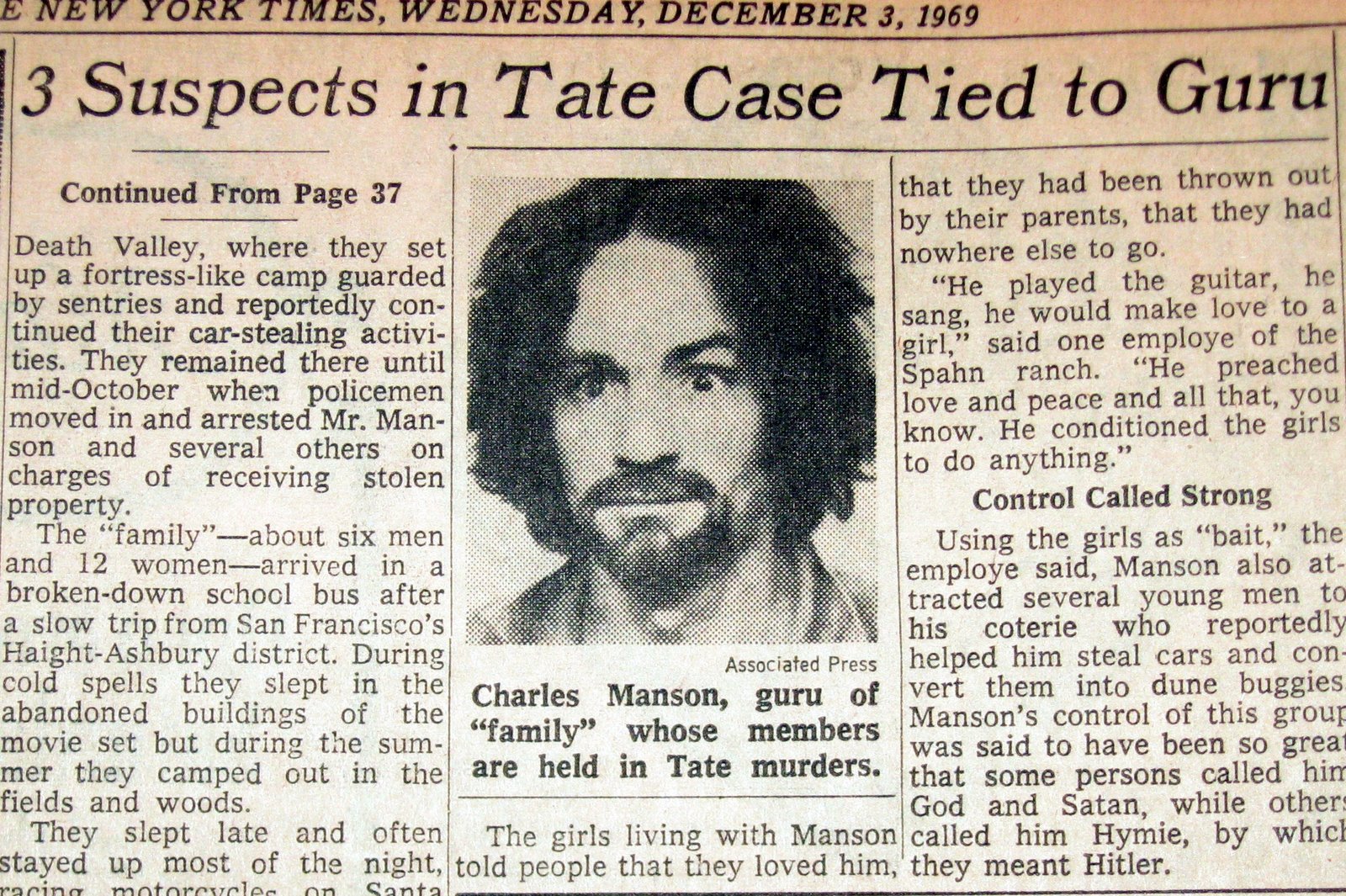
I was born on December 3rd, 1969, and so - in the mood for a little personal nostalgia - I decided this morning to present on the blog a little time capsule, a glimpse into the world of that day and era.

As usual, I have my parents to thank for being thoughtful and resourceful. Recently, I was at their home, and my Mom and Dad, without preamble, pulled out a yellowed edition of The New York Times from my birthday.

One they had kept for more than thirty-seven years. And one that I had never seen.

The newspaper on that day cost ten cents. And this edition is filled with advertisements for things like new cars (which cost a whopping $1,995 dollars), and tires (two tires for $25.00).


Headlines of the day involve an editorial by Al Gore (Senior), an arrest of "guru" Charles Manson, and the inaugural flight of the Boeing 747.

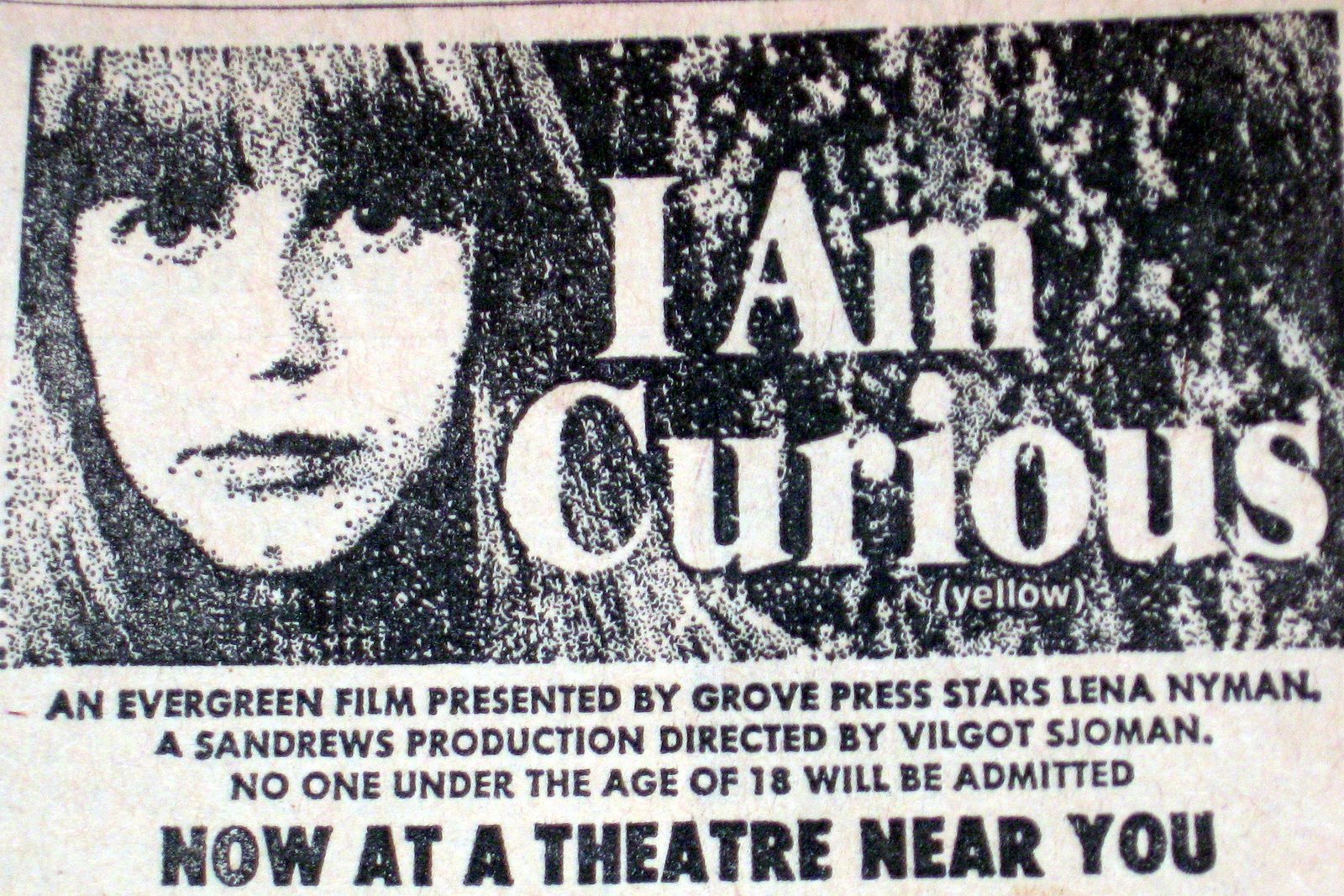
Also, being an admirer of film, I had to leaf to the movie listings and see what was playing. Among the fascinating titles: I am Curious (Yellow), The Arrangement (starring Kirk Douglas), Bob, Ted, Carol and Alice, and Midnight Cowboy.


Saturday, December 01, 2007

CULT TV FLASHBACK #40: The Evil Touch (1974): "They"

Now here's another horror anthology curiosity from a bygone era, but unlike Darkroom (1981), this half-hour program aired in the early 1970s in syndication (1973-1974) and was made in Australia by American producer Mende Brown. The series featured a variety of American guest stars including Darren McGavin, Ray Walston, Vic Morrow and Leslie Nielson. The show was hosted by Anthony Quayle, who would walk out from a black background to address the audience during each installment (usually behind wisps of what appeared to be blue cigarette smoke...), and introduce and conclude each macabre story. His typical end note reminded audiences that "there is a touch of evil in all of us." Then, sardonically, he would add "Good night. Pleasant dreams."

Perhaps the weirdest entry of The Evil Touch (and that's quite an honor given some of the stories...) was "They", which aired in the New York market on June 2, 1974, and was written by Norman Thaddeus Vane and directed by Mende Brown. Harry Guardino stars as Dr. Fenton, a man who is on vacation in the English countryside with his young son, Peter...a boy who has dreamed of the remote landscape and even the old English village that is their destination. Just recently, a series of deaths have occurred there on the moors, on the rocks overlooking the ocean side. Narrator Quayle ponders "They say the sea can kill you," and then meditates on the nature of fate. "What makes people travel long distances?" He asks. "Is it destiny that leads them, or is the journey part of their destiny?"

Once you get your mind around that question, "They" descends into a world of barely linear storytelling that, despite this unconventional quirk, is actually quite compellingly surreal and horrifying; perhaps because it feels so dreamlike; or more accurately, nightmarish. What happens next in the story is that Peter gets lost on the moors and runs into a cult of malevolent children who wear rings of black make-up around their eyes...a sort of quasi punk affectation. They (the children) are led by a porcelain young beauty, a black-haired wraith called Lydia (Alexandra Hynes). She has already met Peter in his dreams. "I've come to show you my favorite game," she tells young Peter in one nocturnal visit to his bedroom. "It's called...touch."

Show me on the doll where the evil siren touched you...

Anyway, Lydia and her cult of evil children want to initiate Peter into their "new order" and so therefore play another game with him (which isn't as much fun as "touch"), this time "blind man's bluff," to see if he is worthy of membership. (And membership has its privileges). Blind-folded, Peter almost walks off the cliff where the other five corpses were found dead, but his father, Dr. Fenton, finds him and rescues him as he is about to take a giant step for child-kind.

The boy and his father flee to what they hope is safety in a nearby cottage and lighthouse, only to discover that it is the residence of Lydia and her minions. What follows is a confrontation between Fenton and Lydia for possession of Peter's soul. It plays like Village of the Damned meets Lord of the Flies meets The Wicker Man on acid at Marshall Applewhite's Heaven's Gate. And dammit if it isn't effectively unnerving.

Lydia tells Dr. Fenton - who is a renowned advocate and lecturer on the subject of birth control (because overpopulation leads to starvation and "the population bomb," he says, "is more dangerous than the atom bomb,") - that they are enemies. She is the leader of "the Children of the New Order," (no, not the British rock band...) a new cult with dozens of groups across England alone. The children of the new order have given up on the Old Ones (meaning grown-ups) and are converting children to their cause. They want a world of perfection...a world of children. One-upping the Hippie generation in their philosophy, they believe that they can't trust anyone over fifteen...that with age comes corruption. The age of twelve is considered middle-aged by these kids.

Dr. Fenton attempts to reason with Lydia, "where do you get the experience, the maturity to rule?" He asks. Experience is sorrow, the cult suggests, maturity unnecessary.

In the final battle, Peter breaks Lydia's spell over him, and he and Dr. Fenton escape to the moors. But suddenly Dr. Fenton is trampled by a local bookshop owner whom Lydia has maliciously transformed into a wild pony (don't ask...). And then...on the bluff overlooking his father's corpse, Peter dons the black eyeshadow and...joins "They."

In closing, Quayle - our host - says "They are probably still somewhere on the moors..."

In that case, I'm never visiting England.

Seriously, what the heck does this story mean? Naturally, it feels very 1970s in a lot of ways, and that's the era that the great Irish poet (and story editor on Space:1999), Johnny Byrne has often called "the wake-up from the hippie dream." The Evil Touch's "They" portrays a generational clash in a world of limited resources, and does so in the language of "cultism." The great civic leaders of the 1960s (JFK, Robert Kennedy, MLK), had been replaced by radical cult leaders like Charles Manson, Jim Jones and the like. It was an era of war (Vietnam), scandal (Watergate), and an Energy Crisis, and there was a feeling that things had to change in a drastic, revolutionary way, if the human race was to survive the next decade. That's how cult leaders became powerful, because people were seeking answers in unconventional places. Of course, we did survive that era...but "They" plays into a fear of the impending end of the world, of an insurgency from "within" and it does so in the unsettling language of dreamscapes and phantasms. Fenton's murder by the horse, for example, is cut as a lyrical montage, utilizing slow-motion photography, extreme close-ups of the horse braying, and a super-imposed close-up of Fenton's agonized face as he is crushed. There are jump-cuts, flashbacks and other "trippy" film techniques here that we associate from the disco decade era, and the film grain, naturalistic approach and isolated, picturesque setting all add-up to something strangely disturbing. The gaps in conventional narrative are filled in by the imagination, and the result is something that - no matter how weird (and it is very weird...) deserves to be considered artistic.

Not many people remember The Evil Touch (and it ain't available on DVD...), and that's shame because it often told very weird stories like "They," on a super-low budget. But with that super-low budget came a super zeal and energy that the most expensive series mysteriously find difficult to replicate. The Evil Touch's "Kadaitcha Country" pitted Leif Erickson (as a Christian missionary) against an aborigine God in the Australian outback; "The Trial" found a haughty tycoon (with a secret) Ray Walston trapped in a nighttime carnival and pursued by a discredited brain surgeon-turned-tattoo-artist who wanted to perform a lobotomy on him. Another good one, "A Game of Hearts" saw a surgeon, Darren McGavin, terrorized by a donor (jokingly named Skorzeny) whose heart he had transplanted to another patient. These synopses make the whole enterprise sound strange, I guess, but The Evil Touch is strange in its own gloriously individual way...and I love that.

Thursday, November 29, 2007

CULT TV FLASHBACK #39: Darkroom (1981): "Siege of August 31"

"You're in a house. Maybe your own. Maybe one you've never seen before. You feel it. Something evil. You run. But there's no escape. Nowhere to turn. You feel something beckoning you. Drawing you into the terror that awaits you in...the darkroom."
-James Coburn's opening narration to Darkroom, a 1981-1982 horror anthology


On Friday nights in 1981, the place for avid horror fans was the Darkroom, a creepy ABC anthology that ran for seven hour-long episodes before cancellation. Produced by Christopher Crowe and executive story consultant Jeffrey Bloom, Darkroom was very much a series in the spirit of Rod Serling's Night Gallery. Each 60-minute story featured one or more macabre tale, usually with a supernatural bent and some diabolical twist ending. Not available on DVD today, this is one of those fondly remembered horror shows that hasn't seen the light of day in a long time. In the 1990s it sometimes appeared on the USA Network or the Sci-Fi Channel.

The series' opening montage was a work of art in its own right. A camera positioned low-to-the-ground - and likely a steadicam - races at warp speed through an entirely empty but ornate, gothic-style Victorian house. The camera whips down the stairs, cruises across long empty spaces, and rockets about to the baritone words of James Coburn's narration (above), until it stops at the imposing door of...the Darkroom. Perhaps this sequence was inspired by Stanley Kubrick's similar charting of inner space via steadicam in The Shining (1981), but I also wondered while re-watching this sequence if some part of it played into my earliest, formative imaginations and psychic gestalt on The House Between: a ghostly, empty house with - as the narration establishes "nowhere to turn." Anyway, it's a damn good opening sequence.

The trademark Darkroom episode, perhaps the most heavily publicized and most eagerly anticipated of the short run, was a special effects extravaganza entitled "Siege of August 31" which involved a Vietnam veteran and southern farmer named Neil (played by Ronny Cox) locked in combat with toy soldiers (and toy vehicles, including a helicopter) made animate.

The final confrontation, an impressive collage of rear projection, blue screen and miniature effects, occurs in a barn by black of night as the veteran adorns his uniform and literally returns to the war that haunts his dreams. The specifics of the tale involve Neil bringing home to his son Ben two toy play sets of "Company B" -- American soldiers. As the ten year old boy is forced to attend military school by his demanding father, the toy soldiers begin speaking to the boy, telling him about the atrocities committed by American military men in Vietnam. Neil thinks the boy is trying to spite him, since there is no way young Ben could possibly know about his wartime experiences. The last straw is when Neil stumbles upon a toy Vietnam Village...one destroyed in flames. Neil's wife (Gail Strickland) begs Neil to let the boy stay home and not attend the school but the father refuses to relent. In fact, he decides to send the boy the very next day. It is that night that Neil meets his destiny in the barn, fighting a toy army and air force.

Based on a short story by Davis Grubb, and written for television by Peter S. Fischer, "Siege of August 31" is directed by Peter Crane. Watching it today, one gets a sense of how deeply conflicted the story is, a reflection of how ambiguous the Vietnam War experience was for the nation, I suppose. On the one hand, Neil (Cox) is portrayed as a veteran who was wounded in war (he lost a leg...) and who wants what is best for his son. He wants Ben to be more than him, more than "just a dumb old dirt farmer." The best he ever felt, he claims, was as as a soldier. "I felt like I counted as something. Like I had something to give." His wife is not so pleased about the whole military academy thing. She doesn't want Ben to be a soldier.. "They got your leg," she tells Neil. "You want them to get your son too?"

On the other hand, Neil is depicted in deliberately unflattering, villainous terms as well. He strikes his wife across the face not once but twice, and is merciless - nay, actually vicious - with Ben, his son. He refuses to relent in his quest to send the boy off to a military academy against his will. Which leaves the toys no alternative, I suppose, but to intervene and stop him. In the end, Neil is a casualty of this personal and very odd war, and his wife eulogizes him. "He was a good man, a fine man," she tells Ben. "[That was] before he went off to war. He used to laugh all the time."

So, on one hand, "Siege of August 31" is an anti-war statement, commenting on atrocities committed under orders (the same mantra used by the Nazis tried for war crimes...), but on the other it wants to support the troops, saying that they did what they had to do. Basically, the story doesn't make a lot of narrative sense, especially since the teleplay explicitly states that Neil did not participate in the particular atrocities depicted by the toys. In fact, he has to phone his colonel to ask about that particular village. So, as a soldier, is he responsible for what the other soldiers do? Is he responsible for being part of a corrupt system? Is that the real "villain" of the piece, the government that sends men to war in the first place?

This is not a small question, and even more pertinent today given the situation in Iraq. Perhaps I'm being pedantic in demanding the story pick a definitive side in what is a complicated issue, but the story is less than it should because it never decides what the point here is. Had Rod Serling been writing, he would have picked a side, either choosing the soldiers and coming down on the side of nationalism, or - much more likely - making the Neil character someone who has to pay for his bad deeds. As it is, the story is diffident instead of forceful. I mean, if it is the system at fault, then both the animate toys and Neil are collateral damage. Why are they fighting each other and not Washington D.C.?

Yet "Siege of August 31" remains incredibly memorable because of that great special effects denouement (which was trumpeted in commercials and previews for the series). One suspects that the battle between Cox and the toy army is the show's real raison d'etre, and truth be told, the special effects hold up pretty damn well today. As a signature episode of Darkroom, the episode is a nostalgic blast, but one wishes that the producers had decided to tell the story in more convincing and clear-headed terms. Instead, the series wants to play things both ways. Neil is both a victim and an aggressor, and that makes the role of the vengeful toys that much harder to ferret out. Ultimately, in the end - during that great spfx battle - you don't know who to cheer for. And for the story to work well, you really, really should. Instead, you're kind of left feeling sorry for everybody. Ben has no father because the toys killed him. Neil was brought down by his blind patriotism and learned nothing. And what force brought the toys to life? Hmmm...

Tuesday, November 27, 2007

TV REVIEW: Mad Men (Season One; AMC)

I hope you'll forgive the lateness of this review. Having a year-old baby to look after means that some programs (and films...) remain in my DVR queue longer than I'd like. At any rate, I've now watched every compelling episode of this summer series right up to the finale and all I can say is...wow. Mad Men, a dramatic series from former Sopranos’ writer Matthew Weiner, is surely one of the best efforts on television, summer, winter or fall.

Set in early 1960, sometime before the Kennedy-Nixon election (which plays an important part in later episodes), this is the story of “life” (and work..) at Sterling Cooper Advertising, a high-powered Madison Avenue advertising firm. With lavish visuals and meticulous attention to detail, this unexpectedly riveting period piece paints a picture of life in corporate America as it once was (and how many Republicans would once again like it to be...).

The audience’s entrée into the world of Mad Men comes from the character of young Peggy (Moss), a female secretary recently hired by Sterling Cooper. In the series premiere, the audience is escorted alongside Peggy on a tour of the office. Ensconced on her desk is an electric typewriter and a rotary phone, and her boss in the secretarial pool, Joan (Hendricks) encouragingly suggests Peggy not be “afraid” of all that intimidating technology. Such a quip not only rings true for the characters but suggests the double layers of meaning inherent in this show. To the contemporary viewer – in the age of I-Pods and I-Phones - these over sized, clattering devices look antiquated and so the comment feels ironic or humorous; yet in the world of 1960, these characters are justifiably proud of this state-of-the-art instrumentation.

Later in the same show, Peggy meets the women who control the phone lines – the operators (who are relegated to a tiny rectangular room dominated by large machinery) that connect calls for the ad men - and she is instructed to be nice to them, lest they don’t connect her calls for her boss. That’s how the last secretary got fired, in point of fact: she couldn’t get her boss’s calls connected anymore. Who could imagine doing business that way today?

Mad Men beautifully and artistically depicts the business world of nearly fifty years ago. It is a world of cigarettes and constant smoking, non-stop martinis, and the utter, unquestionable sexual and professional dominance of the white man, the World War II generation. That final piece is what comes across loud and clear here: the manner in which the advertising men rule the roost both at home and on the job. Women truly are second-class citizens, staying at home, caring for children and tending house, while those who do go to work are treated like sexual opportunities. Minorities aren't in good shape, either. They’re waiters or elevator operators and don’t even rate on the hierarchy; they’re invisible, nothing more than wallpaper. And don’t get me started about the way that divorced women are regarded and treated...

This background detail is critically important to Mad Men, which focuses primarily on two white men of different ages and their end-of-season collision. The first character in this rat race is Don Draper (Jon Hamm), an extraordinary war veteran and ad-man who is afraid he is no longer at the top of his game. The name "Draper" sounds a lot like "dapper," and that's one thing Don surely is: all hat and no cattle, so-to-speak because - as we soon learn - his life story is actually as manufactured as his ad campaigns. Don is married to a beautiful but anxious young woman whose hands often shake, Betty (January Jones), and Don is having an affair with an artist in the city. Later in the run of episodes, he has a second extra-marital affair. He’s a cold fish too, skipping out on his young daughter’s birthday party because he can no longer stand the social niceties. This is after boozing it up all day.

Don’s competitor at the firm is the young lion, Peter Campbell (Vincent Kartheiser) an up-and-comer brimming with arrogance. He’s an immediate thorn in Draper’s side, though in one episode, “New Amsterdam” the audience sees how Campbell is also trapped, saddled with a grasping, condescending wife and a rich family that has certain "expectations" for him. Campbell is desperate to be seen as a legitimate talent (and in one episode he takes up writing to prove he is as talented as one of his peers), and even more desperate to climb the corporate ladder. As the season ends, he resorts to blackmailing Draper, with unusual results.

The reason to watch Mad Men is not just that the characters and drama are entirely fascinating. They are, but what Weiner has so commendably done here is opened a time-capsule to reveal to audiences just how much America has changed in the past-half century. This is no longer a country where pregnant women smoke and drink. This is no longer a world where going to see a psychologist holds such a dramatic stigma. Instead, the series takes place at the very end of that bygone era, a moving into the world of “Camelot,” which then gives way to the British invasion in music (The Beatles), the controversial Vietnam War, and the Kennedy assassination. Understandably, many people consider this era (of Mad Men) the end of innocence, but what Mad Men depicts is not innocence; just a different world, and an extinct one: a Boy’s Business Club. Many of us tend to wish for simpler times, or to look at the past with nostalgic eyes, but Mad Men dramatically slaps off any such rose-colored glasses. If you were a white man, heck yeah this world was great. If not...tough luck.

As drama, and as an artifact of “another world,” but one that comments rather successfully on ours, this is one of the most fascinating TV series of the year. It has been renewed for a second season, and I’m looking forward to season two next summer.

Monday, November 26, 2007

RETRO TOY FLASHBACK # 70: Mr. Spock Decanter (Grenadier, 1979)


To celebrate the release of Star Trek: The Motion Picture on December 7, 1979, the Grenadier Spirits Company unveiled this fascinating and unusual franchise collectible, a "beautifully handcrafted ceramic bust" of the half-Vulcan science officer played by Leonard Nimoy.

According to the literature on the packaging, this Grenadier Original "has captured in each handpainted figurine the uncanny likeness of our favorite Vulcan using only the finest quality porcelain."

And if that's not enough, each Mr. Spock decanter is filled with "Cielo" Liqueur(!) and, according to the back of the box "will be an eye-catching addition for every fan's showcase." The Cielo is 48 proof, in case you were interested, and there's 750 ml. What, no Romulan Ale? Or Tranya?

The back of the box, which features a nice head-onillustration of the classic NCC-1701 (after two-and-half-years in dry dock...) also includes some background on the series and film. "Since its creation, Star Trek has spawned millions of fans and hundreds of fan clubs, publications and conventions," it says in part. Then there's some info on Nimoy, noting he was nominated for three successive Emmys for his portrayal of this beloved character.

I picked up one of these Grenadier Spock decanters mint-in-box back at a huge antiques show in Maryland back in 1990, and was pleased to find it. I always enjoy some of the weirder Star Trek items (for instance, the Star Trek V: The Final Frontier marshmallow dispenser...), though I'm sure Mr. Spock would raise an eyebrow at an alcohol decanter molded in his image. That this item is from Star Trek: The Motion Picture and features the science-officer in a uniform he was only seen in once also makes it a pretty cool example of series memorabilia.

Finally, I have to wonder...will I be adding a Zachary Quinto Mr. Spock decanter to my collection come next Christmas?

Monday, November 19, 2007

MOVIE REVIEW: Spider-Man 3 (2007)

Watching Spider-Man 3, a big summer blockbuster, I had to wonder if director Sam Raimi hadn't, at least in some sense, fallen victim to his own success...as well as audience expectations. The talented director who got his start nearly 25-years ago with the gonzo, ingenious Evil Dead has already crafted three of the most entertaining superhero films ever made (the two earlier Spider-Man films, plus 1990's Darkman). Therefore, to witness a Spider-Man movie that aims high but just treads water is somehow disappointing, especially coming from Raimi. When - in all fairness - a Fantastic Four film of this quality would be a huge revelation. Imagine if Ghost Rider, Catwoman, Elektra, The Hulk or The League of Extraordinary Gentlemen had been this good. Fan-Boys (and girls...) would be celebrating.

Yet given Raimi's over sized talent and the extremely high bar set by the earlier Spider-Man films, Spider-Man 3 smells a little bit like a letdown. Not a huge stinking, throw-out-your-action-figures letdown (like, say, X3), but a letdown nonetheless. It is pleasant to watch, often diverting, now-and-then amusing, and occasionally inspired but also more often than not a victim to the law of sequelitis called "diminishing returns." There's something a little stale and familiar about the whole thing. It's a perfect movie to watch this Thanksgiving, not because it is a turkey, but because it feels overstuffed.

There was a good story here somewhere, buried beneath all the spectacle and digital effects, and one wonders how much Raimi had to succumb to studio calls to make this flick bigger and more spectacular than the other films in the franchise, a choice that severely damages what is good about the film. Specifically, Spider-Man 3's heart rests in the right place: in the growing (and difficult) relationship between Peter Parker (Tobey Maguire), Mary Jane Watson (Kirsten Dunst) and Harry Osborn (James Franco). It's a love triangle of sorts, but more than that too: the friendship between Harry and Peter has turned to hatred over the death of Harry's father, the original Green Goblin. I believe a fine, exciting Spider-Man film could have been produced telling the story of this triangle, and Harry's fall and redemption. I mean, Harry is our "New Goblin." We don't require any more villains than he; and the character deserves that spotlight given his prominence in the love triangle.

But instead - and disappointingly - the movie must provide two additional villains to get in all those CGI effects. So we get the origin story and crime spree of the Sandman (Thomas Haden-Church) a small-time criminal made a super villain. We find out in this film that he is the real murderer of Uncle Ben (Cliff Robertson), but that he was just trying to save his sick daughter. This is all something of a shaggy dog story since the audience never learns if his daughter is cured or not. Not even one line of dialogue is provided on this front. Instead, the movie simply sees the Sandman robbing armored cars and the like to get money for his daughter's operation. Then, at the end of the film, Spider-Man doesn't vanquish him. After soliciting Peter's forgiveness for the death of Ben, the Sandman just flies away between skyscrapers. Gee -- if he wanted to make more money to save his daughter, maybe he could sell the story of Spider-Man's true identity since Spider-Man fights him sans mask...

And then there's the film's other super villain, Venom, played for a short while by a snarky Topher Grace. I admit it, it would be hard to remove the Venom subplot from the film, because it grants Spider-Man 3 it's overarching metaphor and symbolism: anger and revenge personified. Basically, Venom is a "symbiote" that amplifies the tendencies of the host, especially aggression. Peter Parker is exposed to the black goop from space (which conveniently lands in the park just feet from Peter and Mary Jane...), and lets the "dark side" of his personality take over. He becomes consumed with hatred and anger. Aunt May says of such anger, "it's like a poison...it can take you over. Before you know it, it turns you ugly."

The first film boasted a metaphor about puberty/adolescence (Peter learning how to shoot those icky webs...); the second film had symbolism about impotence and lack of confidence (Peter was unsuccessfully in school, career and love, and occasionally couldn't fire those webs..), so it is natural and right that the third film would find a metaphor involving the latest dilemma of the characters. But long periods of this film go by where the space symbiote hangs out (literally) in Peter's apartment, waiting to strike...and not striking. The film has to cycle through all the various plot strands and villains before it lands substantively on the concept of Peter going dark.

Which was done, as superhero fans will note, in much the same fashion in Superman III (1983). Back then, exposure to Richard Pryor's synthetic kryptonite concoction split Superman into two people; one good and one dark. Spider-Man goes through similar paces here, though for some reason, Peter's exposure causes him to act like an extra from Saturday Night Fever (1977). Yeah, suddenly he's a disco dancer "strutting" like a greasy John Travolta. This sequence goes on and on and feels so out-of-sync with the rest of the movie that it's almost jaw-dropping in its pure awfulness. Again, my feeling is that Raimi is a victim of his own success. Everybody loved the "Raindrops Keep Falling on My Head" musical interlude from Spider-Man 2; and we all know sequels have to run the same paces...only bigger and better. Thus we get an extended dork musical interlude in Spider-Man 3.

So Spider-Man 3 is a tad on the schmaltzy, over sentimental side, and don't even get me started on the bizarre, poorly-timed "revelation" scene from Harry's man-servant which just happens to set everything on the right course for a rapprochement between friends., Still, there are glories to be found here. It's great to have the original cast back together (even Dafoe and Robertson!), and Bruce Campbell and J.K. Simmons' get to do some inspired comedic shtick in their supporting roles.

But best of all is that the wacky Raimi sensibility has been retained in terms of action sequences. Raimi is the undisputed master at piling on unexpected elements in an action sequence so that it becomes more involving than just your average neighborhood wrestling match. I remember in Spider-Man 2 how he unexpectedly incorporated Aunt May into a fight sequence with Doc Ock. Here, he surprises again, finding a way to invest an early battle sequence between skyscrapers with real interest and tension. In particular, the previous scene involves Aunt May giving Peter the wedding ring she has kept on her finger for nearly fifty years, as he plans to propose to Mary Jane. There is a lovely monologue from the always-impressive Rosemary Harris about how Ben proposed to her all those years ago. It's a fine, emotional moment...a genuinely heartfelt one.

Then, in the very next scene, Peter is ambushed by Harry on his way home, scooped into the air, and battered. In the tussle, that valuable family heirloom goes flying down towards street level far below the fighting friends. Instead of being a simple slug match between super titans, the ensuing fight sequence finds Peter struggling to keep track of the falling ring while simultaneously evading attacks from Harry. Although the CG still looks lame to me (sorry...), my emotions were fully engaged because the previous scene - with that great acting and dialogue - resonated. That ring is important, we know - essentially a Hitchcockian McGuffin, because Raimi took the time to set up the importance to the characters. Most directors don't understand this notion. They stage fights straight on, with no focal point to make fisticuffs and flying anything more than special effects spectacles. Raimi wisely provides the audience a focal point, and then - in his unpredictable, stylish way - raises the stakes again and again. He goes over the top in his tweaking of us, but we forgive him his trespasses because we are fully invested in the theatricality and importance of the moment.

And frankly, I think the idea of raising the stakes explains some of the problems in this not-bad/not-great threequel. Raimi doesn't get to raise the stakes often enough, or stick closely and authentically enough to the emotional subject matter of the story, the Harry-Mary Jane-Peter triangle. Instead the film is all tricked up with new villains and new special effects...but somehow, the heart of the hero (and the heart of the story) gets sacrificed. The movie feels overcrowded and diffuse instead of tense and focused.

I'm a huge Raimi fan (heck, I wrote a book about the guy in 2004...), but I think it's a good decision for him to leave the franchise. He's been on the Spider-Man beat since before he directed The Gift in 2000. That's a long time to be devoted to one property. Now the franchise needs fresh blood, and Raimi needs a new challenge. I'd love to see him do The Shadow, or Thor, or some other superhero, because his understanding of the genre is pretty-much unequaled. But it is very, very difficult to bring something new to a familiar franchise on the seventh year, in the third film, especially when you have to satisfy all marketing and corporate corners. If Raimi wants to leave superheroes behind all together, he should direct The Hobbit, since Peter Jackson has built a career on imitating Raimi's camera moves anyway. Unlike his disciple, however, Raimi boasts a sense of pace and discipline...his films are rarely self-indulgent like Jackson's highly-praised but inferior spectacles.

In short, I don't think Spider-Man 3 destroys or damages the franchise too terribly -- it's still head and shoulders (in my opinion...) above superhero franchises like Fantastic Four, X-Men and I'd also include the inconsistent Batman series. The biggest problem is that Raimi has wowed us the previous two times at bat, and this time he hits a double instead of a home run.

And we got used to the home runs.

Friday, November 16, 2007

CULT TV FLASHBACK #38: The Twilight Zone: "Walking Distance"

There are probably more than seventy-five episodes of Rod Serling's classic series The Twilight Zone (1959-1964) worth remembering in one of these cult tv flashbacks. And I intend - over the years - to get to many of 'em! There's William Shatner spying a gremlin on the wing of an airliner in "Nightmare at 20,000 Feet," or my personal Shatner fave: "Nick of Time," a second season Zone which sees the Shat waging a psychological war with a bobble-head Devil on a dime-store fortune-telling machine. God, I love that episode even more than the gremlin one, maybe because the true subject nature (like the best episodes of the series), is human nature and especially the pitfalls of our nature that trap so many of us.

And then there's "Time Enough At Last," with Burgess Meredith as a dedicated book reader who survives a nuclear holocaust only to...

Or the one about the woman in the bus station who spies her double... but no one believes her until more doubles start showing up...

Or the episode about the woman in bandages, getting plastic surgery, and we don't see her face (or the face of her surgeon...) until the denouement...

Well, you know, don't you? The funny thing about The Twilight Zone is that there are 156 episodes of this classic anthology series, but during the yearly marathons on Sci-Fi, the same fifty or so episodes get rerun. The one with "Talky Tina," or the woman (Agnes Moorehead) in the remote cabin with little spacemen chasing her ("The Invaders'), or the one about a very special alien cookbook ("To Serve Man.") These episodes are all timeless and terrific and worthy of broadcast from here to eternity.

But there are other eminently worthy wonders in this land of imagination too; ones that don't quite bite with scalding irony, or sting with surprise and O'Henry twists. Instead, these installments tug at the heart strings and evidence a deep melancholy. Which brings us to my selection today: "Walking Distance," by Rod Serling. It originally aired in 1959...nearly fifty years ago, during The Twilight Zone's first season on CBS.

This is the story of 36 year old "vice president of media" Martin Sloan (Gig Young), a successful but overworked businessman. He feels like he's been at a "dead run" for a long time, and has grown tired. Martin makes an unexpected stop at a rural gas station one day, only to realize that he's within walking distance of his hometown, "Homewood." It's a place he hasn't visited in over twenty years. While his car is serviced at the station, Martin walks down a dusty road (and we watch him go down that long path in a clever shot utilizing a mirror...), and straight into the Twilight Zone.

For that old town - a place of ice cream sodas, merry-go-rounds, games of marbles, Sundays in the parks and band concerts - hasn't changed a whit in two decades. It still costs a dime for a chocolate ice cream soda with three scoops. Martin wanders the streets and begins to remember a time in his life when things were simpler; slower...happier. He remembers a time when he was eleven years old carving his initials onto a gazebo in the park.

Then, wonder of wonders, Martin spies himself as a teenager carving those initials. He has returned home....to the past. He has traveled back 25 years. Excited, Martin runs to his house and sees his Mom and Dad; both long dead in the present. He pleads with them, telling them he's their son. However, they fear he's a crazed man, a lunatic escaped from an asylum. Determined, the adult Martin chases down his young self on a merry-go-round, and tries to tell him a very important message. He succeeds only in scaring the teenage version of himself, and the boy falls and injures his knee. It's an injury that both Martins feel simultaneously - since they are one in the same. "I only wanted to tell you that this is a wonderful time of life for you," the elder Martin whispers sadly after the boy has been taken away. "Don't let any of it go by without enjoying it."

Finally, Martin meets his father again at the foot of the merry-go-round...and his Dad knows who he really is now (Martin dropped his wallet). His father is loving but stern, and tells the elder Martin he must return to the present. "There's no room. There's no place," he tells him. "...maybe there's only one summer for every customer..." Giving the kind of advice only a Daddy can give, Martin's father also suggests "You've been looking behind you, Martin. Try looking ahead."

As Serling's closing narration makes plain, "Walking Distance" is about the fact that no matter how hard we try, we can't go home again. The past is sometimes so close to us that we feel we can reach out and touch it, that it is merely "walking distance" from here. A scent, a turn of a phrase, a photograph, a song, even a retro-toy flashback(!) can spur images of a past that we have left behind...yet not forgotten. And many people, like Martin Sloan, experience that "errant wish" as Serling describes it, that a "man might not have to become older," might never have to outgrow the merry-go-rounds of his youth.

"Walking Distance" is a beautifully-shot episode of The Twilight Zone, as well as an emotional journey that speaks to human truth. At the center of the story is the merry-go-round as metaphor. Life is indeed like a merry-go-round, we understand: we climb on, it starts to spin, and it feels like we can't easily get off....not without jumping. The episode plays with that notion artfully as the adult Martin chases down his younger self on the spinning amusement park ride.

The merry-go-round is depicted at a cockeyed angle, spinning ever faster. As Elder Martin nears his prey, the camera adopts a high-angle during the chase. Tellingly, Martin never quite reaches himself, just as a merry-go-round spins and spins, moves and moves, but never actually goes anywhere or reaches any destination. When Martin turns around and goes against the tide of the merry-go-round, time seems to slow down and this descent feels like a reckoning, as past and future finally collide, and Martin must make a choice about where he is going to live, and more importantly, how he is going to live. His world needn't be one of "no more cotton candy," "no more band concerts" but to change it, he has to change how he sees life. I love how the episode culminates around a tender conversation between father and grown son...a conversation that could not occur anywhere but the Twilight Zone, because in reality, the father is long dead. Here, the "fifth dimension" makes room for a son - no longer a kid - to experience the wisdom of his father one last time; when he needs it most. Martin's father is the age of the elder Martin, and one sense in both the performance and the dialogue that his Pop understands too well Martin's desire to return to the past; a past without responsibility or stress.

Rod Serling died young, and much of his work, including "They're Tearing Down Tim Riley's Bar" on Night Gallery expressed this wistful desire to return to a "simpler" time. "A Stop at Willoughby" on The Twilight Zone is a darker meditation on the same demons haunting "Walking Distance," but there the quest to stop running, to find peace, results only in death, not learning. In some sense, I guess I prefer "Walking Distance" because Martin Sloan does get a second chance to get life right; to change who he is. As sad as it is that the past is gone, there's also an optimistic side: every new day is a chance to recapture what we lost; or find a different kind of happiness. I wonder if Rod Serling - who wrote a whopping 90 episodes of the Twilight Zone's 156 - felt like life was a merry-go-round he couldn't escape, or if - with the help and catharsis of the Twilight Zone - he managed to exorcise the same demons expressed by Martin Sloan in "Walking Distance."

Wednesday, November 14, 2007

CULT MOVIE REVIEW: 2001: A Space Odyssey (1968)

This isn't my choice for the greatest science fiction film ever made. For me, that honor goes to another film of the year 1968, Franklin Schaffner's Planet of the Apes. However, objectivity requires that I state my bias here and explain a little bit about my decision-making process.. Planet of the Apes is a rip-roaring, exciting, dramatic social allegory about race, war, religious fundamentalism and more, whereas Stanley Kubrick's 2001: A Space Odyssey appeals almost entirely to the intellect...and the eyes. The film is lugubrious and steady, the mood...removed, clinical, not exciting by any conventional sense. Another way to put it: Planet of the Apes makes the blood run hot; 2001 -- chills it. So this is a personal preference for me, and yet even in acknowledging my preference as a reviewer, I would easily award 2001: A Space Odyssey the number #2 slot on that "greatest" films list, and today seek to acknowledge some of the elements of the Stanley Kubrick masterpiece that make it such an amazing and rewarding viewing experience.

Going back and watching 2001: A Space Odyssey again today, there are three elements that combine to make it a brilliant and visionary science fiction film. One: director Kubrick visually crafts a sense of "cosmic order," an order to the universe beyond that which humanity perceives, via his understanding and deployment of film language or grammar. Secondly, the film serves as a sometimes-ironic meditation on the development and drawbacks of man's technology (or tools), and thirdly, A Space Odyssey functions indeed as the "amazing experience" I noted above. Today's viewers, perhaps more interested in pace, narrative, characterization and the like may harbor little patience for a cinematic venture that pays such attention to reality, scientific accuracy, and the "details" of a futuristic journey into space. Crudely put, 2001: A Space Odyssey isn't a film that you can just interface with passively. It...happens to you. In many ways, it's like you are a passenger aboard the Discovery One, or the Moonbus, or the Pan Am Clipper with the other characters, You're watching -- almost in real time -- as events occur. If you take the title literally, this is nothing more and nothing less than a chronicle of what life is like in "the space age" of the twenty first century. You aren't going to see space battles, time warps and the like, but you will get a bird's eye view of planet Earth, or an orbital space station...after the stewardess serves lunch.

COSMIC ORDER
Stanley Kubrick's film, often billed as "the ultimate trip," tells the story of mankind: from the beginning to the "next step." From the "Dawn of Man," to "Jupiter and the Infinite Beyond," the film charts his development as a species. Watching over mankind (with unknown intent and agenda) are the alien monoliths: black, featureless obelisks that appear almost as signposts in the development or evolution of humanity. In the distant past, a monolith appears on Earth over the home cave of a tribe of primitive apes, and - emitting a strange signal - pushes the apes to grow, change, develop. After contact with the monolith, the apes miraculously develop an understanding of technology, or tools - weaponry.

The next monolith is discovered buried deep inside the crater Tycho, not terribly long after modern man has developed the ability to travel to the moon. The monolith sends a transmission to Jupiter and it is there, in orbital space, that man will have his next rendezvous with the monolith; one that will push forward the species' development again further; evolving mankind into enigmatic "star children."

Taken as given the idea that the monoliths are far more advanced than the race they shepherd, it is crucial for filmmaker Kubrick to craft a sense of overarching order in the universe. He begins doing so from the very first shot of the film. It is a beautiful outer space landscape which depicts Earth's pocked moon in slow descent. Beyond the moon, growing visible, is Earth itself - blue and beautiful. And over the Earth, even more distant, is Sol, our sun - shining brightly. The three bodies are aligned, forming some aspect of geometric progression, a perfect one-two-three. This is the first indication of a cosmic order, but not the last.

We see this kind of geometric staging of heavenly bodies in "The Dawn of Man" sequence as well. There is shot from ground level, gazing up at the imposing monolith. The sun - high in the sky - is intersected by the monolith's apex, and here we have another viewpoint that intimates order: a direct line from the monolith to the heavens above; to the "star" people or aliens.


Late in the film (near the climax), Kubrick's camera depicts a shot of Jupiter and its myriad satellites. Once more, the heavenly bodies are lined up in symmetric, precise sequence, but then - interestingly - a black monolith intersects the line of planets and moons almost perfectly on the horizontal xis, splitting the line in two. It is almost as though we are gazing at an algebraic equation created by the planets' positions. It is at almost exactly at this moment that the "trip" into the Monolith begins, and represents another symbol of Kubrick's obsession with a sense of cosmic order. It is an order beyond mankind's understanding or comprehension since we - unlike Kubrick's omnipotent camera - can never see such a view; never act as "the eyes of the universe," as it were. We travel between worlds; in orbital space, but can we see the stars how God does? Or how the Monoliths do? In all these views, the stars are immaculate and perfect, ordered for eyes not our own.

In charting a cosmic order, Kubrick also splits his film into what I see as three distinct movements. One is natural ("The Dawn of Man"), one is technological ("18 Months Later; aboard the Discovery) and one is spiritual or supernatural, ("Beyond the Infinite"). These are the three stages of existence mankind must travel in order to evolve to the next realm of existence: the star children.

In "The Dawn of Man," Kubrick's locked-down camera reveals a sunny, barren Earth in a succession of beautifully composed static landscape shots (no fewer than eight separate shots). There is life here (and our first indication is the sight of animal bones on a bluff...), but the long, vacant emptiness of the landscape seems to reflect the life and times of the apes. They huddle at night in their cave, afraid of the dark, and by day fight inconclusive battles over territory with a nearby family group. The apes are living beings who possess intelligence, but not true self-awareness or anything beyond rudimentary instinct. The arrival of the monoliths change all that.

By the year 2001, mankind - long gone down the path established by the monolith all those aeon's ago - now dwells in a totally technological world. Whereas "the Dawn of Man" featured a wholly natural world, one of bleak landscapes, wide savannas and rocky outcroppings, everything in the year 2001 is totally and completely artificial. We do not glimpse even an iota of something "natural" (besides man himself, perhaps). Man has utilized "tools' to remake the world around him and in doing so has even left behind that very world. Once he achieves space and lands on the moon (a sign, perhaps, of a technologically advanced world...), he has reached the second threshold desired by the monolith; the threshold which will lead him, finally, to the spiritual world.

The last portion of the film, "Beyond the Infinite," depicts astronaut David Bowman (Keir Dullea) leaving behind his technology (the star ship Discovery and the malfunctioning computer HAL 9000) for the enigmatic black monolith in Jupiter's space. He flies into the monolith and upon intersection point the film cuts to a very long, very odd montage -- a "cosmic trip" -- in which we are treated to a plethora of strange visions. Light seems to swirl by the camera, and then the viewer is left gazing for long periods at otherworldly vistas. Green oceans; mountaintops turned red. High angle views of an orange planetary surface and the like. It is distinctly as though nature (the world of "the Dawn of Man") has literally been inverted in the quest for the spiritual. Here, nature is different; the land is different.

There is no room for technology, either, in this realm and very soon David Bowman finds his pod and space suit gone as he ages (seemingly at warp speed) in an odd Victorian apartment. He spends his days (or minutes, perhaps...) waiting to die so he can achieve the next form of human evolution, which I believe the film suggests is a metaphysical form. People often ask what the Victorian sitting room represents or symbolizes and my best description of it is that it is evolution's antechamber. The body's natural death is apparently a prerequisite for the next stage of human life (otherwise, the monolith could just zap Bowman with a laser beam and send him on his way). Instead, David Bowman must grow old locked in his aging body, let his physicality fail. And in that last moment, when the astronaut is old and infirm, laying in bed, he seeks to touch the Monolith (which re-appears before him). He can't quite grasp the afterlife; can't quite touch the Monolith. But then, when he dies, his body disappears, re-formed into the glowing "star child," a baby with soulful eyes dwelling in a kind of translucent womb. This is the birth of man as a spiritual being, and Kubrick has prepared the viewer for the transition by taking man from nature, to technology, to what lays beyond...if not the dark night of the soul, than the glowing brilliance of spirituality; the soul.

TECHNOLOGY

In charting the development of the human race from its natural beginning to its spiritual future, Stanley Kubrick seizes on an irony. The very intelligence brought to humanity by the Monolith - the wherewithal to understand tools and technology - is the very thing that could actually destroy humanity. In "The Dawn of Man" stage of the film, the first "tool" or technology utilized by the apes is a discarded animal bone. It can be used to kill prey during a hunt and therefore assure survival for man (as we see in a montage as a giant beast falls dead after being struck...) or it can be used as a devastating weapon with which to kill enemies and hold on to territory.

The ape armed with the animal bone kills an enemy ape and in a moment of nearly orgasmic delight and triumph, tosses the bone high into the air. Up and up, Kubrick's camera tracks the ascending weapon until - boom - the greatest (and most sweeping) film transition in history. The bone becomes an orbiting satellite in the 21st century. This transition dramatizes in one shot the entire sweep of human history: he has gone from wielding animal bones in the desert to building spaceships and leaving Earth's gravity. The understanding of how to use a tool (and a weapon) has led him to create an entirely technological world around himself.

Which brings us, inevitably, to the HAL 9000, the last word in mellifluous-voiced computers. Like that animal bone in prehistory, HAL is no more than a tool or a device to make life easier for humans. But - also like the prehistoric bone - HAL is dangerous, a weapon. Worse, technology has evolved to such a point now that the "tools" mankind creates can out think him (winning at a Chess game...), and even kill him, as HAL murders the astronauts in suspended animation and cuts the air line of astronaut Frank Poole (Gary Lockwood). The agenda from Kubrick, I believe here, is a word of warning. It might very well be that Kubrick saw this period -- the technological period that precedes the spiritual period - as the era when the human race is in most danger of destroying itself. 2001: A Space Odyssey was produced in the late 1960s during a war that seemed like it was going on forever (Vietnam). It was the era of the Cold War and the threat of nuclear annihilation...a time when a push of a single button (the use of technology again...) could rain death upon millions across the planet. HAL is not just Frankenstein's son, a child of a creator turning bad, but the embodiment of the technological age and inherent dangers thereof.

If man can survive his flirtation with deadly machines, with the technology he himself has forged, 2001: A Space Odyssey seems to suggest, than there will be no limits for him in the universe. If he lets go of the things he made, the destructive things, the sky's the limit.

THE ULTIMATE TRIP
2001: A Space Odyssey runs over two hours, and yet there is barely 45 minutes of dialogue in the entire film. Kubrick tells his tale with beautiful, icily precise visuals, stunning special effects, and - often - classical music. The middle section of the film involves Dr. Heywood Floyd (William Sylvester) traveling from Earth aboard a Pan Am passenger ship to a rotating space station. After a time on the station, he boards a vessel bound for the moon, and continues his journey. This part of the film serves as a travelogue, a day in the life of a commuter in the 21st century. Some people may find it interesting; others may find it dull, for it is the equivalent of one of us taking a trip across country by plane: sitting in our seat on a 747, going out to the runway, flying to another airport, boarding another plane, and so forth. There's a lot of waiting, phone-call making, and even a bathroom break.

The point of all this, I believe, is two-fold. First, Kubrick has created a drama of the near future, and hopes to dramatize what life is like in that time period. It should seem both familiar and strange at the same time, and it is. These sequences are unerringly realistic. But also, I believe Kubrick's naturalistic approach in this middle-part of the film best sells the "cosmic" order and "danger of technology" elements of the film. Mankind believes he controls the universe, as we see here, in the kitchen-sink depiction of space travel as "routine" and "ordinary." But, it is only the illusion of control, as we understand when we meet HAL later. We don't control our technology; the opposite is true. Also -- remember - we don't create the order in the universe -- it is beyond us; and all those geometrically perfect shots of planets in lines reflect that. This section of the film establishes well the illusion man has built around himself. That bubble of delusion soon gets punctured.

One of the longest and most beautiful portions of 2001: A Space Odyssey arrives in this middle section. It is the docking of the passenger flight on the station. It is a lengthy scene (far lengthier, even, than the Enterprise in drydock sequence in Star Trek: the Motion Picture [1979]) and it is cut and paced to Johann Strauss's waltz, The Blue Danube. This selection of music adds an elegance and pace to the scene, but also connotes almost a sense of whimsy. The two space vessels (the station and the ship), are performing a technological waltz of their own, aren't they? The players aren't even human, but the Blue Danube suggests that this space docking maneuver is...a dance. Emotionally, I think we respond to the use of this music in two ways. One, it is a hypnotic piece of music, and we succumb to its spell. But secondly, it is - after some fashion - a humorous or silly selection...and here I think Kubrick is sneaking in that devilish sense of irony once more. He's scoring the future...with the past. He's reducing a technological marvel to...a dance.

The kitchen sink reality of the middle-portion of the film (the travelogue, let's call it), is heightened by Floyd's tour of the space station. He makes a long distance telephone call to Earth and speaks to his daughter The phone booth he uses is adorned with a Pacific Bell logo. He walks past the station restaurant (a Howard Johnsons) and later we catch a glimpse of the billeting accommodations...A Hilton hotel. Later, en route to the Moon, Floyd has to take a potty break and - in a neat visual gag - must read the rather lengthy directions for operating a "zero gravity toilet."

Once the movie has shifted to the Discovery One, there is still this sense of the routine, of the Earthly norm, only transplanted to outer space. Frank Poole is first depicted jogging around a control room, then watching cable TV (BBC 12) while he eats his dinner from a tray. Again, all these scenes of "the routine" establish that two-fold Kubrick agenda: that we are not the masters of technology but vice versa, and that we are taken in by the illusion that we are the masters of the universe.

Why does HAL go nuts and kill the crew of the Discovery? The answer comes at us, almost invisibly, during Dave's sojourn into the Logic Memory Center to unplug the homicidal computer. A message plays revealing that HAL is the only "person" aboard Discovery who knew about the mission to contact the Monoliths. See? We have now outsourced "need to know" information to our tools...and it has driven them mad. The ultimate misapplication of technology, perhaps. The machines control the mission.

2001: A Space Odyssey is a meticulously-crafted, beautifully rendered cinematic journey. It's a film I can watch any time and become hypnotized by, even if it doesn't punch me on the gut level of Planet of the Apes, The Matrix or Star Wars. Above all, It is a splendid match of director and subject matter. One senses Kubrick behind the scenes, like those enigmatic monoliths, manipulating each and every moment. Almost forty years old, the film is as fresh and gorgeous and as open to possibilities and interpretation as it was when first created in the 1960s. Perhaps it isn't as flashy as later sci-fi epics, but it is surely one of the grandest, most thought-provoking, most carefully (and artfully) constructed visions of mankind and his future ever brought to us in the cinema.

20 Years Ago: Doctor Who: "The Girl in the Fireplace" (May 6, 2006)

When The TARDIS lands on a derelict vessel deep in space, The Doctor (David Tennant), Rose Tyler (Billie Tyler) and Mickey (Noel Clarke) inv...