Friday, October 13, 2023

Friday the 13th Part VII - The New Blood (1988)


I could have selected any Friday the 13th film to review today, to celebrate this horror holiday. 

But I chose 1988’s The New Blood, directed by John Carl Buechler, for a few reasons.  

First, this entry features my all-time favorite kill in the long-lived slasher franchise: the sleeping bag murder. 

And secondly, the film’s climax is dominated by a clutch of really great, really inventive gags. Jason Voorhees, like Wily Coyote, gets felled by a falling roof, and punctured by nails to the head. And then he falls through a staircase, and finally gets burned alive (or undead, as the case may be.) 

What’s not to love?

Well, actually, quite a lot.  

The New Blood is not exactly a good horror film, but at the very least it helps demonstrates a theory that I hold close to the heart.

And that theory goes like this: Once upon a time horror films didn’t take themselves so bloody seriously, and emerged, sometimes, as a whole lot of fun.  

During my teenage years, a group of high school friends would get together on Friday nights and we’d all go see these films at the theater. The Friday the 13th movies were good for a laugh; and sometimes good for a scream too.

That doesn’t mean such films are actually good, however. It only means they are fun.

The New Blood is, in terms of this dynamic, buckets full of “fun.” It’s not good in any conventional or critical sense. 

If you are seeking a “good” Friday the 13th movie, I would recommend the 1980 original, the 1981 first sequel, or Part VI: Jason Lives, which has a great sense of humor about itself.

The New Blood -- a kind of Jason vs. Carrie on the cheap -- also represents a point of no return for the franchise. The Jason saga was competing, at this historical juncture, with the far more popular (and more imaginative) Nightmare on Elm Street series, and the writers/producers/directors of the late era Friday the 13ths embarked upon creative somersaults to help Jason compete.

In the span of a few years, Jason battled Carrie, visited New York City, became a body-hopping demon, went to outer space and was re-born as a menacing cyborg, and then went head-to-head with Freddy before, finally, a 2009 reboot that felt like Jason’s Greatest Hits…one…more…time.

A New Blood is the inauspicious start of that trend, an era when a throw-everything-at-the-wall-and-see-what-sticks approach was adopted for the Friday the 13th franchise. New Blood is low brow, slapdash and dumb for a lot of its run, and yet, in its climax, just the right amount of zany too.

Not exactly a ringing endorsement?  

That’s probably true. The acting in the film is dreadful, the story is ridiculous and underdeveloped, and yet the final act -- featuring Jason riddled with nails, doused in gasoline, drowned and otherwise abused --plays like real life Looney Tunes cartoon.


Even against my better judgment, I can’t quite resist the bloody thing.

So Friday the 13th Part VII: The New Blood?  I can’t help but love it…at the same time I’ll tell you flat out it isn’t a very good or accomplished film.  Sometimes fun is just where you happen to find it.


A young girl, Tina, is traumatized when her parents argue at their home on Crystal Lake. She runs down a pier, jumps into a boat, and wishes her father dead. 

The pier collapses and her father drowns. Tina, possessing telekinetic abilities, feels lingering guilt over his demise.

Years later, a teenage Tina (Lar Park Lincoln) returns to Camp Crystal Lake with her mother and her psychiatrist, Dr. Crews (Terry Kiser).  She walks to the pier where her father died and attempts to resurrect him.

Instead, she awakens the sleeping juggernaut, Jason Voorhees (Kane Hodder).

The undead Jason is soon back to his old tricks, hacking up and murdering local teenagers. But before long, Tina realizes she must harness her unusual mental abilities to put an end to Jason’s reign of terror…


My first observation on this re-watch of The New Blood is that, in the Friday the 13th universe, the 1980s have lasted for approximately 25 to 30 years.  

Think about it: We know from on-screen title cards in the first film the action occurs on the cusp of the 1980s.  

Three films follow and then in The Final Chapter (1984), we meet Tommy Jarvis, a ten year old kids, or thereabouts.  

He kills Jason, and Jason is dead and buried. 

Eight or so years later an adult Tommy Jarvis visits Jason’s grave to be certain the killer is dead, and ends up accidentally reviving him (with a little help from lightning).

But in that film, Jason Lives, it’s still the mid-1980s, even though almost a decade has passed.

Now, The New Blood starts. One early image is of Jason defeated, right where Tommy Jarvis left him: floating submerged in a lake.  


A little girl with psychokinetic powers, Tina (Lar Park Lincoln) wishes her father dead at the lake, and the pier upon which he stands crumbles and falls apart. He drowns.  

Seven to ten years later, a high school aged Tina returns to the lake and attempts to revive her father with her unusual mental powers, but awakens Jason instead. 

So Jason has been at the bottom of the lake for about a decade at this point.

And yet it’s still the 1980s.  

Talk about a hell you can’t awaken from: a world of shoulder pads, acid-washed jeans, and mullet haircuts lasting for not a few years, but a few decades.

The other crucial thing to understand about the film is that in this eternal-1980s, Jason has developed the power to defy and violate the laws of physics.  

Sure, in other films of the franchise, Jason possesses the knack of always appearing at the right place at the right time so he can execute the most isolated or vulnerable teen victim.  

But here, he actually seems to boast the ability to teleport. 

During one kill sequence, two teens decide to go skinny-dipping in the Lake. One young woman strips down, and gets into the water.  She submerges, and while she is underwater, Jason murders her boyfriend.  She pops up from underwater to see her boyfriend dead, murdered, and suddenly -- just a second or two later -- Jason emerges from under the water too, right next to her.  Without making a sound (like splashing water as he enters the lake), the killer has moved from somewhere on shore to being underwater, only inches away from his prey. 

This power grows more pronounced in Jason Takes Manhattan, when a victim in a cruise ship disco sees Jason at the room’s entrance, but can’t manage to keep his eye on him, and Jason teleports closer and closer to him…

Jason’s been through a lot these films, however, and perhaps it is no wonder that he’s taking the easy way out, using teleportation skills to catch and kill his quarry. The film’s best and most humorous kill occurs, similarly, when he picks up a girl in a zipped-up sleeping bag and smashes her head first into a nearby tree. 

The (violent move) is so easy and simple, that you may feel Jason just isn’t into his work anymore. There’s no hunting or stalking here, no ratcheting up of the fear.  He just slices open a tent like a can of fruit, pulls out the girl (in sleeping bag) and with one shot unceremoniously cracks her skull.


It feels, at least to me, that all the energy in the film was being rallied for the climax, which finds Tina doing her Carrie shtick and using her fearsome mental powers against Jason. There’s a great shot here of the roof dropping on Jason’s head (and then his undead hand punching through shingle). 

And then Tina telekinetically douses Jason in gasoline and sets him on fire.  Jason burns, in glorious long-shot before our eyes, and I’d be lying if I said the stunts and effects didn’t still look impressive.


I also love how Jason looks in this film. He’s been rotting so long that we can see the skeletal structure of his back poking through his flesh, and when Tina telekinetically tightens his trademark hockey mask on the back of his head, white/yellow pus oozes out of his flesh. 


In other words, Jason looks like a real monster, not just a mad-dog slasher this time around, and I appreciate the adjustment in premise. He’s been dead and buried before so he’s clearly a supernatural entity of some type.

Perhaps the most ludicrous aspect of The New Blood is the manner of Jason’s resurrection, which I alluded to above. Tina’s telekinetic powers miss their target, her Dad, and accidentally hit Jason instead.  

This is almost as bad as a dog pissing on Freddy’s bones…in a dream.

I didn’t know that telekinesis works this way; that it can make wrong turns or hit unsuspecting corpses. 

Of course, if Tina can resurrect the dead, like Jason or her Dad, just using her mental powers, why doesn’t she resurrect her Mom before the end of the movie?   

Once you open up that can of worms, it’s tough to shut down. Why not resurrect all the dead kids who are still in one piece?

The New Blood is filled with dopey, quasi funny moments that hover in a nebulous twilight zone, half-way between the realm of intentional and unintentional humor.  Dr. Crews (Terry Kiser) slowly goes cross-eyed when gutted by Jason, for instance.  And one teenager is killed by a party horn to the eyeball.  


It’s tough to take any of this action seriously, at any level, and yet one scene -- with a young woman trapped in a wood-shed as Jason hunts her -- is surprisingly suspenseful.

The New Blood makes me laugh every time I watch it. It doesn’t take itself too seriously, and it isn’t concerned with much of anything, besides punishing vice (the precursor, universally, to slice-and-dice).  I noted here that dead teenagers aren’t the only commonalities of all these franchise films. 

Instead, every Friday the 13th movie features a moment in which a storm rolls in, lightning crackles, and the power goes out.  Jason moves in with the storm, a supernatural avenger operating under cover of Mother Nature, punishing transgressors for the unpardonable sins of premarital sex and smoking weed.

It used to be that critics did a lot of hand-wringing over these films, but in today’s horror film environment, the New Blood looks positively innocent and naïve. 

Still, in the telekinetic-a-thon of the finale, viewers do get their money’s worth out of this Friday the 13th entry, and good heaping dose of fun, too.

Friday the 13th Part II (1981) - The Body Count Continues...


It was great fun for establishment movie critics of the day -- in the early eighties -- to dismiss the first several Friday the 13th films as artless, anti-social “dead teenager” movies. 

Yet today, one can gaze at the first two films in the durable franchise (from 1980 and 1981, respectively) and quibble with these disses   

The first two movies in the Friday the 13th cycle actually hold up remarkably well. Though they are not particularly deep in terms of theme, they are nonetheless effective and well-made.  In both productions, for example, the slasher format is at its most naturalistic, eschewing theatricality, artificiality and the supernatural in favor of blunt, in-your-face violence, grounded characterizations and psychological, human motivations.

In later entries, of course -- and perhaps to compete with the likes of Freddy -- Jason becomes more an overt supernatural personality, back-from-the-dead and ready to party, as it were.  


But the first two films make the most out of the stream-lined narratives and situations. These are stories, simply, of a mad killer who attacks young people in an isolated, natural setting. The first film makes a fascinating Garden of Eden case, even, comparing a snake in a cabin, to the evil Mrs. Voorhees (Betsy Palmer). Both get decapitated.

Friday the 13th Part II (1981) has long been one of my favorite films in the saga, for a few key reasons.  The first is that the movie attempts to ascribe intriguing and meaningful psychology to Jason’s character; establishing his “Momma’s Boy” complex, which has remained -- through sequels and even the reboot -- a key facet of this Bogeyman’s persona.  


Jason’s psychology is explored in the film by the sympathy shown by his would-be-victim (and great final girl): Ginny (Amy Steel). We learn in the film that she is a child psychologist in-training, and she applies that knowledge to Jason. 

Today, we would never someone with Jason’s obvious deficiencies a “frightened retard,” as Ginny does at one point, but the terminology is not as important as Ginny’s thoughts.  Specifically (and while at a bar no less…) she goes to the trouble to “imagine” what Jason’s life must be like, having been traumatized by the murder of his mother.  She puts herself in his shoes, and this ability to empathize (and grounding in psychology) are the things that differentiate her from the rest of the youngsters.


Ginny’s attempt to imagine or see Jason and his psychology are intriguing, because twice in the film, Ginny actually nearly catches sight of him.  She seems to sense Jason’s presence in two early shots, once during a hike in the woods when she lags behind the group, and later when she stands on a cabin porch.  It’s as if she is more sensitive to him, and that is the factor that helps her survive.  The pay-off occurs in the finale, when she dresses as Jason’s mother in an attempt to confuse him (and save her own life in the process).  She has been “in tune” with his presence, and even his pain, in some way throughout the film.  

In many slasher films, a connection of sorts exists between the insightful, sensitive Final Girl, and the Masked Killer, and that is abundantly the case here.  I rather like that Ginny’s ability to put herself in the shoes (or sweater?) of the “monster” is also the thing that saves her life in the end.

Secondly, Friday the 13th Part II -- far from being the anti-social menace that critics feared would destroy civilization -- is actually pro-social and forward-gazing in some significant sense. 

Consider that the character Mark (Tom McBride) --- a young man confined to a wheelchair -- is depicted as both physically attractive and sexually desirable. Indeed the film treats Mark as “equal” fodder for the vicious killer, Jason. Sure, he’s in a wheelchair, but when he breaks the vice-precedes-slice-and-dice commandment like the other teens, Mark’s still toast. Although there is a conversation in the film regarding how Mark ended up in a wheelchair (via a car accident), he is more than just that chair to the filmmakers and other characters. 


Instead, he is seen as a fun-loving person who -- like the others – just wants to have fun.  He wants to smoke weed and have sex, just like everyone else, and therefore is neither an object of pity or ridicule (like Franklin in The Texas Chainsaw Massacre).  In other words, Marc’s “handicap” doesn’t mark him for special treatment in the film, either within the drama, or outside, it by the filmmakers. That’s admirable.

Mark also gets a great death scene, and one I have never forgotten since I first saw the film at my girlfriend’s house at a party when I was in sixth grade. 


I also regard this film highly because Part II -- in many ways – offers the perfect distillation of the slasher paradigm. 

The first fifteen minutes of the film re-introduce virtually every component of that tried-and-true formula from the tour of the dead and the coup de grace (Mrs. Voorhees decapitation, in flashback), to the sting-in-the-tail/tale (Jason in the lake) and the introduction of useless authority (Crazy Ralph’s final appearance).  If someone wishes to understand or teach the pieces of the paradigm, Friday the 13th Part II is a great place to start learning. You can find every formulaic element in a short duration


There are some odd moments in the film to be sure, like the comical shot of Jason’s hands taking a tea kettle off the stove after the water boils at the end of the pre-title sequence.  Why would he even bother?  

But that funny caper arrives after a sequence that gives audiences a heart-pounding “cat scare” jolt, and a gory demise for the only survivor of the first film, Adrienne King’s Alice.

Also on the down-side: I can’t watch Max’s (Cliff Cudney) and Vicki’s (Laurie Marie Taylor) scenes in the film without doing a double-take.  These actors must have been cast because they look like dead ringers for John Travolta and Amy Irving.

But otherwise, Friday the 13th Part II provides a good psychological insight into Jason-- who here wears a potato sack instead of his familiar hockey mask -- pits him against a great, sensitive nemesis in Ginny, and, under the surface, suggests, even, that he is an equal opportunity slasher.


Along the way, the slasher format gets played out in every last detail, from the car that won’t start (Ginny’s), to the cat jump (in Alice’s home), to the “you-play-you-pay,” vice-precedes slice-and-dice dynamic. In the latter case, Max and Vicky get speared together while making the beast with two backs.

Steve Miner also directed the lean, efficient H20 (1998), and his no-nonsense approach pays off here.  The film is like a freight train barreling down at the tracks towards us, focusing on scares and just enough pop psychology so we don’t feel debauched by the gruesome violence.

That’s a recipe for success that the Friday the 13th franchise couldn’t always replicate. 

Friday the 13th (1980)


Happy Friday the 13th!

Surveying the eleven-strong Friday the 13th saga (twelve if you count Freddy vs. Jason…) the weight of several really bad entries in this slasher-styled film cycle is a difficult cross to bear.  This is especially true for the occasionally-inspired franchise entry, such as this sturdy and even visually-accomplished 1980 originator from director Sean S. Cunningham and writer Victor Miller.

There’s no doubt that the original Friday the 13th is an exploitation film designed to capitalize on the success and popularity of John Carpenter’s Halloween (1978).  But there’s also little doubt that this first entry in the long-lived series is a much stronger film than most people likely remember, at least in visual and symbolic senses.

Although Friday the 13th doesn’t always succeed, particularly because it overuses the stalker P.O.V. shot, other visual flourishes remain impressive, or at least laudable.  In other words, the exploitation here is -- at the very least -- grounded in some solid craft.  And the narrative details and structure as crafted by Miller are both sturdy and simple, thus permitting director Cunningham to shape the visuals in a unique direction.

Today, I want to shine a light on some of the film's more unique and intriguing visual touches, and point out a few reasons Friday the 13th boasts social and cultural value as a work of pop art, and as a product of its time period.

“We ain’t gonna stand for no weirdness out here.”


A group of camp counselors, led by Steve Christy (Peter Brouwer), prepare for the grand re-opening of Camp Crystal Lake, even over the objections of locals like Crazy Ralph (Walt Gorney).

These objections stem from Camp Crystal Lake’s checkered history.  In 1957, camp counselors failed to pay attention when a young boy, Jason (Ari Lehman) drowned in the lake.  Soon afterwards, two counselors were murdered.  Then, some years later, the water in Crystal Lake inexplicably “went bad,” scuttling an attempt to re-open the camp.

But Steve is committed to the cause, and with the help of a sensitive artist and fellow counselor, Alice (Adrienne King) gathers the troops for the big day of the camp’s re-opening.

In short order, however, the curse of “Camp Blood” resumes as a secret assailant begins killing the camp’s new denizens.  The crisis comes to a head during a powerful thunderstorm, and the murderer is revealed as someone who was very close to young Jason…

“God sent me.  You’re doomed if you stay…”

One quality most people forget about the original Friday the 13th is the film’s strong sense of place.  In particular, Crystal Lake is visualized as an idyllic American town, one filled with abundant pastoral and natural beauty.  Early scenes in the film document this beauty, creating an almost Rockwell-ian vision of the surrounding area (actually Blairstown, New Jersey). 


This is Friday the 13th?

And this?

And this?

These visualizations serve a crucial purpose, because Friday the 13th largely concerns innocence lost or destroyed. Two camp counselors, while making love, allow an innocent child to die.  Thus while they sacrifice their (Biblical) innocence, Jason loses his innocence…his very life.  At the same time, Mrs. Voorhees (Betsy Palmer) loses her son and therefore her innocence, along with her mind.

The beauty of the natural environs subtly reinforces the film-long conceit of a Garden of Eden-type setting, but one that is now corrupted.  For example, one short scene relatively early in the film reveals a snake inside one of the counselor’s cabins, a snake in the garden, as it were.  The snake is promptly decapitated by a counselor’s machete, putting an end to the threat and thus restoring order.

Symbolically speaking, that moment is intentionally reiterated in the film’s bloody denouement as our final girl, Alice, lops off the head of a more dangerous snake in the garden – the killer -- also utilizing a machete.  The two images connect meaningfully.

In both cases, we get the idea of natural order overturned by the presence of evil (a serpent, specifically...), and then order is restored, even if the respite is brief.


A snake in the garden gets decapitated by machete.

And then a second snake in the garden gets decapitated by machete.

The Serpent -- the dangerous and murderous invader in the Garden of Eden -- spends much of the film watching and stalking prey, and thus the film frequently repeats one specific composition.  In particular, the camera takes up a position outside while it gazes inside a building (a cabin or a bath house), through a window-glass.  Outside the window is only darkness since the setting is mostly nighttime. But inside the buildings, the characters are brightly lit and attending blithely to their mundane business, unaware of danger.

I wrote about this intriguing composition some in Horror Films of the 1980s, but it’s a significant element of the film’s tapestry.  It reveals not merely the voyeurism of the killer as she stalks her prey.  It also visually constricts the space of the protagonists within the rectangular frame, literally boxing them inside a series of smaller and smaller boxes.  In the tightest, most claustrophobic of those boxes, our heroes go about their business without realizing their world has become limited and closed off by the (invisible) presence of the slasher nearby.

Tight-framing is a regular and de rigueur feature of horror films, but Friday the 13th goes a step further with its relatively ingenious framing technique. Here, characters blindly walk into bloody death, a fact which we, the audience, can recognize and anticipate, but they cannot.  The result of this near ubiquitous staging is that the film becomes more genuinely suspenseful.   We wait, and wait, wondering when the terror will strike, and how it will strike.


Victim in a box #1

Victim in a box #2

Victim in a box # 3

Victim in a box #4
At the same time that the film "boxes in" its victims, the original Friday the 13th also offers wicked sub-textual commentary on the teenagers’ fates because stenciled and stickered camp legends reading “danger” and the like punctuate the Camp Blood's landscape.   Just as the characters are unaware of how their lives have become limited and finite by the presence of the unseen killer, they similarly take no notice of signage which constantly warns them of a threat.  They literally can't see the forest for the trees.


Well, the sign (on right) does say "DANGER."


Well, the sign (upper right) warns "KEEP OUT."

On a basic level, these visual touches make Friday the 13th more intellectually adroit than your average example of the slasher film.  Although the film wants to ape the energy of Halloween, it clearly boasts its own, frequently clever life force as well.

Where Friday the 13th treads even deeper into sub-text, however, is in the explicit connection between man and nature.  The film’s full-on bloody assault occurs under cover of thunderstorm, pounding rain and lightning.  If you watch every Friday the 13th film, you’ll find that this idea recurs more frequently even than the presence of Jason Voorhees.  The “invader” arrives with natural cover, thus with the implicit help, perhaps, of a force beyond the human world.  Is God on Jason (or Mrs. Voorhee's) side in this battle?

Going back to the Jean Renoir short film A Day in the Country (1936) -- an effort based on a story by Guy de Maupassant -- film has frequently connected human nature with Mother Nature.  The Renoir film depicts the tale of a family that vacations near a beautiful lake.  Two women in the family are seduced by burly farm hands that live nearby, and the romantic assignation culminates in an unexpected thunderstorm. 

Have they affected nature with their wanton acts?  Or contrarily, has nature affected them and thus spawned these very acts? 

The equation in Friday the 13th is not that different, at least on a basic level. A storm rolls in and it is one that metaphorically "rains blood," according to one character’s dream, recounted explicitly in the dialogue.  

Accordingly, this storm brings with it a vengeful murderer.  

Is the storm thus a manifestation of the killer’s undying rage?   Is it a protest against the unnecessary death of an innocent child?  Or does the storm represent the tears of God, as it were, the fact that a mother’s love has turned to cold-blooded murder?

I’ve often noted that 1980s watchdog groups like the Moral Majority were foolish to protest the Friday the 13th films because, by one interpretation, these slasher films certainly tow the conservative line about human vices and bad behavior.  

One way of  gazing at the film is to consider that those who are negligent -- those who smoke weed, and those who indulge in pre-marital sex -- are punished by a supernatural avenger, the Hand of God, for their transgressions.  Mrs. Voorhees does the actual punishing via machete, but it is God himself – in the form of the rolling thunderstorm – that grants her murderous campaign the cover it needs to succeed.  You can take or leave that interpretation, but it represents one valid reading of the film's text.  As I like to say, in Friday the 13th and it sequels, vice precedes slice-and-dice.

There are other elements of this exploitation film that audiences now tend to forget about because of all the water and bad sequels under the bridge, yet which probably bear mentioning.  For one thing, the film is dominated by imagery which portends doom.  

One such moment involves Moravian Cemetery, the last turn-off on the road to Camp Blood.  In essence, the shot of the graveyard reminds the audience it’s a short commute from the camp to death.  

Secondly, one of the camp counselors -- the Practical Joker stereotype, Ned -- pretends to drown in the lake early on.  His cruel and thoughtless act foreshadows, of course, the motivation behind the murders at Crystal Lake.  He is re-enacting (unknowingly) the moment that killed Jason, and the moment that actually brings about his end.  Thus even his "joke" is portending of doom.

And then there’s Crazy Ralph.  He’s not a subtle guy, even in terms of his wacko, almost cartoon appearance.  But Ralph is undeniably the “Cassandra” of the film: the old man warning the young people about their impending doom. Like the mythical Cassandra of Ancient Greece, he is doomed to know the future and not to be believed.   Within the context of Friday the 13th, he is also, however, a conservative symbol of tradition.  He is the herald (or historian) who warns of danger, and who is ignored by irresponsible, unworried, callow youth.  They believe that tradition and history don’t apply to them; that they are free of those restraints.  Ralph knows this is not the case, but is dismissed as crazy.  

Again, many of these elements have been repeated so often in the formulaic slasher film sub-genre that it’s difficult to look the original Friday the 13th in its original context, before all this stuff – the Cassandra, the storm, the P.O.V. shot – became reflexive and de-rigueur ingredients.  But all these elements exist for a valid reason in Friday the 13th, and generally enhance the film’s sense of anxiety and danger. 


Camp Blood?  Take a left at the grave yard. 

Crazy Ralph: The Cassandra Complex.

Did somebody drown here?
Slasher movies still get a lot of guff, even today, for lacking “socially redeeming features,” and many critics treat Friday the 13th as Exhibit A in that argument. The late Roger Ebert wrote, for instance, that the “primary function” of the teenagers in the F13 films is to “be hacked to death.”

On the contrary, I would argue the primary function of the teenager in films like Friday the 13th is to survive.   

While Mr. Ebert -- a personal and professional hero of mine, by the way -- reflects fondly in his review of Friday the 13th Part II on the innocence of his youth (and the cinema of his teenage years in the 1950s), he fails to acknowledge something important.  The cultural context that gave rise to the slasher format is entirely different from the one he nostalgically describes.  

Friday the 13th and its ilk arise from a teen culture that witnessed the Vietnam War played out bloodily on television news. It arises from a generation that witnessed a U.S. President toppled in the Watergate Scandal. It arises from a generation that saw the Energy Crisis, the Three Mile Island nuclear accident, America held hostage by an Islamic regime in Iran, and the brutal madness of Charles Manson and his cult.  

The self-same teen generation saw a U.S. President’s Secretary of the Interior, James Watt testify -- straight-faced -- before Congress that America’s natural resources need not be preserved for future generations, since Judgment Day would arrive in this one.  If you also recall some some of the pervasive cultural fears of nuclear apocalypse in the Cold War with the Soviet Union, you can see how America by 1980 had traveled a significant distance from Annette Funicello and The Mickey Mouse Club (1955).  

So why would discerning film critics expect the entertainment of 1980–1985 to be identical to the entertainment of 1950–1955?  The world had changed, and entertainment -- as it always does – changed with it.

The important question to ask, instead, is what kind of entertainment arises out of such a roiling, turbulent cultural context?   At the heart of Friday the 13th...what is it really about?

Consider that in these slasher films, the best and brightest teenagers battle for survival.  Many teenagers die, it’s true, but a handful of the smartest triumph over seemingly insurmountable, nay supernatural, odds.  

Even better, the slasher format -- Friday the 13th films included -- universally champion a very specific brand of hero: the final girl.  

This character archetype is female, obviously, but also smarter, more insightful, and more courageous than her peers of both sexes.  While those peers smoke weed or indulge in pre-marital sex, the Final Girl has instead detected that something in the world is not quite right; that something is off-kilter. While her friends waste time on momentary pleasures, she becomes clued-in to the fact that the world is a dangerous and troublesome place. She starts to "see" the world's dangers (as I enumerated them in above paragraphs...), and devises a life-saving response.

So where critics such as Zina Klapper argue that slasher films champion and actually “induce” violence against women, I’d again argue the contrary point.   Based on the cast dynamics of the Friday the 13th films alone, these movies are equal opportunity offenders in terms of murders, yet pro-woman in terms of survival.  

In other words, the slasher films kill a whole lot of teens of both sexes, but offer, almost universally, one type of survivor: the smart and resourceful female.

This is certainly the case with Alice in Friday the 13th.  She has no recourse but to trust herself -- and her instincts -- on the night of the attack.  No man comes to rescue her, or to sweep her off her feet.  She can rely on nothing beyond her own personal qualities.  Not government (Watergate), not the military (Vietnam), and not corporate interests (Three Mile Island).  

In the end, Alice gets locked in mortal combat with another woman, Mrs. Voorhees, and that's significant too.  How many times in horror movie history have women been afforded the role of primary hero and primary villain in a single work of art?  Sure Mrs. Voorhees is certifiably bonkers, but she is an example of a person who saw something in the world she didn't like and sought to change it.  She is thus the dark reflection of an assertive final girl like Alice.  Accordingly, I can’t see how this movie fits the established party line about misogyny and horror flicks.


Final Girl

Final Monster

When I look back at Friday the 13th, I do see a cheap exploitation film, to be certain.  It's a step down from the artistry and vision of Halloween, for instance.  Yet Friday the 13th undeniably speaks to a specific historical context. Given that historical context I described above, is it so surprising, so morally corrupt that one generation’s entertainment of choice concerns a crucible of survival in which only the clever, the moral, the resolute and the resourceful manage to survive an apocalyptic world that seems stacked against them?  Where evil always resurfaces, even if in a new form? 

Slasher movies don’t make audiences meaner, as Janet Maslin asserted in a column in The New York Times.  They simply take the real world of the 1980s as it already was and demonstrate to teens that they can survive it, given the right skill set. 

Impressively, that skill set is associated not with stereotypical male qualities or even with men at all, but with young, intelligent women.

I can’t legitimately argue that all slasher movies are well-done or social valuable.  Some are dreck.  

But I’ve always felt it was wrong to lump in the first Friday the 13th with the mountains of dreck because it features some visually accomplished moments, a smattering of interesting symbolism, and -- not the least of all -- it conforms to the slasher format’s most noble conceit by reminding kids (and particularly girls) that even if the Boogeyman is at the door (in the form of the Cold War or anything else), they can survive.  

And they can do so with the qualities they already possess in spades, namely intelligence and insight.

Wednesday, October 11, 2023

7 Days Till Enter The House Between's Season Finale (10/18/23)!


Just one week until Enter The House Between concludes its first season! (10/18/23).


Tuesday, October 10, 2023

50 Years Ago: Don't Be Afraid of the Dark


A perennial in syndication throughout the 1970s, Don't Be Afraid of the Dark -- directed by the late, great John Newland (the talent who hosted and directed 96 episodes of the classic paranormal anthology, One Step Beyond) -- first aired fifty years ago today.

I saw it for the first time sometime later, in 1977 or 1978, perhaps, and it absolutely terrorized my young psyche.

The made-for-tv film depicts the chilling tale of Sally Farnum (Kim Darby), a bored housewife.


Along with her work-obsessed husband, Alex (Jim Hutton) -- who is devoted to becoming a partner in his law firm -- she moves into her grandmother's grand old country estate. There, she soon discovers an oddity in the basement study: the fireplace is sealed-up. Not just sealed-up, in fact, but barricaded. The bricks are reinforced with iron bars.


"Some things are better left as they are," warns Mr. Harris, the groundskeeper and repairman, "especially that fireplace..."

But Sally wants the fireplace operable, and so unbolts the ash-door on the side of the mantel. As she peers inside the hole with a flashlight, we can detect that the chimney shaft seems to stretch down and down, into blackest darkness.

Perhaps all the way down to Hell itself...

Before long, a cadre of hairy, shriveled creatures, "ferocious little animals," as Sally describes them, escape from that abyss and are loosed upon the house. They thrive in darkness, and terrorize Sally.


They knock an ashtray from her night stand in the middle of the night; they tug at her skirt and won't let go; they turn off the lights in the bathroom while she's showering.  They even go at her with a straight razor. 

And then things really escalate: these monstrous gremloids murder the interior decorator, tripping him up on the house's ornate and grand staircase. 

But nobody, especially not the work-consumed Alex, believes Sally's fantastic tale that there are tiny monsters inhabiting the house; and worse - that they want to steal "her spirit."

Then, one night, a skeptical Alex finally gets the full-story from old Mr. Harris.

Turns out that Sally's grandfather opened up that fireplace once before -- for the first time since the house was constructed in the 1880s, in fact. And he paid the price for his curiosity. One night, his wife heard cries and screams from the downstairs study. And something horrible dragged her husband down into the fireplace shaft. He was never seen again.

"To this day, I think he's still down there..." warns Mr. Harris.


In the conclusion of Don't Be Afraid of the Dark -- in a twisted, malevolent variation of imagery straight out of Gulliver's Travels -- the gnomes lasso the sedated Sally, and drag her down the stairs, towards that fireplace from Hell, and the long, dark chasm within.

She awakens in time to see the rope tying her ankles together, and she clutches the nearby furniture for dear life as her diminutive nemeses tug and tug. She grabs a flash camera and snaps their photograph, exposing them to the damaging light of the flash bulb for an instant...

Arising from the same period in horror film history that gave us the brilliant, and equally chilling Let's Scare Jessica to Death (1973), Don't Be Afraid of the Dark is essentially the tale of a woman trapped in an unhappy and lonely marriage...and slowly but surely losing her grasp on reality (see also: Something Evil). 

Sally's husband is mostly absent, and treats her as though she's a slow-witted child. All Alex cares about is that she's the "perfect hostess" for a dinner party, and the film functions literally as a metaphor of an unhappy marital relationship.

Little things - literally, little monsters - keep getting in the way of the relationship, driving a wedge between the couple.

The terrifying notion at the heart of Don't Be Afraid of the Dark is the opening of a Pandora's Box, the fear of breaking down a wall and releasing something that can't be put back in its place.

Again, without putting too fine a point on it, there's a psychological equivalent to this Pandora's Box (the fireplace...) in the film too.

Specifically, Sally deals with her fears about being just an "adjunct" to the successful, career-obsessed Alex, but her friend, Joan (Barbara Anderson) warns her that she's building "emotional mountains out of imaginary mole hills."

Quite the contrary, by probing and questioning the way things are in her marriage, Sally is chipping away at the brick and mortar foundation of unquestioned, traditional male/female roles in such relationships. Just as she takes a hammer and cracks open the bricks in that fireplace, releasing anarchy, chaos and terror, she won't take for granted the status quo in her personal life either.

Not unexpectedly, Alex is incapable of doing the same; and in the end, he fails his wife miserably. He loses her to the "darkness."

For a made-for-TV production, Don't Be Afraid of the Dark boasts a fascinating retro film style, a form that enhances its unsettling content. Though the picture is replete with '70s era techniques such as the ubiquitous zoom (which corrupts the frame to a large extent...), director Newland also clearly understood the value of suspense and effective imagery. 

On the former front, the creepy little trolls in the basement aren't revealed for the camera (and then only in half-light) until after the thirty minute point of a 74 minute production.


On the latter front, I would point to a beautifully-composed shot of the depressed, terrified Sally sitting in a white-walled ante-room. She's bracketed by curtains, and outside them is pervasive darkness; the domain of the little devils. It's clear from this deliberate "bracketing" that Sally's space -- even in a large house -- is becoming increasingly constricted and small. Much how she feels about her own role in he marriage to Alex.

The gremlins themselves are played by little people (Felix Silla and Patty Maloney, among them.) acting on over-sized, Land of the Giant-sized mock-ups of the Farnum house. This technique actually works rather effectively: the gremlin shots and Sally shots match-up almost perfectly. 

Another strength of this tele-film remains the creepy, subtly disturbing musical score composed and performed by Billy Goldenberg. The jolting, macabre music makes effective some scenes that, perhaps, would be staged differently in today's filmmaking milieu.

Don't Be Afraid of the Dark is a retro 1970s horror treat, one made in the epoch of such made-for-TV classics as Gargoyles (1972), Duel (1971), Fear No Evil (1969) and yes, Satan's School for Girls (1972).

All of these tele-films, including this John Newland entry, featured a cinematic flair and a deep, palpable sense of dread. Hard to believe they were made for TV, and played to mass audiences, including kids. Today, these productions seem more chilling (and filled with disturbing implications) than many theatrical horror flicks I review here.

Like I said, this one really terrorized me as a child.

Because, as you may have guessed, there are no happy endings in Don't Be Afraid of the Dark. And that's another reason the film is so chilling, so fear-provoking, to this day.

You leave it in abject terror, and you will, in fact, fear the darkness.

Friday, October 06, 2023

Appearance on Inter Fleet Broadcasting!

I had an absolute blast on IFB (Inter Fleet Broadcasting) last night, discussing Enter The House Between, Battlestar Galactica, and my creative career and journey.

Here's the show!


Thursday, October 05, 2023

Join me on lnterfleet Broadcasting Tonight at 8:00 PM (EST)

I will be a guest on IFB (Interfleet Broadcasting) tonight (Thursday, 10/5) at 8:00 pm to discuss Enter The House Between (and hey, the series crossed 2,000 subscribers on YouTube alone!) and also, since it's that time of year, Horror Films of 2000s-2009.

Please join me for the next Interfleet Broadcast, TONIGHT:

https://www.youtube.com/@InterfleetBroadcasting/about

Wednesday, October 04, 2023

Enter The House Between Season Finale "The Last Dream of My Soul" Drops 10/18/23


 The season finale of Enter The House Between is almost here!

"The Last Dream of My Soul" premieres Wednesday October 18, 2023!   Don't miss it!


Sunday, October 01, 2023

40 Years Ago: Manimal


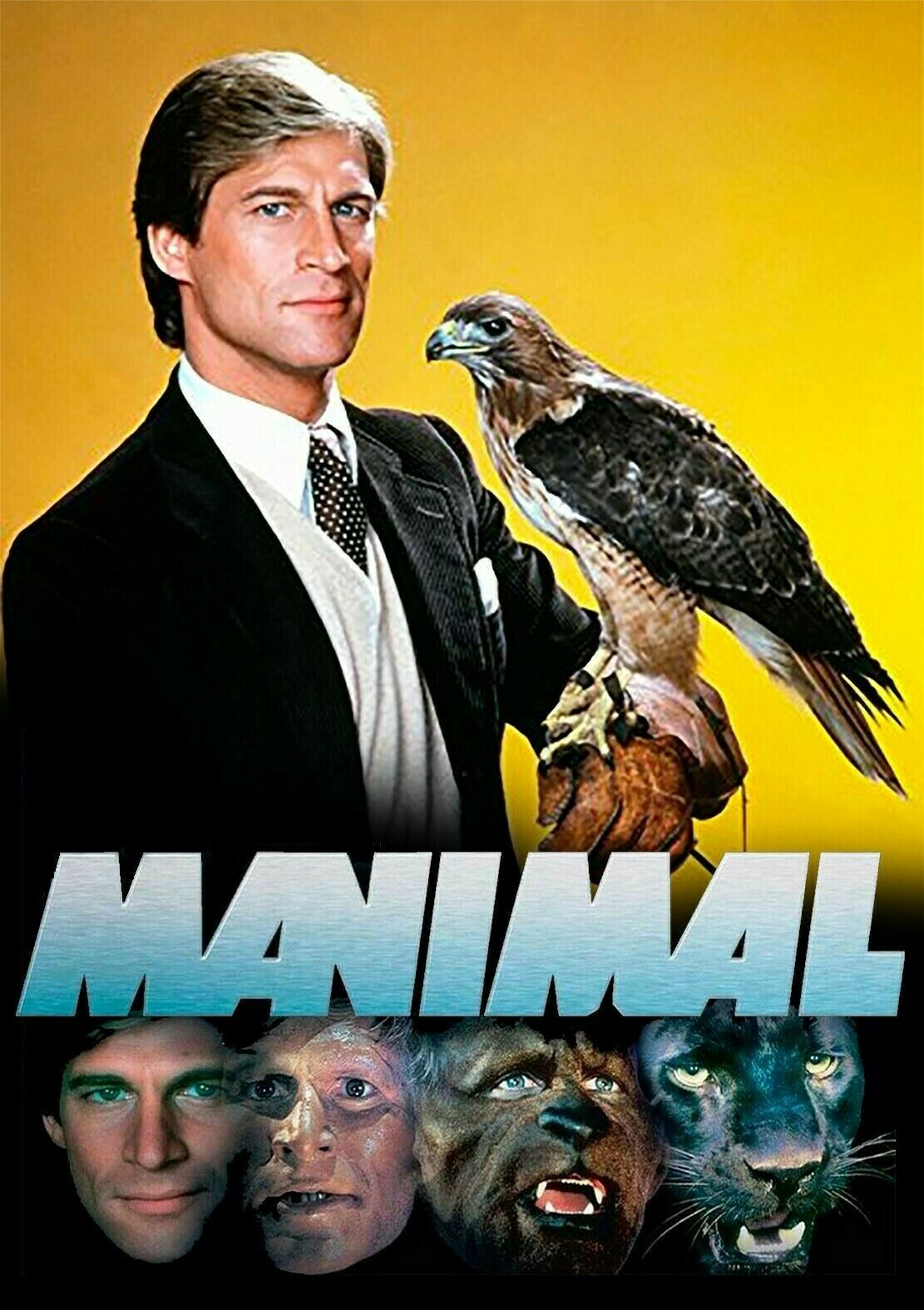
Not a man; not an animal; Jonathan Chase (Simon MacCorkindale) was...Manimal

Forty years ago, NBC was suffering from the pre-Cosby Show doldrums and searching for new series -ANY new series to help the once-proud Peacock restore its ratings glory. Thus oddball series such as The Rousters (which promised to "sink the Love Boat!") were added to the prime-time line-up along with the short-lived superhero program from Glen Larson and Donald Boyle, Manimal

Manimal chronicled the strange adventures of Jonathan Chase, a man who, according to William Conrad's ominous introduction each week, had "the brightest of futures, the darkest of pasts." To wit, Chase had learned from his father the secrets of transformation; the secret that "divides man from animal, animal from man." 

Chase partnered with the NYPD and every episode would turn into animals such as a hawk or a black panther in the course of solving a crime. His sidekicks were Brooke Mackenzie (Flash Gordon's Melody Anderson) and Michael D. Roberts as Ty, another cop. The incredible Steve Winston was the magician behind the special effects, which looked a lot like the physical transformations spotlighted in such werewolf movies as An American Werewolf in London (1981) and The Howling (1981). 

Going back four decades, imagine a series in which every week, a hero gets in trouble, and at just the right moment, transforms into an animal to escape the predicament. It's kind of like The Incredible Hulk, only with a panther, a hawk, a bull, and the like substituting for the big green fella. 

That was Manimal in a nutshell. 


Unfortunately, because the special effects were expensive, the same dramatic (and occasionally impressive-for-their-time) transformations were repeated shot-for-shot in each segment of the series, which only stayed on the air for eight weeks. Soon all the stock effects footage was recognizable and boring.

The height of Manimal's absurdity came with an episode called "Breath of the Dragon," which aired December 10, 1983. In the series' de rigueur Chinatown episode (ever notice how every superhero show has an episode set there?) Chase had to fight a violent Chinese gang. He thus duly reported to his partners that the study of martial arts began with animals; in the observation of how they strike and defend. In keeping with that illuminating bit of sociology, the episode culminates in a straight-faced fight sequence in which series star MacCorkindale bounds absurdly about his opponent, adopting the movements and characteristics of a mountain gorilla. This is something that must be seen to be believed.

TV Guide named Manimal one of the 50 worst shows of all time in 2002 and noted it was "an astonishingly silly, unintentionally hilarious crime series." (TV Guide, July 2002, page 22). Meanwhile, People Magazine trenchantly asked "Would you believe a crime-fighting professor with the superpowers that enable him to turn into a variety of animals?" (October 3, 1983). 


As if Manimal wasn't enough, creator Glen Larson (also the man behind Galactica:1980) simultaneously provided audiences another strange superhero series in 1983: Automan! I'll confess, I've always enjoyed Automan more than Manimal. It had a certain campy charm, whereas Manimal - played woefully straight - is one of the most bizarre superhero TV shows of all time. It ran on NBC's Friday night for a few weeks but was mauled by Dallas. Then it moved to Saturdays when The Rousters got cancelled. 

Guess what sunk Manimal and The Rousters? 

The Love Boat...


20 Years Ago: Doctor Who: "The Girl in the Fireplace" (May 6, 2006)

When The TARDIS lands on a derelict vessel deep in space, The Doctor (David Tennant), Rose Tyler (Billie Tyler) and Mickey (Noel Clarke) inv...