


Subscribe To JKM

 Posts
All Comments
Posts
All Comments
Showing posts with label Blake's 7. Show all posts
Showing posts with label Blake's 7. Show all posts
Wednesday, April 18, 2018
Corgi Space Shuttle

 award-winning creator of the web series Abnormal Fixation (2024), the audio drama Enter the House Between (2023) and author of 35 books including Horror Films FAQ (2013), Horror Films of the 1990s (2011), Horror Films of the 1980s (2007), TV Year (2007), The Rock and Roll Film Encyclopedia (2007), Mercy in Her Eyes: The Films of Mira Nair (2006),, Best in Show: The Films of Christopher Guest and Company (2004), The Unseen Force: The Films of Sam Raimi (2004), An Askew View: The Films of Kevin Smith (2002), The Encyclopedia of Superheroes on Film & Television (2004), Exploring Space:1999 (1997), An Analytical Guide to TV's Battlestar Galactica (1998), Terror Television (2001), Space:1999 - The Forsaken (2003) and Horror Films of the 1970s (2002).
Blake's 7 Corgi Liberator
 award-winning creator of the web series Abnormal Fixation (2024), the audio drama Enter the House Between (2023) and author of 35 books including Horror Films FAQ (2013), Horror Films of the 1990s (2011), Horror Films of the 1980s (2007), TV Year (2007), The Rock and Roll Film Encyclopedia (2007), Mercy in Her Eyes: The Films of Mira Nair (2006),, Best in Show: The Films of Christopher Guest and Company (2004), The Unseen Force: The Films of Sam Raimi (2004), An Askew View: The Films of Kevin Smith (2002), The Encyclopedia of Superheroes on Film & Television (2004), Exploring Space:1999 (1997), An Analytical Guide to TV's Battlestar Galactica (1998), Terror Television (2001), Space:1999 - The Forsaken (2003) and Horror Films of the 1970s (2002).
Pop Art: Blake's 7 Annual (1980)
 award-winning creator of the web series Abnormal Fixation (2024), the audio drama Enter the House Between (2023) and author of 35 books including Horror Films FAQ (2013), Horror Films of the 1990s (2011), Horror Films of the 1980s (2007), TV Year (2007), The Rock and Roll Film Encyclopedia (2007), Mercy in Her Eyes: The Films of Mira Nair (2006),, Best in Show: The Films of Christopher Guest and Company (2004), The Unseen Force: The Films of Sam Raimi (2004), An Askew View: The Films of Kevin Smith (2002), The Encyclopedia of Superheroes on Film & Television (2004), Exploring Space:1999 (1997), An Analytical Guide to TV's Battlestar Galactica (1998), Terror Television (2001), Space:1999 - The Forsaken (2003) and Horror Films of the 1970s (2002).
Blake's 7 Neutron Space Rifle
 award-winning creator of the web series Abnormal Fixation (2024), the audio drama Enter the House Between (2023) and author of 35 books including Horror Films FAQ (2013), Horror Films of the 1990s (2011), Horror Films of the 1980s (2007), TV Year (2007), The Rock and Roll Film Encyclopedia (2007), Mercy in Her Eyes: The Films of Mira Nair (2006),, Best in Show: The Films of Christopher Guest and Company (2004), The Unseen Force: The Films of Sam Raimi (2004), An Askew View: The Films of Kevin Smith (2002), The Encyclopedia of Superheroes on Film & Television (2004), Exploring Space:1999 (1997), An Analytical Guide to TV's Battlestar Galactica (1998), Terror Television (2001), Space:1999 - The Forsaken (2003) and Horror Films of the 1970s (2002).
Pop Art: Blake's 7 Magazine
 award-winning creator of the web series Abnormal Fixation (2024), the audio drama Enter the House Between (2023) and author of 35 books including Horror Films FAQ (2013), Horror Films of the 1990s (2011), Horror Films of the 1980s (2007), TV Year (2007), The Rock and Roll Film Encyclopedia (2007), Mercy in Her Eyes: The Films of Mira Nair (2006),, Best in Show: The Films of Christopher Guest and Company (2004), The Unseen Force: The Films of Sam Raimi (2004), An Askew View: The Films of Kevin Smith (2002), The Encyclopedia of Superheroes on Film & Television (2004), Exploring Space:1999 (1997), An Analytical Guide to TV's Battlestar Galactica (1998), Terror Television (2001), Space:1999 - The Forsaken (2003) and Horror Films of the 1970s (2002).
Model Kit of the Week: Blake's 7 Liberator (Masterpiece)
 award-winning creator of the web series Abnormal Fixation (2024), the audio drama Enter the House Between (2023) and author of 35 books including Horror Films FAQ (2013), Horror Films of the 1990s (2011), Horror Films of the 1980s (2007), TV Year (2007), The Rock and Roll Film Encyclopedia (2007), Mercy in Her Eyes: The Films of Mira Nair (2006),, Best in Show: The Films of Christopher Guest and Company (2004), The Unseen Force: The Films of Sam Raimi (2004), An Askew View: The Films of Kevin Smith (2002), The Encyclopedia of Superheroes on Film & Television (2004), Exploring Space:1999 (1997), An Analytical Guide to TV's Battlestar Galactica (1998), Terror Television (2001), Space:1999 - The Forsaken (2003) and Horror Films of the 1970s (2002).
Theme Song of the Week: Blake's 7 (1978-1981)
award-winning creator of the web series Abnormal Fixation (2024), the audio drama Enter the House Between (2023) and author of 35 books including Horror Films FAQ (2013), Horror Films of the 1990s (2011), Horror Films of the 1980s (2007), TV Year (2007), The Rock and Roll Film Encyclopedia (2007), Mercy in Her Eyes: The Films of Mira Nair (2006),, Best in Show: The Films of Christopher Guest and Company (2004), The Unseen Force: The Films of Sam Raimi (2004), An Askew View: The Films of Kevin Smith (2002), The Encyclopedia of Superheroes on Film & Television (2004), Exploring Space:1999 (1997), An Analytical Guide to TV's Battlestar Galactica (1998), Terror Television (2001), Space:1999 - The Forsaken (2003) and Horror Films of the 1970s (2002).
Thursday, April 14, 2016
Tribute: Gareth Thomas (1945 - 2016)

Gareth Thomas -- a sci-fi TV icon -- has passed away.
Mr. Thomas is widely beloved and remembered for his two season stint as rebel leader Roj Blake on Terry Nation's genre series Blake's 7 (1978-1981).
For the futuristic program's first two seasons, Thomas's Blake was in command of the stolen alien ship Liberator, while attempting to take down a totalitarian Federation.

After he left the series, Thomas returned on two occasions ("Terminal," and the series finale "Blake.")
His last episode as a regular was the season two cliffhanger, "Star One."
Blake's 7 wasn't Thomas's first encounter with science fiction TV.
A few years earlier, he played a different renegade, Shem -- from another dystopia -- in Star Maidens (1976). This was a short-lived series about a female-dominated planet called Medusa, and the program aired in local syndication in the U.S.

Over the years, Mr. Thomas also appeared in such cult-programming as Hammer's House of Horrors (1980), Tales of the Unexpected (1988) and Torchwood (2006). Outside of genre work, Thomas also starred in Heartbeat.
Mr. Thomas will be much mourned in the days ahead, and I offer my deepest condolences to his friends and family.
award-winning creator of the web series Abnormal Fixation (2024), the audio drama Enter the House Between (2023) and author of 35 books including Horror Films FAQ (2013), Horror Films of the 1990s (2011), Horror Films of the 1980s (2007), TV Year (2007), The Rock and Roll Film Encyclopedia (2007), Mercy in Her Eyes: The Films of Mira Nair (2006),, Best in Show: The Films of Christopher Guest and Company (2004), The Unseen Force: The Films of Sam Raimi (2004), An Askew View: The Films of Kevin Smith (2002), The Encyclopedia of Superheroes on Film & Television (2004), Exploring Space:1999 (1997), An Analytical Guide to TV's Battlestar Galactica (1998), Terror Television (2001), Space:1999 - The Forsaken (2003) and Horror Films of the 1970s (2002).
Monday, July 23, 2012
Blake's 7 to be re-booted next?
 IndieWire
is reporting that Casino Royale (2006) director Martin Campbell has signed a deal
to launch a TV re-boot of Blake’s 7 (1978 – 1981), the cult-TV
series concerning a band of space rebels fighting a totalitarian Federation
from aboard an alien ship of incredible technology, the Liberator.
IndieWire
is reporting that Casino Royale (2006) director Martin Campbell has signed a deal
to launch a TV re-boot of Blake’s 7 (1978 – 1981), the cult-TV
series concerning a band of space rebels fighting a totalitarian Federation
from aboard an alien ship of incredible technology, the Liberator.
So,
if everything works out, we’ll have Blake’s 7, and a re-boot of Space:
1999, called Space: 2099 on the tube at the same
time.
Of
course, I’ve read probably five or six times over the last decade about
attempts to re-launch Blake’s 7, either as a cartoon, a
film, or a new TV series, and nothing ever seems to happen. I wonder if this attempt will be any
different.
And
as I noted in an interview on Genre-tainment last week, the problem with rebooting Blake’s
7 now is that Firefly (2002) – a great series – already revived and
reflected many aspects of the Terry Nation legend. So the new Blake’s 7 will not only
need to genuflect to the original program, it will need to stake out territory
that differentiates itself from Firefly.
I
just wrote a post about remakes here on the blog, and noted the reasons why they
aren’t always desirable. But
I also wrote about the fact that I’ll review each remake on a case-by-case
basis. I stick by that. Also, I did write, way back in
1999 -- in my book about Blake’s 7 -- that a big-budget remake
with new special effects and a focus on the Dirty Dozen/Robin Hood aspects of
the legend could indeed prove pretty amazing.
Furthermore, I deeply miss space adventure on television. It’s been absent since the cancellation of SGU (2009 – 2011), and thus the thought that either
Space:2099 or Blake’s 7 – or both – could be airing soon fills me with more hope than despair…at least at this point.
If
you’re interested in learning more about the original Blake’s 7, check out my
book on the subject, available here.
award-winning creator of the web series Abnormal Fixation (2024), the audio drama Enter the House Between (2023) and author of 35 books including Horror Films FAQ (2013), Horror Films of the 1990s (2011), Horror Films of the 1980s (2007), TV Year (2007), The Rock and Roll Film Encyclopedia (2007), Mercy in Her Eyes: The Films of Mira Nair (2006),, Best in Show: The Films of Christopher Guest and Company (2004), The Unseen Force: The Films of Sam Raimi (2004), An Askew View: The Films of Kevin Smith (2002), The Encyclopedia of Superheroes on Film & Television (2004), Exploring Space:1999 (1997), An Analytical Guide to TV's Battlestar Galactica (1998), Terror Television (2001), Space:1999 - The Forsaken (2003) and Horror Films of the 1970s (2002).
Tuesday, July 21, 2009
All's Well That Ends Well: Final Episodes, Cliffhangers and Goodbyes
 Approximately a week ago, author and blogger Brad Templeton penned a vast (and widely-linked) essay terming Battlestar Galactica's series finale ("Daybreak") "the worst ending in the history of science fiction on the screen."
 His reasoning is sound, not to mention brilliantly expressed, and the author points specifically to three problems. They are: an egregious scientific error, an overall sense of storytelling laziness to resolve important "mysteries" (relying on God and God's powers as the explanation for a multitude of events), and most damningly, poor internal consistency. In that final regard, "Daybreak 1 & 2" don't even track with earlier episodes of the four season series, particularly one important installment set on Kobol.
I suggest you read the entire, meticulous piece for yourself, so you can draw your own conclusions. Personally, I agreed with the author on at least one of his main points. Although I never even registered the Mitochondrial Eve/scientific error (and scientific errors tend not to bother me that much anyway...), I was dumbfounded that audiences were expected to believe "Daybreak's" closing conceit: that a technological race would voluntarily (and in one voice...) give up health care, air conditioning, telephones, and indoor plumbing to live on a primitive planet in close proximity to their sworn enemies (you know, the ones who had attempted their genocide...). I mean, the Colonists had only survived the Genocide because of technology; because of their spaceships. I just don't believe for a second that an advanced people would willingly give it all up. I also disliked the final explanation -- or lack of explanation -- for Starbuck's character. It was a cop-out on a cosmic scale.
Yet I write today not to curse Battlestar Galactica's disappointing finale, but because the essay got me thinking about the ways that other genre series have arrived at their final chapters. It wasn't that long ago, actually, that most series just went off the air without any sort of wrap-up whatsoever.
I suggest you read the entire, meticulous piece for yourself, so you can draw your own conclusions. Personally, I agreed with the author on at least one of his main points. Although I never even registered the Mitochondrial Eve/scientific error (and scientific errors tend not to bother me that much anyway...), I was dumbfounded that audiences were expected to believe "Daybreak's" closing conceit: that a technological race would voluntarily (and in one voice...) give up health care, air conditioning, telephones, and indoor plumbing to live on a primitive planet in close proximity to their sworn enemies (you know, the ones who had attempted their genocide...). I mean, the Colonists had only survived the Genocide because of technology; because of their spaceships. I just don't believe for a second that an advanced people would willingly give it all up. I also disliked the final explanation -- or lack of explanation -- for Starbuck's character. It was a cop-out on a cosmic scale.
Yet I write today not to curse Battlestar Galactica's disappointing finale, but because the essay got me thinking about the ways that other genre series have arrived at their final chapters. It wasn't that long ago, actually, that most series just went off the air without any sort of wrap-up whatsoever.
We never saw the final voyage of the U.S.S. Enterprise's five year mission. Nor did we witness the Alphans discover a new home, or return to Earth. The Searcher never found those "lost tribes" of Earth.
Television audiences never knew if David Vincent stopped the alien invasion of Earth, or if Carl Kolchak finally convinced anybody that there were monsters running around Chicago. Nope. Those TV series just...stopped. The axe of cancellation fell...and that was the end of the story.
On the other hand, some notable series did get to inscribe their last acts, ending with some modest sense of completion (even if dedicated fans were left begging for more....) Now, I'm specifically discussing endings in this essay, folks, so you might consider the descriptions ahead as spoilers. If you don't want to know how a number of sci-fi series ended, then read no further.
"Fall Out"

First off, we have Patrick McGoohan's legendary series about individualism and "The State," called The Prisoner (1968). The 17-episode roster ended with an episode titled "Fall Out." If you've never seen it, there's simply no way to satisfactorily explain it, except to state that, well, it's really bonkers. The imprisoned Number Six (McGoohan) -- after undergoing a trial/psychological test of sorts -- discovers that the Village's leader, Number One, is actually a man in a chimp mask. No scratch that...Number One is actually himself. Then Number Six destroys the Village, flees with a midget, and -- through images repeated from the familiar opening credits montage -- we are led conclude that the whole cycle of imprisonment may be starting over again.
Though bizarre, the ending of "Fall Out" succeeds because it suggests that even outside the walls of the Village, Number Six will always be a "prisoner" in an increasingly de-humanized society determined to catalogue and number citizens. We relate this message to us: we're all prisoners.
Yet "Fall Out" isn't coherent in any traditional storytelling sense, and it actually abandons the tight, "literal" narrative of the earlier episodes for an entirely allegorical finale. Some regular viewers of The Prisoner were actually enraged by the abandonment of the literal for the metaphorical, while others undertook the tough task McGoohan had sought for them: they interpreted the psychedelic, powerful images and found their own answers about the underlying meaning.
"Blake"

Blake's 7 (1978-1981), another British sci-fi series, also featured a rather definitive and downbeat ending, and one much more literal in nature than "Fall Out." I like to call it "The Butch Cassidy and The Sundance Kid" End. After years of successfully fighting against the tyrannical and powerful Federation, Kerr Avon (Paul Darrow) finally leads his gang of rebels into a trap from which they cannot escape.
The last scene of the episode "Blake" (and of the series) involves all the main characters being gunned down in slow-motion by Federation soldiers. Our last view of the cunning Avon sees him offering a strange smile...and raising his own weapon in a futile demonstration of defiance. The screen goes blank and laser fire dominates the soundtrack...
This ending was and remains perfect -- not because of the brutal massacre -- but because of the character-based events leading up to it. Before Avon faces the shock troopers of the Federation, he encounters the idealistic, missing hero of the series, Roj Blake (Gareth Thomas) and -- because of a misinterpretation and poorly chosen words -- ends up killing him in cold blood.
Blake's 7 always concerned character fireworks more than action, and "Blake" is true to that longstanding quality. Blake trusted too much...and died. And Avon trusted too little...and also died. In other words, the same problems that had always plagued these men throughout the series plagued the freedom fighters right through the violent finale. Yes, "Blake" is dark, but any other ending wouldn't have seemed realistic in Blake's 7's cynical universe. Tie-in writers, fans, and producers have toiled ever since "Blake" aired to figure out an acceptable way for the heroes to somehow survive the events of this final episode, but the massacre stands as the final video chapter of Blake's 7. And it remains one of the most mind-blowing series finales in the genre's history.
"All Good Things"

In 1994, after seven successful seasons in syndication, Star Trek: The Next Generation achieved the sense of closure that the Original Series had been denied. It occurred in an adventure called "All Good Things" that recalled the past (and the premiere episode, "Encounter at Farpoint,") had one foot in the present, and even featured a subplot set in the future, twenty-five years down the line.
Although "All Good Things" was mired in tongue-twisting techno-babble, the story -- which saw the Enterprise-D and Picard investigating a mystery in three time periods -- was satisfactorily epic: the entire universe was at stake. The God Entity Q even took Picard back in time to the Dawn of Man in one dynamic scene. But by going returning to the beginning of the series ("Farpoint"), and Q's "Trial of Humanity," "All Good Things" also granted The Next Generation series a nice book-ends quality. Q's trial was finally adjourned...and mankind passed with flying colors.
"The Truth"
 The X-Files (1993-2002) ended after nine highly-rated seasons on broadcast television, and unlike other series finale's featured on this list, it's goal was not just to wrap-up character fates, but actually offer the viewer a linear, top-to-bottom explanation of the show's long-standing alien conspiracy and mytharc.
 Creator Chris Carter used the occasion of fugitive Fox Mulder's trial to present evidence (and exposition) about the conspiracies that had become part and parcel of 1990s pop culture. Witness testimony, first-hand evidence, and character recollections painted -- for the first time -- a larger, more coherent picture of the X-Files meta-story.
So much of The X-Files also concerned two world views or perspectives in conflict...and in love, exemplified by the believer Mulder (David Duchovny) and the skeptic, Dr. Dana Scully (Gillian Anderson). Appropriately, "The Truth" reunited this pair, and gave them one last go at the Cigarette-Smoking Man, the enduring villain of The X-Files. Then, in a touching and romantic coda, Mulder and Scully talked about their future....and the planet's. There was even the hint of a sequel since these final moments discussed the date for the alien "colonization: 2012.
"Chosen"
 When creator Joss Whedon first imagined Buffy the Vampire Slayer, he projected the future of horror's most popular archetype, the "Final Girl:" a woman who could not only defeat the monster, but whom the monsters actually feared. The long-lived WB/UPN series followed the adventures of the heroic Slayer, but even as an admirable female superhero, Buffy was still trained by men (A Watcher), and sent on missions by men (A Watcher Council).
 So it was only appropriate in the final episode of the seventh season that Buffy all-but-declared her independence. With the help of Willow's powerful magic, Buffy not only led an army against the forces of the darkness, she "awakened" the female power of would-be female Slayers the globe over, who were suddenly able to harness their "potential."
It was, perhaps the ultimate statement of "Girl Power," which seemed entirely logic given the development of the series, and Whedon's original intent of creating a character who could overcome monster/horror movie cliches. "Chosen" also saw the final destruction of Sunnydale's pesky Hellmouth, the source of all the series' monsters over the years. So not only were viewers inspired...they knew they could sleep safe at night.
Many other series had interesting conclusions too. Captain Janeway (Kate Mulgrew) brought Voyager home in Star Trek: Voyager. Frank Black (Lance Henriksen) grabbed his young daughter Jordan (Brittany Tiplady) out of school and went into hiding with her after Peter Watts' death. And so on and so forth.
Another kind of series ending doesn't really bring closure at all. On the contrary, a number of programs ended on a catastrophic cliffhanger -- one with evil on the ascent -- that was intended to be resolved the following season. When that next season never came, the cliffhanger became the de-facto ending of the whole run. American Gothic (1995) offered one such cliffhanger, with Lucas Buck -- the Devil himself -- finally taking over the soul of his son in the South Carolina town of Trinity. Angel (1999-2005) ended with an unresolved battle against an army of demons in a dark alley' a perfect reflection of the main character's fight against a more powerful foe.
"The Tr ap"
ap"
 ap"
ap"Sapphire & Steel (1978-1981) was another genre series that went out with a cliffhanging bang. On a seemingly normal mission, our heroic "agents," Sapphire & Steel investigated a strange gas station and diner in a pocket universe of sorts. They quickly learned that the cosmic way-station was a trap sprung for them by an unseen enemy.
The serial and thus the series ended with Sapphire and Steel peering out from their inescapable prison...into infinity itself. This cliffhanger was ultimately resolved in a 21st century audio production, but the time trap stood for years...a chilling reminder of the dangerous, enigmatic nature of the series. It was an ironic capper too: after years of solving temporal riddles, Sapphire and Steel finally walked into a riddle they couldn't figure out, a deliberate reversal of the initial premise.
"The Return"
V: The Series (1985) had a tumultuous run on NBC, with an unusually high degree of cast and character turn over. Ham Tyler (Michael Ironside) and Robin (Blair Tefkin) had been written out mid-season, and Elias (Michael Wright) and Nathan Bates (Lane Smith) had been killed off. These unexpected deaths and surprise departures worked well in a series about a life-and-death Resistance fight against evil, militaristic aliens. The final cliffhanger was no different: it offered abundant surprises. Peace was suddenly declared on Earth, and the Star Child, Elizabeth (Jennifer Cooke), was slated to marry the Leader (unseen on a Visitor spacecraft).
In the episode's final moment, Elizabeth's human boyfriend, Kyle (Jeff Yagher), stowed away on the Leader's ship for the journey back to the distant Visitor home world. But a not-quite vanquished Diana (Jane Badler) revealed she'd planted a bomb aboard the same ship...one just waiting to detonate.
V: The Series ended with a long, dramatic pullback (from the viewpoint of the imperiled, departing shuttle...) as Willie (Robert Englund), Donovan (Marc Singer) and Juliet (Faye Grant) watched it lift off. Did Diana kill the Leader and the Star Child? Did Kyle stop the inter-species marriage? We'll never know, but at least V: The Series went out with a dramatic flourish.
V: The Series (1985) had a tumultuous run on NBC, with an unusually high degree of cast and character turn over. Ham Tyler (Michael Ironside) and Robin (Blair Tefkin) had been written out mid-season, and Elias (Michael Wright) and Nathan Bates (Lane Smith) had been killed off. These unexpected deaths and surprise departures worked well in a series about a life-and-death Resistance fight against evil, militaristic aliens. The final cliffhanger was no different: it offered abundant surprises. Peace was suddenly declared on Earth, and the Star Child, Elizabeth (Jennifer Cooke), was slated to marry the Leader (unseen on a Visitor spacecraft).
In the episode's final moment, Elizabeth's human boyfriend, Kyle (Jeff Yagher), stowed away on the Leader's ship for the journey back to the distant Visitor home world. But a not-quite vanquished Diana (Jane Badler) revealed she'd planted a bomb aboard the same ship...one just waiting to detonate.
V: The Series ended with a long, dramatic pullback (from the viewpoint of the imperiled, departing shuttle...) as Willie (Robert Englund), Donovan (Marc Singer) and Juliet (Faye Grant) watched it lift off. Did Diana kill the Leader and the Star Child? Did Kyle stop the inter-species marriage? We'll never know, but at least V: The Series went out with a dramatic flourish.
How we judge the success or failure of a series finale ultimately depends, I suppose, on how we viewed the series that preceded the ending. Enterprise (2001-2005) had a terrible, insulting finale that randomly killed off a beloved character and ended with the terrible idea that the whole series was a holodeck game for Will Riker. But who -- watching that show -- could have honestly had high expectations for the finale? I know many people believe Battlestar Galactica set the bar high...and that's why "Daybreak" felt so weak. Let's face it: if the producers begin every episode of their series with the line that the bad guys "have a plan," the producers should probably have one too. And that plan should eventually be made clear to audiences. It never was. The mystery of the five Cylons overtook the series' real sense of drama in the last two years, turning Battlestar into what I once termed "a cosmic game of Clue:" a parlor game about guess who "the secret Cylon" was. Everything else became secondary...
But heck, at least the Galactica's crew didn't go down to Earth on flying motorcycles, right? Or encounter invisible cub scouts from space? Which series endings (listed in this essay or not) stick with you as being the best? Or particularly irk you?
award-winning creator of the web series Abnormal Fixation (2024), the audio drama Enter the House Between (2023) and author of 35 books including Horror Films FAQ (2013), Horror Films of the 1990s (2011), Horror Films of the 1980s (2007), TV Year (2007), The Rock and Roll Film Encyclopedia (2007), Mercy in Her Eyes: The Films of Mira Nair (2006),, Best in Show: The Films of Christopher Guest and Company (2004), The Unseen Force: The Films of Sam Raimi (2004), An Askew View: The Films of Kevin Smith (2002), The Encyclopedia of Superheroes on Film & Television (2004), Exploring Space:1999 (1997), An Analytical Guide to TV's Battlestar Galactica (1998), Terror Television (2001), Space:1999 - The Forsaken (2003) and Horror Films of the 1970s (2002).
Tuesday, March 04, 2008
Theme Song of the Week # 15: Blake's 7 (1978-1981)
award-winning creator of the web series Abnormal Fixation (2024), the audio drama Enter the House Between (2023) and author of 35 books including Horror Films FAQ (2013), Horror Films of the 1990s (2011), Horror Films of the 1980s (2007), TV Year (2007), The Rock and Roll Film Encyclopedia (2007), Mercy in Her Eyes: The Films of Mira Nair (2006),, Best in Show: The Films of Christopher Guest and Company (2004), The Unseen Force: The Films of Sam Raimi (2004), An Askew View: The Films of Kevin Smith (2002), The Encyclopedia of Superheroes on Film & Television (2004), Exploring Space:1999 (1997), An Analytical Guide to TV's Battlestar Galactica (1998), Terror Television (2001), Space:1999 - The Forsaken (2003) and Horror Films of the 1970s (2002).
Monday, August 07, 2006
Your "Arena" or Mine?
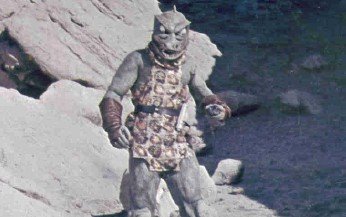 Anybody who appreciates genre television history also probably understands that the very medium of television - a massive gobbler of hours and stories - tends to repeat the same formula and conventions again and again. Decade after decade. Ad infinitum.
That's probably why we've had so many "civilization of the week" programs such as The Starlost (1973), The Fantastic Journey (1977), Logan's Run (1977) and Otherworld (1985). Yet science fiction TV doesn't just repeat formats, it very often goes further than that; repeating specific episodes (sometimes alarmingly so...). Variations on a theme, or rip-offs? Discuss amongst yourselves...
One old chestnut that has been repeated quite a bit since the 1960s is a variation on the brilliant short story "Arena," written by Frederic Brown. This story has probably been repeated more frequently even than that other cliche: the most dangerous game.
The original "Arena" first appeared in Astounding Science Fiction Magazine in 1944 and concerned the war for survival in outer space between two equally matched forces: the human race and the aliens known as "The Outsiders." During the final space battle of a long interstellar war, a human pilot named Carson is miraculously plucked from the cockpit of his one-man scouter and teleported to an arena of blue sand and bizarre, speaking lizards.
He is contacted there by an omnipotent alien who informs him that the space war will not be settled amongst the stars, but on this unique field instead. Carson is then forced to combat a deadly alien representative of the Outsiders, a repellant, round tentacled organism called "The Roller." Naturally, the battle is to the death. If Carson loses this vital contest, mankind stands to be wiped right out of existence. If Carson wins the fight, however, the human race inherits control of the galaxy. Talk about the weight of the world on your shoulders, huh?
In the short story "Arena," what followed this brilliant and elegant set-up was a tense, Darwinian tale of mental and physical conflict between two species in a battlefield replete with an impenetrable force field. Although author Frederic Brown was not aware of it when he penned this classic tale in the World War II era, his vignette would someday become the most cherished "stock" story in science fiction TV, at least in the sixties, seventies and eighties.
Perhaps the first variation on Brown's "Arena" arrived on TV in 1964 when Robert Specht wrote his teleplay "Natural Selection" for the anthology series called The Outer Limits. The episode became "Fun and Games" for air, and producer Joseph Stefano claimed never to have read Brown's original work. Specht's variation on the genre standard involved Earthlings who were transported away from their lives to fight a deadly alien competitor on an another planet and - of course - in a kind of arena.
As in the original story, the victor in this Outer Limits battle (and his species) would be permitted to survive and the loser, along with his people, faced annihilation. In this case, the battle occurred on a world known as "Andera," which is a jumbling of the title "Arena," isn't it? See the similarities?
Gene Coon, producer of the original Star Trek realized that "Arena" was too good a concept to pass up during the first season of that classic series in 1966-67. He authored a teleplay appropriately called "Arena" and did the right thing: he actually credited Brown as his co-writer on it. During this particular voyage of the starship Enterprise, the stakes for survival had changed. If Captain Kirk lost his battle with a reptilian Gorn captain (after a massacre at the planet, Cestus III), the Enterprise would be destroyed - but humanity would still survive. And vice versa.
At the end of the Trek adventure, a new twist entered the "Arena" mythos. Where Brown had described survival as a moral imperative and had seen his protagonist Carlson execute the evil Roller, a creature he likened to an intelligent spider, William Shatner's dashing and demonstrative Captain Kirk took a higher road. He refused to kill his lizard-like opponent and thereby demonstrated the advanced trait of mercy. As on so many TV series, a "valuable" lesson had been learned. In this case, I don't mean valuable lesson in a cynical fashion. Remember, America was getting deeper into the Vietnam War at the time of Star Trek, so the notions in the story were just as timely as they had been when Brown crafted the original.
The Star Trek variant on "Arena" also featured another important element in what has become a stock story: the search to build a primitive weapon to defeat a stronger foe. In Trek, it was Kirk's efforts to collect raw materials to forge gunpowder and build a primitive cannon. That element also stuck in the memory of many future episode writers.
When the stock "Arena" story re-appeared on Year Two of the British space opera, Space: 1999 in 1976, it was deja vu all over again. This time, the story was called "The Rules of Luton." It was written by Charles Woodgrove (a pseudonym for producer Freddie Freiberger...Star Trek's third season producer!), and saw Commander John Koenig (Martin Landau) and Science Officer Maya (Catherine Schell) facing off against three alien criminals when they committed a so-called "crime" on the planet Luton - eating a berry. Yes, it was a planet of intelligent vegetables and eating a berry was tantamount to murder. What do you want, it was the seventies, okay?
On Space: 1999 there was no threat to the galaxy, or even Moonbase Alpha. At stake were merely the lives of Koenig and Maya if they lost. Interestingly, the three bad aliens (a teleport, an invisible alien and a super strong fella), were not the real bad guys at all. Instead, the supervisors of the arena became the primary antagonist because of their blood lust. Again, this was a new twist. The villainy had shifted from those the heroes had to fight against to those who were orchestrating the fighting. Perhaps this is symbolic of 1970s post-Watergate anti-authoritarianism.
Also, instead of building a makeshift cannon to defeat his foes, the resourceful Koenig made a bolo. Now if only Captain Kirk and Commander Koenig would fight in an arena, cannon against bolo. Landau vs. Shatner...man to man. One has an Oscar, the other an Emmy...
In 1978, another British space series, Blake's 7 recycled the "Arena" concept one more time. The first season episode "Duel" found freedom fighter Roj Blake (Gareth Thomas) battling his nemesis, the one-eyed, cyborg Travis, in an arena supervised by another superior (and condescending) life form. On Star Trek it was the Metrons. On 1999 the Lutons. Here it was a Keeper called "Giroc" and a guardian called "Sinofar." Sinofar and Giroc's people had destroyed all life on their planet centuries earlier in a useless war, and were now doomed for eternity to teach other battling humanoids the same lesson in destruction.
In this case, Blake and his pilot Jenna forged primitives lances and spears out of the local brush (see how the same concepts keep sneaking in?). Blake also followed the example of Kirk and Koenig before him, refusing to kill his enemy. However, In typically cynical fashion (the rule on Blake's 7 rather than the exception...), Blake allowed Travis to live because he knew he could beat Travis, not out of any glorious human instincts or quality of mercy.
And so it has gone, over the years.
In 1979-80, Gil Gerard's out-of-time hero, Buck Rogers ended up in arena to fight a villain called the Traybor in an episode of that series, entitled "Buck's Duel to the Death." There was no superior overlord, but the battle in an arena still decided the fate of a society. Here, the Traybor could shoot bolts of electricity out of his hands, and Buck had to utilize Twiki as a kind of inhuman shield who got the bolts. Bidi-bidi-bidi. In the end, Buck won and freed the planet, telling the people that democracy was in their hands, not the Traybors'...or his.
Even Star Trek eventually regurgitated the "Arena" concept as late as 1987, when the fourth episode of Star Trek: The Next Generation vetted an (uncredited...) re-make called "The Last Outpost.' This time, the avaricious Ferengi (in their first appearance) subbed for the Gorns, and the Metrons were replaced by an old, cloaked alien from the mysterious T'Kon empire, called "Portal."
As before, the Federation and an enemy were locked in hostilities over "ownership" of territory or equipment, both ships were paralyzed in space by the superior race, and the answer to the riddle was to be found on a planet below. Portal stood in judgment over the combatants, and tested them for worthiness. I hasten to add, there have been cheesier variations of of the "Arena" story, but none that ended as anti-climactically as this installment. Riker beat the Ferengi simply by quoting Sun Tzu to Portal. Cop-out! Cop-out! This was also the second time in four episodes that Picard had surrendered the Enterprise, the Federation's flag ship. Jeez...Kirk must have been spinning in the Nexus over that.
But I digress. The core of the timeless "Arena" story, the idea that is resurrected over and over again across the decades on genre TV, is obviously a powerful one on an emotional level, which perhaps explains its longevity. Human beings are (apparently...) intrinsically violent creatures, and our violence makes us do stupid things. In the "Arena" template, aliens - sometimes with good motives, sometimes not - make us face the consequences of our stupidity. A superior force, like God in some fashion, stops us in our tracks and makes us confront the truth about our brutal natures. (I think this idea is also at the core of Star Trek's "Errand of Mercy," which also concerns the notion of war, and a third party stepping in to stop the killing.)
Perhaps there is also an element of wish-fulfilmment in the idea of two enemies battling it out personally, rather than with the might of governments behind them. Instead of millions dying in a conflict organized and orchestrated by a few planners, only representative leaders would face physical harm. I think we'd like to believe things could be so simple; that the fate of the universe could be settled by a good right hook.
Now I just wonder, how can I fit the "Arena" template into my series, The House Between? I probably shouldn't try, but it's fun to think about. Fredric Brown's story - forged in war time, when populations were being bombed from above by V2 rockets - will continue to carry meaning for us so long as humans wage war, and find more and more antiseptic ways to do so. How would you write a variation on "Arena" in 2006? What points would a clever writer make now, in light of the War on Terror and other conflicts raging across the globe? I wonder.
award-winning creator of the web series Abnormal Fixation (2024), the audio drama Enter the House Between (2023) and author of 35 books including Horror Films FAQ (2013), Horror Films of the 1990s (2011), Horror Films of the 1980s (2007), TV Year (2007), The Rock and Roll Film Encyclopedia (2007), Mercy in Her Eyes: The Films of Mira Nair (2006),, Best in Show: The Films of Christopher Guest and Company (2004), The Unseen Force: The Films of Sam Raimi (2004), An Askew View: The Films of Kevin Smith (2002), The Encyclopedia of Superheroes on Film & Television (2004), Exploring Space:1999 (1997), An Analytical Guide to TV's Battlestar Galactica (1998), Terror Television (2001), Space:1999 - The Forsaken (2003) and Horror Films of the 1970s (2002).
Friday, August 05, 2005
Friday Cult TV Flashback # 4: Blake's 7: "Blake"
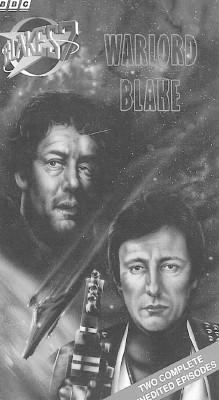 In my travels to Conventions and the like, I've discovered that many contemporary science-fiction fans are interested in the late-1970s British TV series Blake's 7, but for one reason or another have never seen it. This fine program, created by Terry Nation (the man who first imagined Dr. Who's nemesis, the Daleks), hasn't aired on the Sci-Fi Channel (that I know of...) for at least the last eleven or so years, and BBC has yet to release the series on DVD. The entire run of fifty-two hour-long episodes were available on VHS in the 1990s (two-volumes per tape), but that's a considerable investment. These tapes may still be on the market and available through secondary venues like E-bay or Half.com.
But really, that's neither here nor there. Blake's 7 (and it's final episode, "Blake") is the subject of this week's Friday cult TV flashback. For those who aren't familiar with the series, a brief re-cap is in order. Blake's 7 is set in a far-future world, wherein Earth is the central planet in a fascist, totalitarian, intergalacticac organization called 'The Federation.' The Federation controls its sheep-like population through mind-altering drugs, ruthless shock-troopers and propaganda. Basically, there are a few very rich people in the Federation, but they control everyt aspect of life. Resistors are ruthlessly stamped out, put up for mock trial, and accused of bogus crimes they didn't commit (such as the ever popular charge of child molestation.)
In the first episode of the series, "The Way Back," a freedom-fighter named Roj Blake (played by Gareth Thomas) wakes up from his drug-induced equivalent of "sleep" to remember that he was once a political figure to be reckoned with, before the Federation ruined and brainwashed him. He attends a meeting of rebels who hope he will lead them again, but shock troopers massacre everybody and capture Blake, putting him on trial for child molestation, a crime he never committed. Blake is sentenced to life imprisonment on a distant penal planet, but en route, (in the episode "Space Fall,") Blake teams up with a group of other criminals including the cunning computer-expert Avon (Paul Darrow), the beautiful space pilot and smuggler Jenna Stannis (Sally Knyvette), the cowardly thief, Vila (Michael Keating) and the gentle giant with a behavior inhibitor chip in his head, Gan (David Jackson).
This core group of outcasts escapes from the Federation prison ship and takes charge of a mysterious alien derelict ship that possesses superior technology, the Liberator. Blake quickly uses the incredibly advanced vessel (which is equipped with a teleportation device...) to strike at the very heart of Federation planets and installations, and his quest for freedom and liberation becomes legend around the galaxy. Over the course of the first season, others are added to Blake's crew, including the Auron telepath, Cally (Jan Chappell), and the most-advanced computer ever designed by man, called Orac. Two years into the series, Blake disappears after a pitched space battle, leaving Avon in charge of the (often-changing) gang of rogues. The last half of the series' involves Avon attempting to lead the resistance, and trying to determine if Blake is alive or dead.
Blake's 7 is an interesting TV series because - unlike most American genre programming (excluding V: The Series) - it focuses on a leftist group of heroes resisting an overarching right-wing bureaucracy. Usually, in shows like Star Trek, Stargate SG-1 and the like, the heroes are PART of the bureaucracy (like Starfleect Command), so that alone makes it unique. But Blake's 7 has more to offer than just that distinction. Writing on page 301-302 of Science Fiction - The Illustrated Encyclopedia (Dorling Kindersley, 1995), critic John Clute noted that Blake's 7 was a "series with a sharp tendency to anarchism" and that it featured a "deliberately seedy, pessimistic ambience." Reviewer Peter Nicholls, writing in The Encyclopedia of Science Fiction (St. Martin's Press, 1993, page 133) felt the Terry Nation-created program was "addictive" and "notable for a sense of doomed helplessness." Visible Ink Press's Video Hound's Sci-Fi Experience in 1997 (on page 35) dubbed Blake's 7 "the Anti-Star Trek."
Blake's 7 is an interesting TV series because - unlike most American genre programming (excluding V: The Series) - it focuses on a leftist group of heroes resisting an overarching right-wing bureaucracy. Usually, in shows like Star Trek, Stargate SG-1 and the like, the heroes are PART of the bureaucracy (like Starfleect Command), so that alone makes it unique. But Blake's 7 has more to offer than just that distinction. Writing on page 301-302 of Science Fiction - The Illustrated Encyclopedia (Dorling Kindersley, 1995), critic John Clute noted that Blake's 7 was a "series with a sharp tendency to anarchism" and that it featured a "deliberately seedy, pessimistic ambience." Reviewer Peter Nicholls, writing in The Encyclopedia of Science Fiction (St. Martin's Press, 1993, page 133) felt the Terry Nation-created program was "addictive" and "notable for a sense of doomed helplessness." Visible Ink Press's Video Hound's Sci-Fi Experience in 1997 (on page 35) dubbed Blake's 7 "the Anti-Star Trek."

This is how I describe the series in my book, A History and Critical Analysis of Blake's 7, The 1978-1981 British Television Space Adventure: "Blake's 7 is a futuristic accumulation and translation of classic literary, film, and television traditions. It is part Robin Hood with its band of futuristic outlaws facing the overwhelming power of an evil Galactic Empire and part The Seven Samurai (1954) or The Magnificent Seven (1960) in its thematic predisposition to dramatize heroes defending the innocent from conquering forces both alien and human. Unlike Robin Hood, however, Blake's 7's television avengers are noticeably not merry men. On the contrary, the heroes of Blake's 7 are depicted...as a desperate, fatalistic and determinedly pragmatic band. Although Blake is a man of honor, his mind starts to break down after the death of a follower ("Pressure Point,") and his continued failure to defeat the mighty Terran Federation. Blake's right-hand man, Avon, is even less traditional. Equipped with a razor-sharp intellect and an instinct for self-preservation, Avon chooses to accompany Blake on his cosmic quest only because it suits his purposes. In the words of Terry Nation, his television series is not about outer space or alien civilizations at all. Instead, it concerns "the little guy against city Hall." The heroes, including a loyal "everyman," a beautiful smuggler and a common thief, are thus defined in totally realistic and believable, non-superhuman terms."
This week, I focus on "Blake," the series' final episode, because I believe that in one sense it best expresses the aesthetic of this unique and valuable TV series. The episode begins with Avon and his group of rebels on the run. Their only base has been destroyed, and so they take their ship, The Scorpio in search of Blake to the lawless world of Gauda Prime. The Scorpio is badly damaged in a space battle and it crashes on the frontier world, leaving Avon's avengers without even modest transportation. They find Blake - scarred and battle weary - but Avon thinks that his old friend has sold him out to the Federation Security forces. Blake and Avon have a final confrontation, and only one man survives. Then, the Federation troops arrive to put down the insurrection once and for all, and there is a devastating shoot-out between Federation shocktroopers and the survivors of Avon's squad.
It has often been said that one way to judge a TV series is by the manner of its ending. Think of the bizarre and enigmatic conclusion to The Prisoner, Star Trek: Voyager's return to Earth - a tidy wrap-up - or The Next Generation's return to the first episode "Encounter at Farpoint," with Q. This is the case with Blake's 7 because "Blake" expresses perfectly the overall aesthetic of Blake's 7. To wit, the finale offers an unsentimental, brutal ending to a series that takes the conclusion of Butch Cassidy and The Sundance Kid one step further. There's no polite freeze-frame here. No sir. There's a shoot-out and the dramatis-personae you have grown to love over the course of four years....go down. And that's after the stunning confrontation between Avon and Blake.
Basically, this is the episode where your hopes come crashing down. All through the series, you have followed Blake on his "impossible" dream to topple a space-spanning Federation. At times, you have actually believed that Blake - the idealist and hero - can accomplish this. Even though it is an impossible task. The final episode "Blake," makes you right your expectations. You were deluded, buddy -- there's no way this is going to have a happy ending. In fact, the strange smile that appears on Avon's face just before the end of the episode may well be his final understanding of this fact. That he too bought into a futile dream. You don't fight City Hall and win. You might disrupt it for a while, but you're just not going to beat a Galactic Federation. For me, this is a much more satisfying ending than what we see in Return of the Jedi. Take down the Emperor, destroy the Death Star and party down with Ewoks. Sorry, but It's just not that easy to bring down an entrenched, oppressive force. Blake's 7 stays true to its story line by expressing this with "Blake," a ballsy finale.
Some fans hate the ending of Blake's 7, and I can understand why. As fans, we always want to believe that "the adventure continues." That our heroes survive to fight another day. But that's really - if you examine it - not ever what this show was about. Blake's 7 concerns desperate men fighting a desperate battle, and on this day - and in their last adventure - the law catches up with them. I just love it, even if those last five minutes still leave a lump in my throat.
Today, thanks to Buffy the Vampire Slayer, Angel, Lost and other modern series, we're used to the idea of losing our favorite characters. But back in 1981, few shows were willing to take this route (Sapphire & Steel was another British series with a grim finale...) and so today I praise and remember Blake's 7 for its final episode, "Blake." This was a show (and a last episode...) that fulfilled the series' premise in spades, in an exciting, cutthroat and utterly unemotional fashion.
award-winning creator of the web series Abnormal Fixation (2024), the audio drama Enter the House Between (2023) and author of 35 books including Horror Films FAQ (2013), Horror Films of the 1990s (2011), Horror Films of the 1980s (2007), TV Year (2007), The Rock and Roll Film Encyclopedia (2007), Mercy in Her Eyes: The Films of Mira Nair (2006),, Best in Show: The Films of Christopher Guest and Company (2004), The Unseen Force: The Films of Sam Raimi (2004), An Askew View: The Films of Kevin Smith (2002), The Encyclopedia of Superheroes on Film & Television (2004), Exploring Space:1999 (1997), An Analytical Guide to TV's Battlestar Galactica (1998), Terror Television (2001), Space:1999 - The Forsaken (2003) and Horror Films of the 1970s (2002).
Subscribe to:
Posts (Atom)

-
 It is quite difficult to believe, but in 2024, Ridley Scott’s Alien (1979) turns 45 years old. Perhaps the most amazing thing about Alie...
 -
 It is an indisputable fact that fan service and good drama don’t always go hand-in-hand in the cinema. In fact, sometimes these factors div...