Subscribe To JKM


 Posts
All Comments
Posts
All Comments
Tuesday, September 27, 2016
Movie Trailer: Westworld (1973)

 award-winning creator of the web series Abnormal Fixation (2024), the audio drama Enter the House Between (2023) and author of 35 books including Horror Films FAQ (2013), Horror Films of the 1990s (2011), Horror Films of the 1980s (2007), TV Year (2007), The Rock and Roll Film Encyclopedia (2007), Mercy in Her Eyes: The Films of Mira Nair (2006),, Best in Show: The Films of Christopher Guest and Company (2004), The Unseen Force: The Films of Sam Raimi (2004), An Askew View: The Films of Kevin Smith (2002), The Encyclopedia of Superheroes on Film & Television (2004), Exploring Space:1999 (1997), An Analytical Guide to TV's Battlestar Galactica (1998), Terror Television (2001), Space:1999 - The Forsaken (2003) and Horror Films of the 1970s (2002).
Monday, September 26, 2016
Ask JKM a Question: The Westworld franchise?

A regular reader, Chuck, writes:
"I do not know if this is an “Ask JKM” subject, so much as a general request but here goes---With the new (and perhaps over-hyped) HBO series Westworld set to start this October, I was wondering if you had any plans to discuss the films on which the series is based, Westworld (1973) and/or Futureworld (1976).
Personally, I have not watched either film before, but I want to make it a priority before the series premier on October 2(?).
Anyway, if you have given any thought to the matter—please do. I always enjoy watching (or re-watching) a movie or episode, and then reading your review of the same.

Chuck, that's a great question, and it has inspired me to spend this week looking back at the Westworld franchise, which includes the original film, the follow-up you named, Futureworld, and the short-lived 1980 series: Beyond Westworld.
Your sense of the timing of this is right.
With the franchise destined to return next week on HBO, it seems an appropriate juncture to remember the history of Westworld.
Look tomorrow for my Westworld review, and then follow-up posts about the franchise throughout the week. I plan to review every episode of the old TV series (there are just five) and post some views of merchandise/collectibles from the 1970s.
Don't forget to ask me your questions at Muirbusiness@yahoo.com
award-winning creator of the web series Abnormal Fixation (2024), the audio drama Enter the House Between (2023) and author of 35 books including Horror Films FAQ (2013), Horror Films of the 1990s (2011), Horror Films of the 1980s (2007), TV Year (2007), The Rock and Roll Film Encyclopedia (2007), Mercy in Her Eyes: The Films of Mira Nair (2006),, Best in Show: The Films of Christopher Guest and Company (2004), The Unseen Force: The Films of Sam Raimi (2004), An Askew View: The Films of Kevin Smith (2002), The Encyclopedia of Superheroes on Film & Television (2004), Exploring Space:1999 (1997), An Analytical Guide to TV's Battlestar Galactica (1998), Terror Television (2001), Space:1999 - The Forsaken (2003) and Horror Films of the 1970s (2002).
Cult-TV Theme Watch: B&W

Black-and-white photography, often abbreviated to "BW" or B&W" is a mode of monochrome photography in the visual arts. Black and white photography features shades of gray, rather than, necessarily, strong black and white contrast.
Black-and-white is frequently utilized in cult-TV history to signify or venerate an older period of film history (before color photography).
For example, She-Wolf of London (1990) featured an episode "Beyond the Beyond" about a beloved old TV science fiction series that was lensed in black-and-white. All footage of the "show within a show," was, accordingly, in black-and-white.
Similarly, when Star Trek: Voyager (1995-2001) sought to pay homage to the 1930s sci-fi serials like Flash Gordon and Buck Rogers, the production company used black-and-white photography do to so; to ape the "older" look of those chapter plays or cliffhangers.

One of the greatest episodes of The X-Files (1993-2002), "The Post-Modern Prometheus" was also filmed in black-and-white, which connected, satirically, its new Frankenstein story with the Universal Studios' classic of the 1930s. We were suddenly in a new age of genetic science, a time ripe for science run amok, and the visuals thus connected to our memories of the Karloff Frankenstein monster.
Even the romance-drama Felicity, in the year 2000, paid homage to TV of yesteryear by making a black-and-white episode that looked like Serling's The Twilight Zone (1959-1964).
In some cases, black-and-white photography is also used on modern programming to suggest the age of film noir: the 1940s.

This is certainly the case in the acclaimed Moonlighting (1985-1989) episode, "The Dream Sequence Always Rings Twice." Here, the program's detectives, David (Bruce Willis) and Maddie (Cybill Shepherd) "imagine" or fantasize themselves into a 1940s-era night club, replete with a murder.
More recently, Smallville's (2001-2011) episode "Noir" followed a similar pattern, with Jimmy Olsen dreaming of a World War II era Smallville...in black and white, of course.
 award-winning creator of the web series Abnormal Fixation (2024), the audio drama Enter the House Between (2023) and author of 35 books including Horror Films FAQ (2013), Horror Films of the 1990s (2011), Horror Films of the 1980s (2007), TV Year (2007), The Rock and Roll Film Encyclopedia (2007), Mercy in Her Eyes: The Films of Mira Nair (2006),, Best in Show: The Films of Christopher Guest and Company (2004), The Unseen Force: The Films of Sam Raimi (2004), An Askew View: The Films of Kevin Smith (2002), The Encyclopedia of Superheroes on Film & Television (2004), Exploring Space:1999 (1997), An Analytical Guide to TV's Battlestar Galactica (1998), Terror Television (2001), Space:1999 - The Forsaken (2003) and Horror Films of the 1970s (2002).
The Cult-TV Faces of: Black and White
 |
| Identified by Chris G: Moonlighting: "The Dream Sequence Always Rings Twice." |
 |
| Not Identified: She-Wolf of London: "Beyond the Beyond." |
 |
| Identified by SGB: Lois and Clark |
 |
| Identified by SGB: The X-Files: "Post-Modern Prometheus" |
 |
| identified by SGB: Star Trek Voyager: "Bride of Chaotica" |
 |
| Identified by SGB: Buffy the Vampire Slayer |
 |
| Not Identified: Felicity: "Help for the Lovelorn." |
 |
| Identified by SGB: Supernatural. |
 |
| Identified by SGB: Smallville: "Noir." |
 |
| Identified by SGB: The Walking Dead |
award-winning creator of the web series Abnormal Fixation (2024), the audio drama Enter the House Between (2023) and author of 35 books including Horror Films FAQ (2013), Horror Films of the 1990s (2011), Horror Films of the 1980s (2007), TV Year (2007), The Rock and Roll Film Encyclopedia (2007), Mercy in Her Eyes: The Films of Mira Nair (2006),, Best in Show: The Films of Christopher Guest and Company (2004), The Unseen Force: The Films of Sam Raimi (2004), An Askew View: The Films of Kevin Smith (2002), The Encyclopedia of Superheroes on Film & Television (2004), Exploring Space:1999 (1997), An Analytical Guide to TV's Battlestar Galactica (1998), Terror Television (2001), Space:1999 - The Forsaken (2003) and Horror Films of the 1970s (2002).
Sunday, September 25, 2016
At Flashbak: Parker Brothers' RISK
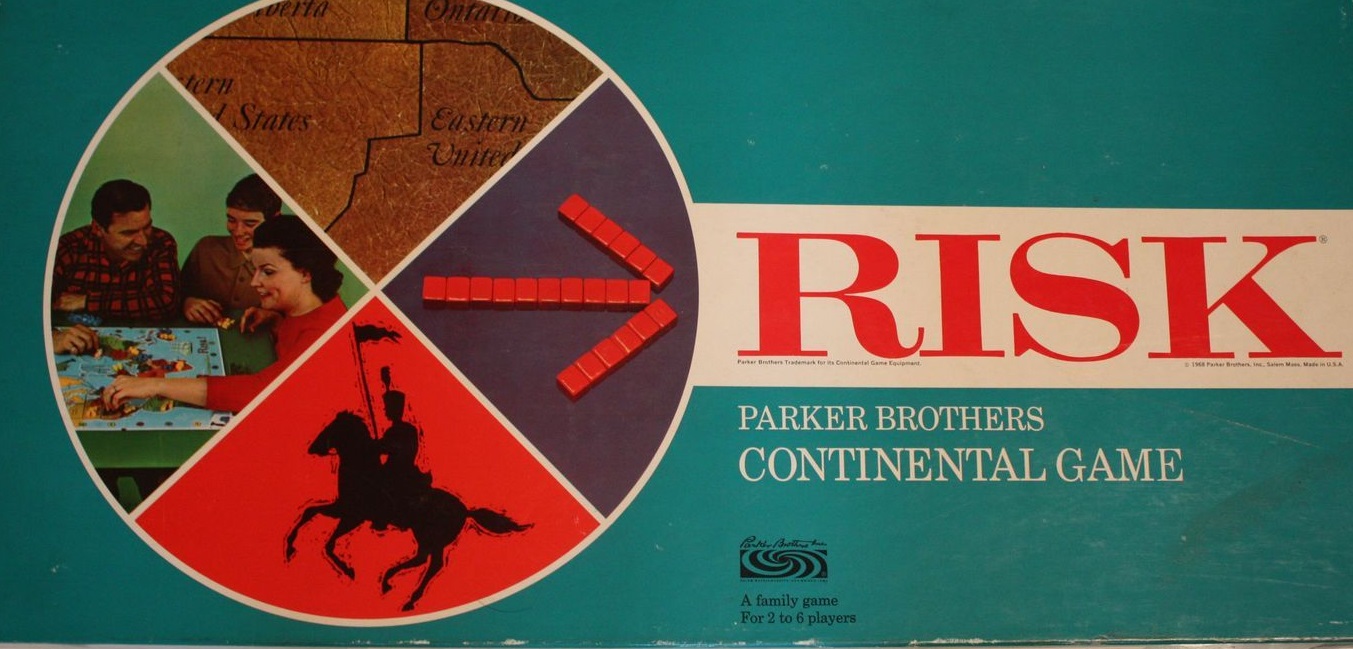
This
week at Flashbak I celebrated one of my favorite, classic board games: RISK.
Here’s
a snippet and the url: (http://flashbak.com/the-classic-world-domination-game-celebrating-risk-parker-brothers-364884/
)

“In
1959, Parker Brothers licensed from creator Albert Lamorisse (1922-1970) a game
called “Conquest of the World.”
You
probably know the game by the name it has gone by ever since: RISK, “The
Classic World Domination Game.”
Designed
for 2-6 players, ages 10 and up, the object of RISK is to occupy every
territory in the world. Yes, you are out
to literally occupy the entire planet Earth.
Here
is how the game’s directions describe the campaign: “You are battling to conquer the world. To win, you must launch daring
attacks, defend yourself on all fronts, and sweep across vast continents with
boldness and cunning.”
The
game comes down to a folding board that separates the Earth into forty-two
territories over six continents. Each player gets armies to sweep across the
continents, and five dice with which to battle: three red and two white.
And what about
alliances with other players?
Well,
they’re….risky.
An
advertisement in the seventies put the matter: “Trust is something you’ll have to take a risk on.” Instead, the player should focus on “maneuvering options” and “shrewd assessments.”
I
remember playing RISK with my father as a teenager, and then taking the game to
college at the University of Richmond, where I relentlessly played it with my
roommate and other best friend. The sad
thing is, as I recall: I sorta, kinda cheated.
I
didn’t mean to. Honest. I just didn’t remember
the rules right and we all used three white dice for defense instead of two,
and that made conquering the world that much harder. At this point, I’d like to humbly apologize
to my friends for not reading the rules more carefully…
Since
the game’s premiere in 1959, the RISK Empire has grown by leaps and bounds. There are variations of the game such as
Castle Risk (1986) and RISK 2210 AD (2001). Similarly, there have been RISK
variations based on pop culture properties.
Over the last few years I have seen Doctor
Who, Plants vs. Zombies, Lord of the Rings, Star Wars, Transformers and Game of Thrones versions of the classic
game. You can also find RISK apps and computer games…”
Please
continue reading at
Flashbak.
award-winning creator of the web series Abnormal Fixation (2024), the audio drama Enter the House Between (2023) and author of 35 books including Horror Films FAQ (2013), Horror Films of the 1990s (2011), Horror Films of the 1980s (2007), TV Year (2007), The Rock and Roll Film Encyclopedia (2007), Mercy in Her Eyes: The Films of Mira Nair (2006),, Best in Show: The Films of Christopher Guest and Company (2004), The Unseen Force: The Films of Sam Raimi (2004), An Askew View: The Films of Kevin Smith (2002), The Encyclopedia of Superheroes on Film & Television (2004), Exploring Space:1999 (1997), An Analytical Guide to TV's Battlestar Galactica (1998), Terror Television (2001), Space:1999 - The Forsaken (2003) and Horror Films of the 1970s (2002).
Saturday, September 24, 2016
Saturday Morning Cult-TV Blogging: Space Stars Episode #7 (October 24, 1981)

In
the seventh episode of Hanna Barbera’s Space Stars (1981), Space Ghost goes
up against another space pirate. This one is named Krugar and looks like of
Larry Niven’s Kzin.

After Krugar is
captured and held in a force field, the Phantom Cruiser passes through a
radiation cloud. The exposure to the
cloud -- just like in The Incredible Shrinking Man (1957) --
causes the crew to shrink. An antidote
is developed, and Krugar’s annihilator ray actually makes it more effective. “No
matter how large or how small,” the narrator intones, “no evil can defeat…Space Ghost.”

“Uglor’s
Power Play” is the Teen Force adventure of the week. Harnessing the brilliant
minds of the scientists on the planet Centrix, Uglor gives himself the powers
of all the Teen Force members. One of the scientists is a floating brain in a
jar!

The
Herculoids story this week features a space pirate too. “The Buccaneer” finds
an alien visiting Quasar in search of buried treasure. Amusingly, the
Herculoids seek the help of a group of subterranean people called “Sand People.” They resemble not Tatooine’s Tusken Raiders,
however, but rather the Jawas! They have the cloaks, and the glowing eyes.

The
second Space Ghost story, “The Sorceress” involves a witch “who depends on
machinery,” and the unrequited love she has for Space Ghost. Here, she captures
him and takes his power bands, all while demanding his “heart.”

In
“Rock Punk,” the Astro and the Space Mutts story, a mountainside sculpture of
the Space Stars – “Mount SpaceMore” -- is stolen by the villain Rock Punk. His
next theft involves the Earth’s moon.
Rock Punk, strangely, wears roller skates. He also says things like “Can you dig it?” At the end of the tale, he is captured and
sent to Space-traz, instead of Alcatraz.

The
final story, “The Olympians,” finds the Teen Force helping the Hercuoids to
battle descendants of the mighty Greek Gods, including the children of
Hercules, Mercury, Zeus and Medusa.
The
Space Magic interlude this week stars Kid Comet and the Astromites and involves
making a magic wand disappear. Space
Fact and Space Mystery both start Space Ghost and involve an explanation of
life support systems. The space code is
SKCOR ('rocks' backwards), and features host Elektra of the Teen Force.
award-winning creator of the web series Abnormal Fixation (2024), the audio drama Enter the House Between (2023) and author of 35 books including Horror Films FAQ (2013), Horror Films of the 1990s (2011), Horror Films of the 1980s (2007), TV Year (2007), The Rock and Roll Film Encyclopedia (2007), Mercy in Her Eyes: The Films of Mira Nair (2006),, Best in Show: The Films of Christopher Guest and Company (2004), The Unseen Force: The Films of Sam Raimi (2004), An Askew View: The Films of Kevin Smith (2002), The Encyclopedia of Superheroes on Film & Television (2004), Exploring Space:1999 (1997), An Analytical Guide to TV's Battlestar Galactica (1998), Terror Television (2001), Space:1999 - The Forsaken (2003) and Horror Films of the 1970s (2002).
Saturday Morning Cult-TV Blogging: Shazam: "The Doom Buggy" (November 2, 1974)

This
episode of the Filmation live-action Saturday morning series Shazam
(1974 – 1977) is titled “The Doom Buggy,” and frankly, that’s a bit of a melodramatic
title for such a pedestrian adventure.
In
“The Doom Buggy,” a boy named Don decides to drop out of school, over the
protests of his friend, Cathy (Lisa Eilbacher).
Don thinks he doesn’t need an education, and already has the skills to
be a great mechanic. He’s made up his
mind and can’t be swayed.
Then,
while driving in his dune buggy in the desert, Don has an accident and damages
Mentor’s RV. The parts that Don needs to
repair the RV are an hour away, but the young man proposes a short-cut and
takes Billy Batson (Michael Gray) through a span of rough desert terrain called
“Perdition Flats.”


The
Elders have already told Billy that “Each
of us, in his own way, is a teacher,” and so when Don’s dune buggy
experiences difficulties in the harsh desert, Billy showcases his
knowledge.
When the buggy becomes lost, for
instance, Billy shows Don how to create a makeshift compass in the sand, using
a stick and sunlight. The Elders had
already prepared him for this eventuality too, informing him that a “dark shadow will show you the light.”
And
then when a fire erupts in a nearby mineshaft, Billy -- as Captain Marvel --
uses an underground spring to put out the conflagration.

At the end of this harrowing adventure, Don decides not to drop out from school…and to continue his education instead.
The episode ends with Mentor, Don, Cathy and Billy still lost in the desert, at least until they notice that Captain Marvel has written an arrow in the sky, next to the word “Exit.”
award-winning creator of the web series Abnormal Fixation (2024), the audio drama Enter the House Between (2023) and author of 35 books including Horror Films FAQ (2013), Horror Films of the 1990s (2011), Horror Films of the 1980s (2007), TV Year (2007), The Rock and Roll Film Encyclopedia (2007), Mercy in Her Eyes: The Films of Mira Nair (2006),, Best in Show: The Films of Christopher Guest and Company (2004), The Unseen Force: The Films of Sam Raimi (2004), An Askew View: The Films of Kevin Smith (2002), The Encyclopedia of Superheroes on Film & Television (2004), Exploring Space:1999 (1997), An Analytical Guide to TV's Battlestar Galactica (1998), Terror Television (2001), Space:1999 - The Forsaken (2003) and Horror Films of the 1970s (2002).
Friday, September 23, 2016
Buck Rogers Week: "The Hand of the Goral" (March 26, 1981)

In “The Hand of the Goral,” a shuttle carrying Buck (Gil Gerard) and Hawk (Thom Christopher), and a Starfighter piloted by Colonel Deering (Erin Gray) explores a habitable planet.
On
the surface of that mysterious planet, the crew finds the wreckage of a ship,
and an injured survivor, named Reardon (Peter Kastner).
Meanwhile,
Dr. Goodfellow (Wilfrid Hyde-White) has discovered that the planet is called
“Vordeeth,” meaning “The Planet of Death.”
Ten
thousand years ago, the world was inhabited by a race called the Goral, but
they undertook a mass exodus, and the planet was abandoned.
Following
some strange and inexplicable events on the planet surface, Hawk and Buck
follow Wilma back to the Searcher.
There,
they find the crew-members strangely altered.
Admiral Asimov (Jay Garner) has become a raging tyrant, Crichton has
become friendly and appreciative of humans, and Twiki is a grumbly, resentful
sort.
With
Asimov threatening to kill and torture crew members, Buck, Hawk and Wilma
resolve to return to the planet and figure out what has happened, but their
escape won’t be easy.
Buck
realizes that all the crew members are duplicates meant to trick them, and
proceeds to the planet below, only to be confronted with a being (John Fujioka)
who promises him great riches if he cans solve the riddle of the Goral.

I
suppose that I tend to go easier on the second season of Buck Rogers than many
fans did in the early 1980s. The season
is not as much fun as the first, but I like the addition of Hawk -- a solid
“resident” alien character -- and feel that some of the stories were
compelling. I like “The Guardians,” in
particular.
“The
Hand of the Goral” is not without its problems, but it too would get ranked in
the upper tier of second season installments. The idea of a duplicate Searcher,
where characters possess altered personalities immediately puts one in mind of
Star Trek episodes such as “Mirror, Mirror,” it’s true, but in this case, an
alternate universe is not at work.
Rather, an alien games-player, or “tester,” the titular hand of the Goral, is responsible. He was left behind by his people to protect the planet from intruders, and determine their worthiness to receive the wisdom and riches of the Goral. He refers to the strange duplicates as “simulacra,” and certainly his powers are fierce.


There have been many attempts in science fiction stories to tell stories in which protagonists encounter duplicate versions of the habitat, and must determine if it is real or not. On Star Trek, Kirk was confronted with a complete mock-up of the Enterprise in “The Mark of Gideon.” The Alphans encountered a duplicate of their moon base in Space:1999’s “One Moment of Humanity,” and here Buck, Hawk and Wilma visit a duplicate Searcher, replete with a crew of simulacra. At least in this case, it is made clear that the hand of Goral possesses incredible powers and energy stores by which to create these settings and characters.
It’s intriguing to meet the Searcher crew recreated as “imperfect fakes.” Asimov is a dictator, Crichton is nice, and Wilma suddenly is all clingy and frightened. It’s not they are “evil” parallel versions, just versions that are off, and require deciphering on Buck’s part.
Overall “The Hand of the Goral” is tense, keeps one guessing, and doesn’t rely on a ridiculous premise (see: “The Golden Man”) to sell its story. I love stories about mysterious planets, or planets “of death,” with their ancient, inscrutable mysteries.
“The Hand of the Goral” may not be terribly original, but it possesses a creepy vibe, and a sense that an unseen force is manipulating reality itself. In a not always successful second season, those qualities are enough to make the episode stand out from the pack.
award-winning creator of the web series Abnormal Fixation (2024), the audio drama Enter the House Between (2023) and author of 35 books including Horror Films FAQ (2013), Horror Films of the 1990s (2011), Horror Films of the 1980s (2007), TV Year (2007), The Rock and Roll Film Encyclopedia (2007), Mercy in Her Eyes: The Films of Mira Nair (2006),, Best in Show: The Films of Christopher Guest and Company (2004), The Unseen Force: The Films of Sam Raimi (2004), An Askew View: The Films of Kevin Smith (2002), The Encyclopedia of Superheroes on Film & Television (2004), Exploring Space:1999 (1997), An Analytical Guide to TV's Battlestar Galactica (1998), Terror Television (2001), Space:1999 - The Forsaken (2003) and Horror Films of the 1970s (2002).
Buck Rogers Week: "Mark of the Saurian" (February 5, 1981)

Just
as an armistice has been declared between the Directorate and the Saurian
Empire, a group of Saurian nationals masquerade in human form, as Ambassador
Cabot (Linden Chiles) and his party.
Cabot
and his team board the Searcher, and plot to take the exploratory ship into the
“restricted zone” near the Delta Quadrant Defense Station. The Saurian plan is to secretly seize control of that station,
a weapon so powerful it caused their people to seek peace.
Buck
(Gil Gerard), suffering from “Cygnus Fever,” is able to detect the Ambassador
and his party as they really are: alien
infiltrators.
Although
Wilma (Erin Gray) believes Buck’s story, the Searcher crew fears that Rogers is
delusional, and even dangerous. They try to keep him in bed, and
sedated, while the Saurians seek to stop him.
Meanwhile,
Buck attempts to convince his friends that the Saurians are playing the crew for
fools…

“Mark
of the Saurian” is a solid episode of the second season Buck Rogers (1979-1981)
format. Alas, the story also appears regurgitated, almost note for note, from another popular sci-fi series of the disco decade: Space: 1999 (1975-1977).
Fans
of that series will certainly remember a Year Two story and two-part episode, called “The
Bringers of Wonder.” There, Commander
John Koenig (Martin Landau) is injured during an eagle crash, and consigned to
Medical Center. While there, he undergoes a head-injury treatment that alters
his brainwaves.
At
the same time, a ship apparently from Earth, a super swift, nears Moonbase
Alpha. It is manned entirely by friends of the
Alphans, including Dr. Shaw, Helena Russell’s (Barbara Bain) mentor.
But
when Koenig awakens, he doesn’t see human friends from Earth, he sees “monsters
from another dimension” who are operating by their own malevolent agenda (a
plot to detonate the nuclear waste domes on the moon).
Koenig
attempts to convince his friends that he is not delusional or hallucinating,
but they fear his injury is affecting his mind. He is out of his head, so-to-speak.
The
points of similarity between the two stories are suspiciously numerous.
In
both cases, we have the protagonist or hero of the show dealing with an
injury/sickness. Koenig has a brain injury. Buck suffers from Cygnus
Fever. This is important, because this “condition”
is the excuse by which his subordinates fail to heed his warning about enemy
infiltrators.
In
both cases, one of the key alien infiltrators is a doctor or physician, an individual with access to
the sick bay/Medical Center, and so can therefore attempt to harm the sick protagonist. It was Dr. Shaw in “Bringers of Wonder,” and
Dr. Moray in “Mark of the Saurian” who commit this act. They both seek to stop the one person who can see the invaders as they really are.
In
both cases, a man whose word is absolutely dependable is easily questioned because of
the prior incident (brain injury/Cygnus fever), leaving that man to have to act
alone, without the support of his friends.


In
both cases, the aliens with the secret agenda (to detonate the domes; or take
over the Delta Quadrant Defense Station) are only outed when the protagonist
manipulates an instrument in the control room to alter the conditions of that
room and make the aliens visible to shocked co-workers.
In
“Bringers of Wonder,” Koenig uses sonic manipulation in Command Center to
allow the Alphans to see the “earthlings” as he sees them...as slimy aliens.
In “Mark of the
Saurian,” Buck adjusts the thermostat on the Searcher’s bridge, making it
cold. The Saurians -- who are cold-blooded -- collapse, and when
unconscious, appear in their true, reptilian form.
In
sci-fi TV, many stories are influenced by older stories. Many series offer variations on a theme, or
on a trope (like “the silicon based life form,” or the “fight to the death.”) But “Mark of the Saurian” isn’t a variation
on a theme so much as it is a straight-up regurgitation of “Bringers of Wonder.” It is a point-by-point repeat.
That fact established, it’s not a bad episode in the scheme of things. Buck, feeling
alone, discovers the two people he can truly count on in a crisis: Wilma and
Hawk (Thom Christopher), and the episode helps us glean a sense of those
friendships.
On
the other hand, some questions are indeed left unanswered.
How do the Saurians trick Twiki and Crichton
into seeing them as human beings? They are robots, after all, not susceptible to a disguise device that depends, apparently, on "body chemistry."


And since when has the Directorate been at
war with the Saurians? And if the
Saurians broke the armistice, does that mean the war with the Saurians will
resume?
Finally, why is Buck so mean and insulting to his doctor in this episode? He is the worst patient, ever!
Despite
such questions, I enjoy some of the call-backs to Season One in "Mark of the Saurian." These
include the re-use of the space station miniature from “Space Vampire,” and the
re-use of the Directorate dress uniforms, seen as far back as “Awakening.”
Also, the Directorate gets a specific name-check.

If only we heard a mention of Dr. Huer.
Fans
of 1970s electronic toys will also note that Lakeside’s Computer Perfection
makes an extended cameo as a view screen control panel in Searcher’s sick
bay. The unmistakable blue and white toy
is seen several times at Buck’s bedside, and there are two close-ups of the
game’s controls (under a blue hood).

Finally,
one might wonder how I can enumerate all the similarities here to Space:1999
and yet still assess this Buck Rogers episode as one of the better second
season shows.
The answer is simple. By comparison to efforts like “The Golden Man”
or “Shgoratchx!"even a retread like “Mark of the Saurians” is a welcome relief.
award-winning creator of the web series Abnormal Fixation (2024), the audio drama Enter the House Between (2023) and author of 35 books including Horror Films FAQ (2013), Horror Films of the 1990s (2011), Horror Films of the 1980s (2007), TV Year (2007), The Rock and Roll Film Encyclopedia (2007), Mercy in Her Eyes: The Films of Mira Nair (2006),, Best in Show: The Films of Christopher Guest and Company (2004), The Unseen Force: The Films of Sam Raimi (2004), An Askew View: The Films of Kevin Smith (2002), The Encyclopedia of Superheroes on Film & Television (2004), Exploring Space:1999 (1997), An Analytical Guide to TV's Battlestar Galactica (1998), Terror Television (2001), Space:1999 - The Forsaken (2003) and Horror Films of the 1970s (2002).
Thursday, September 22, 2016
Buck Rogers Week: "The Satyr" (March 12, 1981)

"There are strange viruses here on this planet."
- Cyra (Anne E. Curry) warns Buck about the dangers of Arcanus in "The Satyr."
On first glance, however, this development seems unexpected since the episode's storyline stems from a long-standing and ubiquitous sci-fi TV trope: "the single mother in jeopardy."
In this all-too-familiar genre TV chestnut, a series protagonist encounters a lovely single mother and her child (usually a son) who are being menaced by some malevolent outside force. The series hero then becomes a stand-in husband/father to the duo, defeats the menace, and -- in a heartbreaking moment -- must say farewell to his new family so that he may continue his episodic adventures romantically unimpeded.
Examples of the "single mother in jeopardy" convention can be found on the original Battlestar Galactica (1978 - 1979) in "The Lost Warrior," where the convention is played well as a variation on Shane (1953) and as a commentary on gun control, in V: The Series as "The Wildcats" (wherein Marc Singer's Mike Donovan steps in to save a Mom and her daughter from the Visitors), and on MacGyver, "To Be a Man," which featured the late Persis Khambatta as Zia, the single mother in jeopardy from Russian military forces.
Examples of the "single mother in jeopardy" convention can be found on the original Battlestar Galactica (1978 - 1979) in "The Lost Warrior," where the convention is played well as a variation on Shane (1953) and as a commentary on gun control, in V: The Series as "The Wildcats" (wherein Marc Singer's Mike Donovan steps in to save a Mom and her daughter from the Visitors), and on MacGyver, "To Be a Man," which featured the late Persis Khambatta as Zia, the single mother in jeopardy from Russian military forces.

In Buck Rogers': "The Satyr," Captain Buck Rogers (Gil Gerard) explores the planet Arcanus, the site of a failed Earth colony while the star ship Searcher is away for ten days on a mission to "sweep" an asteroid belt.
On the planet surface, Buck soon meets Cyra (Anne E. Curry) and her son, Delph (Bobby Lane), the only two settlers who have remained behind on the planet. Buck soon discovers that the duo is regularly harassed by Pangor (Dave Cass), a half-man/half-goat or "satyr" who seems obsessed with them. Buck steps in to battle the violent Pangor, but is bitten by the satyr.
Over a period of days, Buck begins to transform into a satyr himself, a creature obsessed with women and wine...and little else.
After being bitten, Buck learns that Pangor is actually Jason Samos, the founder of the Arcanus colony and Cyra's much-mourned husband. She has been unable to leave the planet behind because she still feels attached to him, despite Jason's transformation into a rampaging monster.
On the planet surface, Buck soon meets Cyra (Anne E. Curry) and her son, Delph (Bobby Lane), the only two settlers who have remained behind on the planet. Buck soon discovers that the duo is regularly harassed by Pangor (Dave Cass), a half-man/half-goat or "satyr" who seems obsessed with them. Buck steps in to battle the violent Pangor, but is bitten by the satyr.
After being bitten, Buck learns that Pangor is actually Jason Samos, the founder of the Arcanus colony and Cyra's much-mourned husband. She has been unable to leave the planet behind because she still feels attached to him, despite Jason's transformation into a rampaging monster.

As I've noted above, the "single mother in jeopardy" cliche has been depicted on television many times, but "The Satyr" illustrates nicely how a science fiction program can explore contemporary issues that "regular" dramatic programs either cannot, or if they do seems too on the nose, like an Afterschool Special.
Clearly, this episode of the series sub textually concerns alcoholism; and the effect of alcoholism upon the entire family unit. This subtext and social commentary actually elevates "The Satyr" above its familiar and cliched premise and makes it one of Buck Rogers' finest hours.
Clearly, this episode of the series sub textually concerns alcoholism; and the effect of alcoholism upon the entire family unit. This subtext and social commentary actually elevates "The Satyr" above its familiar and cliched premise and makes it one of Buck Rogers' finest hours.
In "The Satyr," Cyra and Delph live a relatively happy life, until Dad -- Pangor -- shows up at their home, demanding wine and violently threatening Mom.

In one well-staged scene, we watch with Delph through an exterior window as, inside the home, Pangor pushes Cyra onto her back (behind the kitchen table), and threatens physical violence. He wants more wine, you see, even though, as Cyra tells him, "he drank it all the last time." The subtext here isn't just violence, but sexual violence, at least in terms of the staging/blocking.

What we get in "The Satyr," particularly in this camera view from the outside-in, is the notion of a child dwelling in a terrifying household of alcoholism and domestic violence, and seeing/experiencing things that no child should. Worse, the P.O.V. suggests isolation and helplessness.
At several points during the episode, Delph is also policed by his mother not to be too conspicuous, so as not to gain the attention of the alcoholic/Satyr. At one point, Delph plays "flute grass" and at another point he calls out innocently for his Mom. In both instances he is quickly "hushed" -- "Don't shout!" -- lest the angry man of the household focus his violent attention upon him. Half the battle is staying off Pangor's radar as he pursues his vices.
Additionally, the boy, Delph, soon sees himself as his mother's defender, eventually fighting the angry Pangor and telling the beast to "leave my mother alone." In the homes of many alcoholics, it is indeed the child who eventually becomes the protector of the Mom,or other siblings, and who stands-up to the offending drinker.
As for Cyra, she's dramatized in this episode as the traumatized, exhausted victim of sustained domestic abuse. She hides bruises on her neck from Buck, and, quite understandably, doesn't like "to be touched."
She also has much trouble letting go of the "good man" who was once her husband, clinging to old photo albums which reveal happier, more romantic days. Much of the blocking depicts Cyra cowering or retreating. She is someone who is used to being terrorized and fears being struck.
Cyra also maintains the family home on Arcanus -- despite the danger to herself and her son -- in the misguided belief that somehow Pangor can change. In fact, Cyra spends her life appeasing the violent satyr. "If he's supplied with enough [wine]," she informs Buck, "he's content" and leaves the family alone.
At the same time that she must handle Pangor, Cyra worries that the "virus" that affected her husband -- a metaphor for alcoholism -- could affect her son too "when he's a man." In other words, the cycle of abuse and violence could continue to the next generation. Yet by keeping Delph on Arcanus, in a terrorized home, Cyra makes it more likely that this will happen to Delph.
This social commentary in "The Satyr" is intriguing by itself, but the episode gains some real unexpected juice and power when Buck actually grows sick with "the virus "and quickly loses his status as the white knight.


Buck sets up house with Cyra and Delph (even teaching the boy to fly his shuttle craft) and then -- just when things are good -- succumbs to the same "virus' and begins to show signs of physical violence like Cyra's previous husband. In one sequence, Buck tries to hide evidence of his transformation from Delph, ashamed to show his true nature as a "monster" to the boy he clearly cherishes.
Here, the subtext isn't about alcoholism so much as the nature of (some) men in general, and how some women seem to attract these monsters, one after the other. It's something in their individual nature and lack of self-esteem perhaps, and part of a deadly symbiosis involving abuser and victim. '
"The Satyr" tries to make viewers understand why Cyra stays on Arcanus, imperiled by one satyr after the other, and gives us some insight into the mentality of a perpetual victim. In this case, Cyra just can't let go of the past and the (vain) dream that Pangor could again become the husband she once loved.
Of course, Buck -- as our stalwart series hero -- is able to kick the virus and save the day. Still, it was pretty daring in terms of 1981-era television to create a metaphor for alcoholism and then see the likable series protagonist succumb to that "disease." In visual terms, Buck's horns literally start to come out, as he transforms from man to beast.
I am old enough to remember the promotional materials and interviews for the second season of Buck Rogers in the 25th Century. The overall promise by the producers was that Buck would become more recognizably and fallibly human, and less the quipping, boogeying, Burt Reynolds-in-space figure of the first season.
Whether or not that promise was fulfilled entirely is up for debate, but certainly "The Satyr" showcases Buck at his most human and interesting. He exhibits real remorse when he believes he is responsible for the death of Cyra's husband, Jason, and then must battle his growing "dark side" as the satyr virus takes hold.
This episode is also intriguing for the way it ties the myth of the Satyr (a wine loving man/goat) to the alcoholism/domestic violence symbolism, and for the implicit "reason" behind alcoholism provided by the show.
Jason had the "pioneer spirit," you see, and had hoped to turn Arcanus into a "garden of Eden." When that dream failed, he couldn't handle it...and that's when he first acquired "the virus." Again, this idea fits our contemporary world well.
What leads people to drink? Failure? Tragedy? Loss? Desperation?
Like the best social commentary in science fiction television (from The Twilight Zone to Star Trek to The X-Files to Buffy), this is an episode that plays ably on two levels. You can watch it just as a gripping, good adventure, or as a story with a bit more relevance and meaning in our own world.
In other words, the metaphor for alcoholism holds powerfully (right down to the blocking of the actors), but you aren't hit over the head with a "lesson."
At the very least, "The Satyr" adds some much-needed depth to an old TV trope. In this Buck Rogers episode, the single mother was again in dire jeopardy, but it's the nature of that jeopardy and the source of the jeopardy that make this installment meaningful and unique, even after three decades.
award-winning creator of the web series Abnormal Fixation (2024), the audio drama Enter the House Between (2023) and author of 35 books including Horror Films FAQ (2013), Horror Films of the 1990s (2011), Horror Films of the 1980s (2007), TV Year (2007), The Rock and Roll Film Encyclopedia (2007), Mercy in Her Eyes: The Films of Mira Nair (2006),, Best in Show: The Films of Christopher Guest and Company (2004), The Unseen Force: The Films of Sam Raimi (2004), An Askew View: The Films of Kevin Smith (2002), The Encyclopedia of Superheroes on Film & Television (2004), Exploring Space:1999 (1997), An Analytical Guide to TV's Battlestar Galactica (1998), Terror Television (2001), Space:1999 - The Forsaken (2003) and Horror Films of the 1970s (2002).
Buck Rogers Week: "The Guardians" (January 22, 1981)

The second season of Buck Rogers in the 25th Century is not generally high-regarded among fans. In its sophomore sortie, the Glen Larson series eliminated the characters of Dr. Huer, Dr. Theopolis and the Draconians, downplayed Buck’s (Gil Gerard) strong sense of fish-out-of-water humor, and moved Buck from sexy secret agent work on Earth to a deep space assignment aboard the Earth ship Searcher.
These format changes cast the new Buck Rogers rather firmly in the mold of Star Trek or Space: 1999 with the new series acting as a vehicle for “civilization of the week” stories.
These format changes cast the new Buck Rogers rather firmly in the mold of Star Trek or Space: 1999 with the new series acting as a vehicle for “civilization of the week” stories.
In that particular format, success or failure rests largely on how well interesting and likable main characters interact with intriguing or convincing alien cultures. The Fantastic Journey (1977), for example, got the former aspect of that alchemy right (the likable main characters), but had a difficult time coming up with good stories, and original alien cultures to explore.
In broad terms, this was the very problem with the second season of Buck Rogers. Episodes that involved mischievous dwarfs, (“Shgoratchx!), or backwards-aging men spray-painted gold (“The Golden Man”) failed to impress or persuade either mainstream audiences or die-hard sci-fi fans.
Some second season episodes were better, including the dynamic “The Satyr," a show that pinpointed a great “alien” metaphor for alcoholism and its impact on families (and which I'll review later today).
In broad terms, this was the very problem with the second season of Buck Rogers. Episodes that involved mischievous dwarfs, (“Shgoratchx!), or backwards-aging men spray-painted gold (“The Golden Man”) failed to impress or persuade either mainstream audiences or die-hard sci-fi fans.
Some second season episodes were better, including the dynamic “The Satyr," a show that pinpointed a great “alien” metaphor for alcoholism and its impact on families (and which I'll review later today).
On Star Trek, an alien disease or weapon was often utilized to examine emotional aspects of the characters that they normally keep hidden. “The Naked Time” or “The Naked Now” are two such notable examples.
In those episodes, a disease that mimicked alcohol intoxication “exposed” the underneath characteristics of our favorite Starfleet officers. The character revelations were sometimes funny, sometimes extremely moving.
That general idea informs “The Guardians,” only an alien artifact is the catalyst for the character reveals.

Here, Buck and his new friend Hawk (Thom Christopher) investigate a “Terra Class satellite.” Although the exploration of the planet is supposedly “strictly routine,” Buck and Hawk soon hear a distant bell ringing over the wind's howl. They follow the noise and discover that the bell tolls for Janovus XXVI, an old man now on his death bed.
This ancient “Guardian” informs Buck that he has been waiting for Captain Rogers for over five hundred years. Now, he must pass on to Buck – “The Chosen One,” an ancient green Pandora’s Box. This jade artifact must be transported to the old man’s unnamed successor and only a person of both “the past and the present” (like Buck) can get it to its destination successfully.
This ancient “Guardian” informs Buck that he has been waiting for Captain Rogers for over five hundred years. Now, he must pass on to Buck – “The Chosen One,” an ancient green Pandora’s Box. This jade artifact must be transported to the old man’s unnamed successor and only a person of both “the past and the present” (like Buck) can get it to its destination successfully.

This trajectory especially concerns Lt. Devlin (Paul Carr), since he is due to be married on Lambda Colony in only a few days.
When Admiral Asimov (Jay Garner) is exposed to the box, he imagines his crew…starving to death on the long journey in the void from the edge of the galaxy to Lambda.


When Wilma (Erin Gray) is affected by the box, she sees herself as a hopeless blind woman wandering the corridors of Searcher alone.
Then, in a matter of an hour, Wilma is blinded in real life, and realizes her vision was prophetic. Even Hawk is affected, and he experiences an emotional moment with his dead mate, Koori (Barbara Luna).


When Wilma (Erin Gray) is affected by the box, she sees herself as a hopeless blind woman wandering the corridors of Searcher alone.
Then, in a matter of an hour, Wilma is blinded in real life, and realizes her vision was prophetic. Even Hawk is affected, and he experiences an emotional moment with his dead mate, Koori (Barbara Luna).

As the Searcher reaches the edge of the galaxy, Buck realizes the box must be passed on to a Guardian, a “saintly figure” seen throughout many cultures and on many worlds. When a Guardian does not possess the box, chaos ensues, and that sense of chaos explains a lot of Earth’s violent history. Buck realizes that the Time Guardian is the very one that they now must seek…

In some sense, “The Guardian” showcases how the series could have approached more serious sci-fi storytelling.
This episode is not without flaws (and the ending looks cheap...), but the crew member visions of people starving to death and going blind are authentically disturbing. I remember watching the program for the first time in 1981 and feeling pretty jolted by Asimov’s vision of a crew dying from hunger…and looking like zombies. This moment resonates, and is probably the strongest in the show, despite the fact that Gil Gerard, in the vision, hardly looks emaciated...
"The Guardian" also delves into some pretty dark territory regarding erstwhile Lt. Devlin. While Searcher is lost and heading to the edge of the galaxy, he learns that his fiancé on Lambda Colony has died. She was killed while out searching for him and his lost ship. Again, this bit of drama is just a bit darker than the typical Buck Rogers show, and here it all works well. A sense of panic and anxiety builds up as "The Guardian" reaches it final act.
Of all the phantasms featured in "The Guardians," Buck’s may be the least effective. It’s great to meet a Rogers family member, since we know very little of the astronaut’s family history, and yet Buck doesn’t really do or say anything important in this dream. You’d think Buck might want to warn his Mom about the coming nuclear holocaust…tell her to go into hiding, or something. Instead, she’s the one worried about his mission.
Buck’s dream is a bit off tonally, though it’s fun to see the special effects from “Awakening” recycled as a callback to the Buck Rogers pilot.
In toto, I would have preferred to see a dream in which Buck revealed some personal flaw, foible or fear. Like the fact that he was afraid of never again making a meaningful connection with the world around him. I don't know. But something other than an idyllic dream of lemonade and small-town Americana. This dream tells us where he came from, but in a sense, we already know that. Better to explore how he feels about where he was, or where he is, or where he might be headed.
In toto, I would have preferred to see a dream in which Buck revealed some personal flaw, foible or fear. Like the fact that he was afraid of never again making a meaningful connection with the world around him. I don't know. But something other than an idyllic dream of lemonade and small-town Americana. This dream tells us where he came from, but in a sense, we already know that. Better to explore how he feels about where he was, or where he is, or where he might be headed.
Like many cult-tv programs, “The Guardians” also imagines an external force as being the guarantor of peace or war in the galaxy.
On the original Twilight Zone, the great (and incredibly atmospheric) episode “The Howling Man” postulated that man would experience peace only during those intervals during which he held the Devil captive. Whenever the Devil escaped captivity, world war would occur.
On the original Twilight Zone, the great (and incredibly atmospheric) episode “The Howling Man” postulated that man would experience peace only during those intervals during which he held the Devil captive. Whenever the Devil escaped captivity, world war would occur.
Likewise, in Star Trek’s “The Day of the Dove,” an alien monster that thrived on “hate” was believed responsible for the violent, war-like aspects of humankind’s long history.
Probably the best aspect of “The Guardians” is simply the fact that the episode creates a sense of terror (especially in the scene wherein the box is jettisoned from the ship…but then re-appears aboard her…) without ever focusing on a humanoid villain. There are no bad guys to be found here, at all, only a strange alien artifact that the crew of Searcher, including Buck, doesn’t quite understand.
This conceit was very much of the Space:1999 playbook: terror is forged because man doesn’t have all the answers, and his curiosity or other emotions only create more danger.
It’s nice to see Buck Rogers operate on that more intellectual, spine-tingling level, at least for a short duration. Had later episodes followed this relatively intelligent formula, the second season might today be much better perceived.
It’s nice to see Buck Rogers operate on that more intellectual, spine-tingling level, at least for a short duration. Had later episodes followed this relatively intelligent formula, the second season might today be much better perceived.
I don’t often return to the second season of Buck Rogers today because of some of the really dreadful episodes, but “Time of the Hawk,” “The Satyr” and yes, “The Guardians” reveal how the changes from season one to season two could have truly created an interesting space opera and interesting, early 1980s alternative to Star Trek.
I don't know if the second series was too rushed, it was difficult to find good writers, or there were problems elsewhere that needed to be addressed first, but at least for "The Guardians" everything seems to come together for Buck.
In this case "opening up Pandora's Box" gave the sci-fi series a pretty visceral and intriguing hour.
I don't know if the second series was too rushed, it was difficult to find good writers, or there were problems elsewhere that needed to be addressed first, but at least for "The Guardians" everything seems to come together for Buck.
In this case "opening up Pandora's Box" gave the sci-fi series a pretty visceral and intriguing hour.
award-winning creator of the web series Abnormal Fixation (2024), the audio drama Enter the House Between (2023) and author of 35 books including Horror Films FAQ (2013), Horror Films of the 1990s (2011), Horror Films of the 1980s (2007), TV Year (2007), The Rock and Roll Film Encyclopedia (2007), Mercy in Her Eyes: The Films of Mira Nair (2006),, Best in Show: The Films of Christopher Guest and Company (2004), The Unseen Force: The Films of Sam Raimi (2004), An Askew View: The Films of Kevin Smith (2002), The Encyclopedia of Superheroes on Film & Television (2004), Exploring Space:1999 (1997), An Analytical Guide to TV's Battlestar Galactica (1998), Terror Television (2001), Space:1999 - The Forsaken (2003) and Horror Films of the 1970s (2002).
Subscribe to:
Posts (Atom)
60 Years Ago: Star Trek:"The Naked Time" (September 29, 1966)
Stardate 1704.2: The U.S.S. Enterprise (NCC-1701) orbits distant Psi 2000, an ancient world on the verge of breaking up. The crew's mi...

-
 Director Ridley Scott has already given the science fiction cinema two of its greatest and most cherished films: Alien (1979) and Blade...
 -
 "Other Worlds lie outside our seeing; beyond the beyond; on the edge of within. The Great Pyramids: erected by the Ancient Ones as a ba...